Kombucha vs Kefir vs Makgeolli: The Ultimate Guide
Fermented drinks are more than just a health trend. They’re living foods with thousands of years of history and culture packed into every sip. As interest in gut health has exploded, kombucha, kefir, and makgeolli have all stepped into the spotlight. But most people don’t really know what sets them apart — or which microbes are doing all the work. Today, we’re doing a deep dive into all three: the science, the history, and everything in between.
What Is a Fermented Drink, Anyway?
Fermentation (醱酵) is a metabolic process where microorganisms break down organic matter to generate energy. Along the way, they produce a whole range of byproducts — organic acids, alcohol, carbon dioxide, vitamins, and enzymes. Fermented drinks generally fall into three categories: lactic acid fermentation, alcoholic fermentation, or a combination of both. Kombucha, kefir, and makgeolli each have their own distinct microbial communities and fermentation styles, which is exactly why they taste so different and deliver different nutritional profiles.
The History and Cultural Roots of Each Drink
Kombucha
Kombucha’s origins trace back to around 220 BCE, during China’s Qin Dynasty. It was called the “Tea of Immortality” and spread across East Asia before making its way to Russia and Eastern Europe. By the early 20th century, it had become a household staple in Germany, where it was known as Teepilz — literally “tea mushroom.” Then came the 2000s wellness boom in the United States, and kombucha went global. Today the global market is worth billions. In South Korea, it started appearing in cafés and convenience stores in the mid-2010s and hasn’t looked back.
Kefir
Kefir has been made in the Caucasus mountains for thousands of years. Nomadic peoples there traditionally fermented it by placing milk and kefir grains into animal-skin pouches. The name is widely thought to come from the Turkish word keyif, meaning “good feeling.” In the late 19th century, Russian physicians began prescribing kefir for tuberculosis and gastrointestinal conditions, which sparked serious scientific interest. Today it’s consumed widely across Eastern Europe, the Middle East, and North America. In Korea, it has a dedicated following, especially among home fermentation communities.
Makgeolli
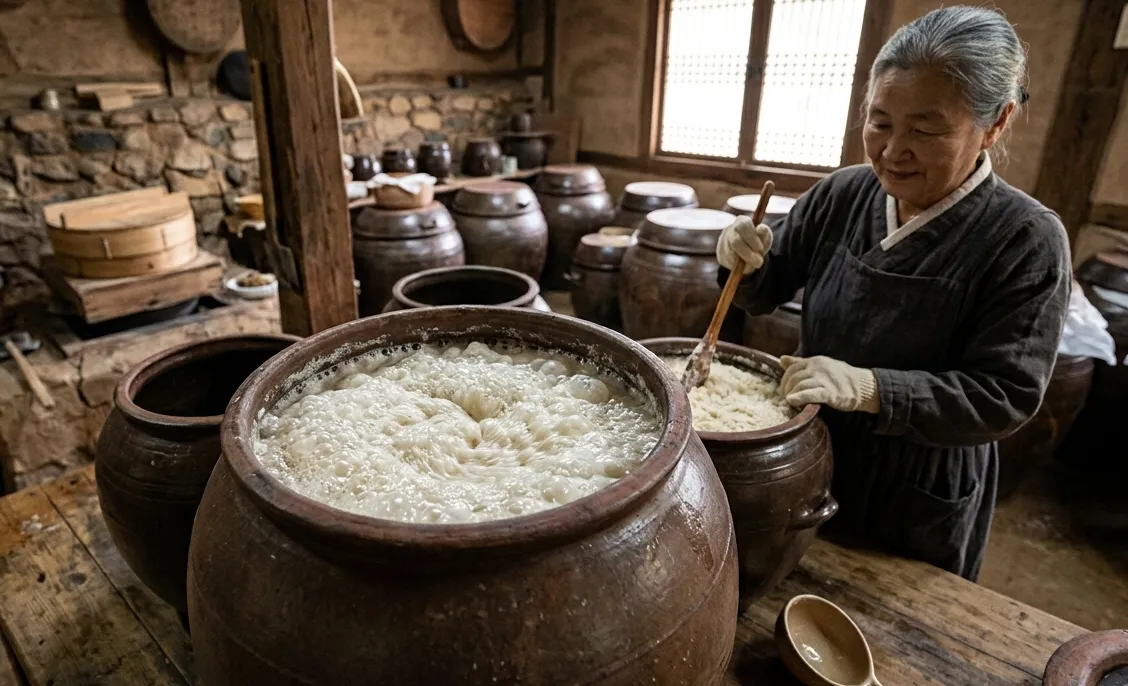
Makgeolli is Korea’s oldest alcoholic drink, and it’s woven into the fabric of Korean culture. References to it appear in historical texts from the Three Kingdoms period. During the Goryeo era, it was known as nongju — “farmer’s wine” — because it fueled laborers through long days in the fields. Under the Joseon Dynasty, it went by names like takju and baekju and was brewed in homes across the country. Colonial-era alcohol tax laws suppressed that home-brewing tradition, but a revival of traditional Korean spirits has brought premium regional makgeolli back into the conversation. Exports to Japan, the United States, and Europe have grown steadily since the makgeolli boom of the 2000s.
Fermentation Science: A Side-by-Side Comparison
| Category | Kombucha | Kefir | Makgeolli |
|---|---|---|---|
| Fermentation Type | Mixed (acetic acid + alcohol) | Mixed (lactic acid + alcohol) | Alcoholic (+ lactic acid) |
| Key Microorganisms | Acetic acid bacteria (Acetobacter), yeasts (Brettanomyces, Zygosaccharomyces) | Lactic acid bacteria (Lactobacillus, Lactococcus), yeasts (Kluyveromyces, Saccharomyces) | Yeast (Saccharomyces cerevisiae), mold (Aspergillus), lactic acid bacteria |
| Fermentation Starter | SCOBY (symbiotic culture of bacteria and yeast) | Kefir grains (polysaccharide matrix) | Nuruk (grain-cultured mold) |
| Primary Substrate | Sweetened black or green tea | Milk (or plant-based alternatives) | Rice (glutinous or non-glutinous) |
| Alcohol Content | 0.5–3% | 0.5–2% | 6–8% (average) |
| pH Range | 2.5–3.5 | 4.2–4.6 | 3.8–4.5 |
How Kombucha Ferments
The heart of kombucha is the SCOBY — Symbiotic Culture Of Bacteria and Yeast. The yeasts go first, breaking sugar down into alcohol and carbon dioxide. Then acetic acid bacteria (Acetobacter and Gluconobacter) step in and oxidize that alcohol into acetic acid and gluconic acid. The result is a tangy, slightly effervescent drink rich in organic acids, B-complex vitamins, amino acids, and polyphenols. Some bacterial strains also produce a thick pellicle made of bacterial cellulose during fermentation — that rubbery, disc-shaped layer people often call the “mushroom.”
How Kefir Ferments
Kefir grains are a fascinating little ecosystem. Inside a polysaccharide matrix called kefiran, lactic acid bacteria and yeasts live together in symbiosis. The lactic acid bacteria convert lactose into lactic acid, dropping the pH. The yeasts produce alcohol and carbonation. Proteins get partially hydrolyzed during the process, which makes kefir easier to digest — and often tolerable even for people with lactose intolerance. Researchers have identified more than 30 distinct microbial species in kefir, including Lactobacillus kefiranofaciens and Leuconostoc mesenteroides.
How Makgeolli Ferments
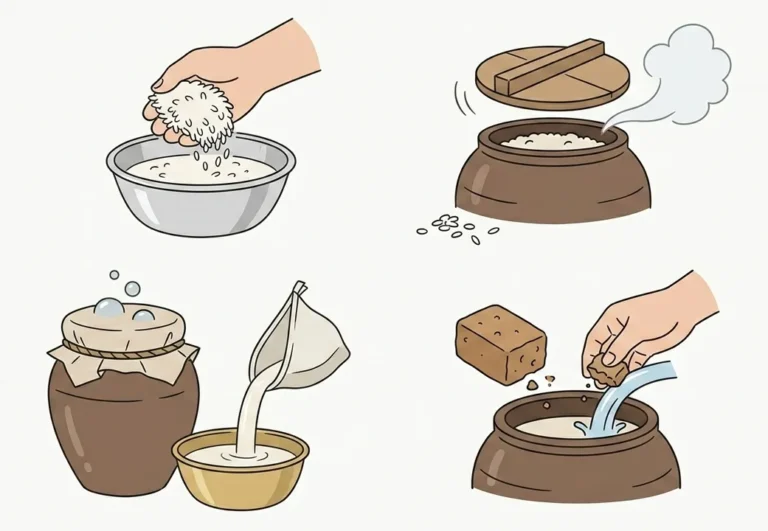
Makgeolli uses a two-stage process, but both stages happen at the same time. This is called parallel double fermentation (병행 복발효). First, molds in the nuruk starter — primarily Aspergillus oryzae — secrete amylase enzymes that break down rice starch into glucose. Simultaneously, yeasts convert that glucose into alcohol. This parallel process distinguishes Korean traditional brewing from Japanese sake and Western beer, where saccharification and fermentation happen in separate stages. Makgeolli is rich in yeast, lactic acid bacteria, protein, dietary fiber, and organic acids. It comes in at roughly 40–50 kcal per 100mL.
Nutritional Breakdown
- Kombucha: Contains organic acids (acetic acid, gluconic acid, lactic acid), vitamins B1, B2, B6, and B12, polyphenols, and trace alcohol. It’s relatively low in calories, though sugar content varies significantly by brand.
- Kefir: A strong source of calcium, phosphorus, magnesium, protein, vitamin K2, vitamin B12, and folate. Around 100–120 kcal per 200mL, depending on the fat content of the milk used.
- Makgeolli: Contains protein, carbohydrates, organic acids, B-complex vitamins from yeast, and dietary fiber. The alcohol content means calories add up — keep that in mind. Sodium is relatively low, but it’s worth checking the label on commercial products for additives.
Please note: none of the health information in this article constitutes medical advice. Always consult a qualified healthcare professional before making changes to your diet for health reasons.
Home Recipe: Simple Milk Kefir
Making kefir at home is one of the easiest fermentation projects you can try. Here’s what you need and how to do it.
Ingredients
- Kefir grains: 1–2 teaspoons (about 10–20g)
- Fresh whole milk (recommended): 500mL
- Glass jar (500mL or larger): 1
- Cheesecloth or coffee filter: 1 sheet
- Rubber band: 1
- Plastic strainer and wooden or plastic spoon
Steps
- Sterilize your jar. Either boil it or rinse thoroughly with very hot water, then let it dry completely. Avoid metal tools — they can damage the kefir grains. Stick to plastic or wood.
- Add your ingredients. Place the kefir grains in the sterilized jar first, then pour in the milk at room temperature (20–25°C / 68–77°F). Cold milk slows fermentation down considerably.
- Ferment. Cover the mouth of the jar with cheesecloth or a coffee filter and secure it with a rubber band. Keep the jar at room temperature (20–25°C), away from direct sunlight. Ferment for 18–24 hours. In summer, 18 hours is usually enough. In winter, you may need 24–36 hours.
- Check for doneness. When the milk has thickened and smells pleasantly tangy, fermentation is complete. Strain out the grains with your plastic strainer — they’re ready to use for your next batch.