Sikhye: Is Korea’s Sweet Rice Drink Actually Fermented?
Sikhye is Korea’s sweet rice drink. What happens in the pot, whether it is actually fermented, whether it is probiotic, and how home cooks make it.

Sikhye is Korea’s sweet rice drink. What happens in the pot, whether it is actually fermented, whether it is probiotic, and how home cooks make it.

Fermented and pickled are not the same. How salt-brine fermentation and vinegar pickling differ, how to tell which you are buying, and where kimchi fits.

Doenjang and miso look alike but are made with different microbes and methods. How they taste, how to substitute one for the other, and which is healthier.
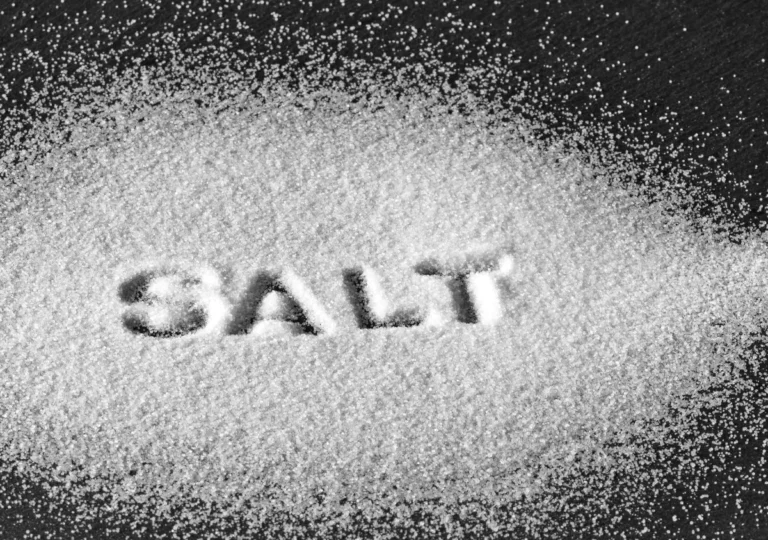
How salt controls fermentation: what it does to microbes and texture, why there is no universal salt percentage, and whether salt type matters.
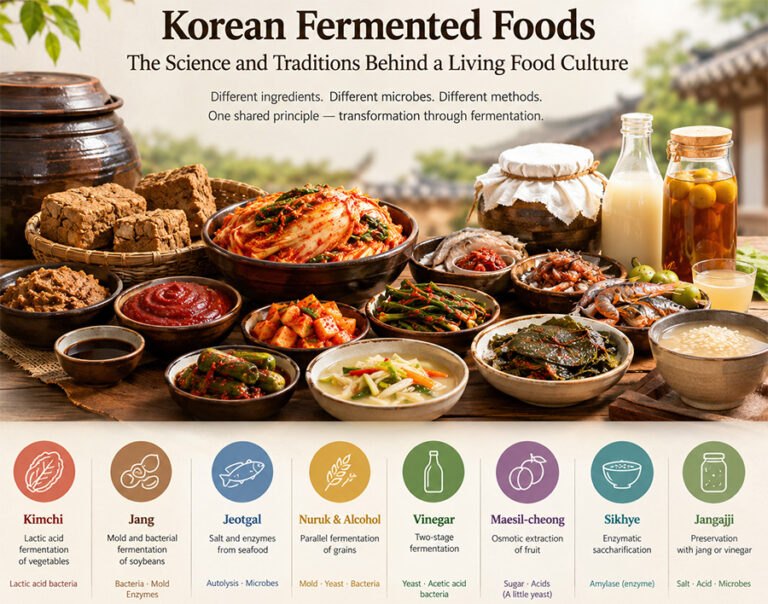
Korean cuisine is built on fermentation. This is not a metaphor. It is a structural fact. The flavors that define Korean food — the sourness of aged kimchi, the deep umami of doenjang, the layered heat of gochujang, the concentrated savoriness of jeotgal — are not created by cooking techniques or spice combinations alone. They…
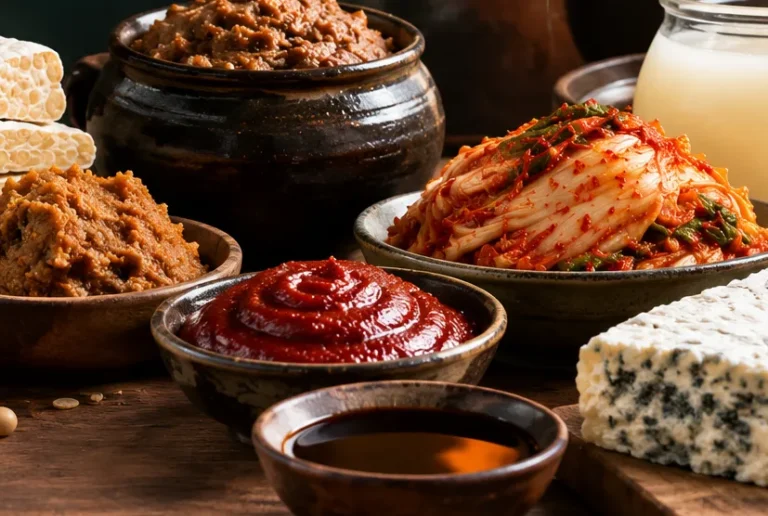
Not all mold is spoilage. How Aspergillus, Rhizopus and koji molds transform grains and beans in traditional fermented foods.

There is nothing complicated about sauerkraut. Cabbage. Salt. Time. Three ingredients. No starter culture. No special equipment. No heat. And yet what emerges from that simplicity is one of the most well-documented, most studied, and most misunderstood fermentation processes in Western food science. Sauerkraut is not pickled cabbage. It is not preserved in vinegar. It…
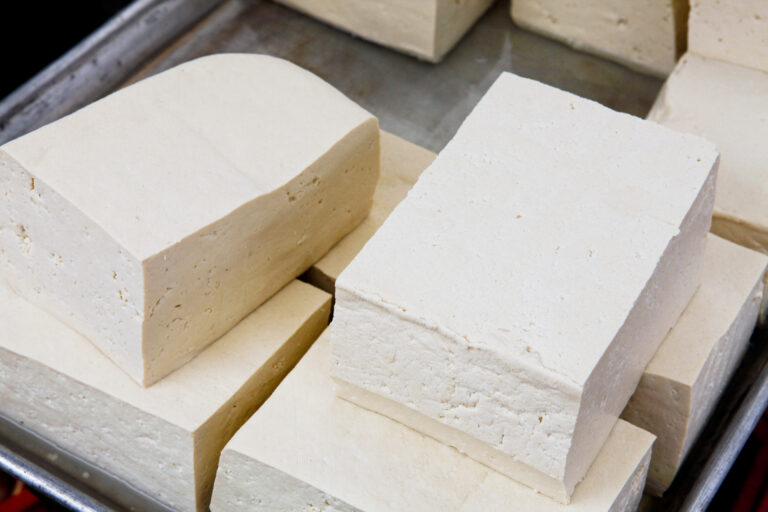
Tofu can be fermented too. How sufu and stinky tofu are made, the molds and bacteria involved, and what changes in the curd.
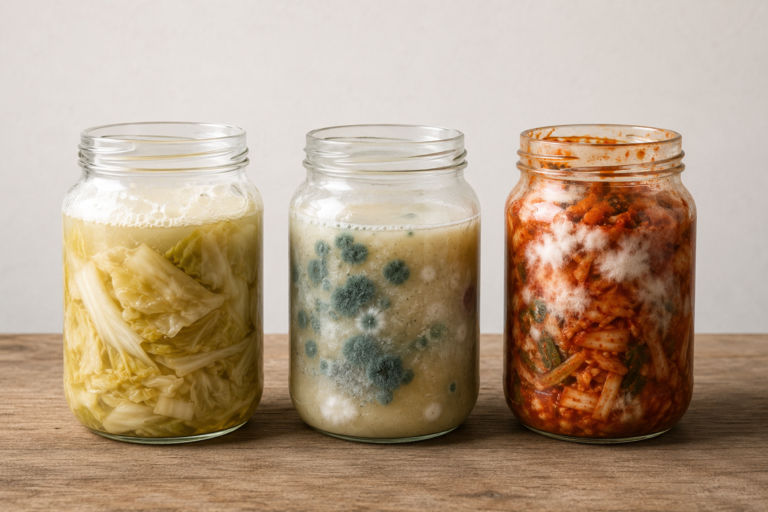
Mold, slime, mushy texture, bad smells, too much gas: how to diagnose common home fermentation failures and what to do about each.
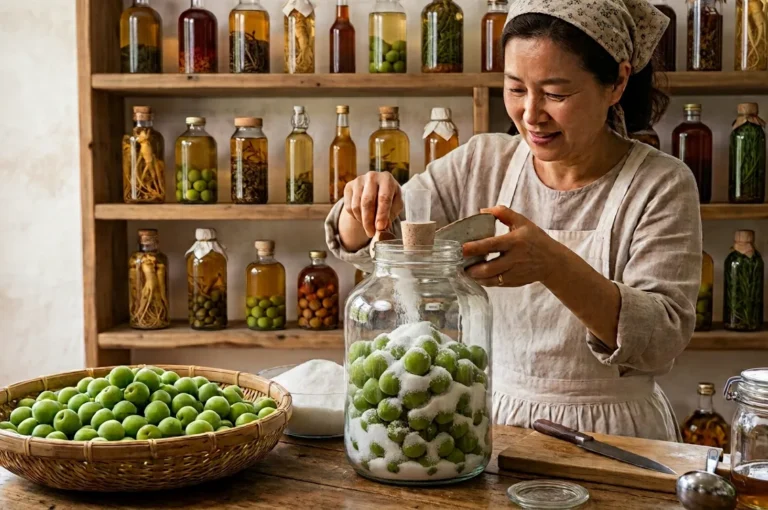
Maesil-cheong is green plum steeped in sugar. What happens in the jar, how to make it, how Koreans use it, and what the “enzyme” label means.