Tofu Fermentation: How Microorganisms Turn Soybean Curd Into Something Entirely Different
Most people think of tofu as the opposite of fermentation. Plain. Neutral. A blank canvas that absorbs whatever flavors you put on it.
But across East and Southeast Asia, tofu has been fermented for centuries — transformed by molds, bacteria, and time into foods that bear almost no resemblance to the mild white block you started with. Creamy, pungent, intensely savory, sometimes aggressively funky. Fermented tofu is closer to aged cheese than to the fresh tofu sitting in water at your grocery store.
Tofu fermentation is one of the most dramatic examples of what microorganisms can do to a simple food. And understanding it connects directly to the broader science of soybean fermentation that runs through Korean, Chinese, Japanese, and Indonesian food traditions.
What Is Tofu Fermentation?
Tofu fermentation refers to any process in which microorganisms — typically molds, sometimes bacteria — are allowed to grow on or in tofu, breaking down its proteins, fats, and carbohydrates into smaller, more flavorful compounds.
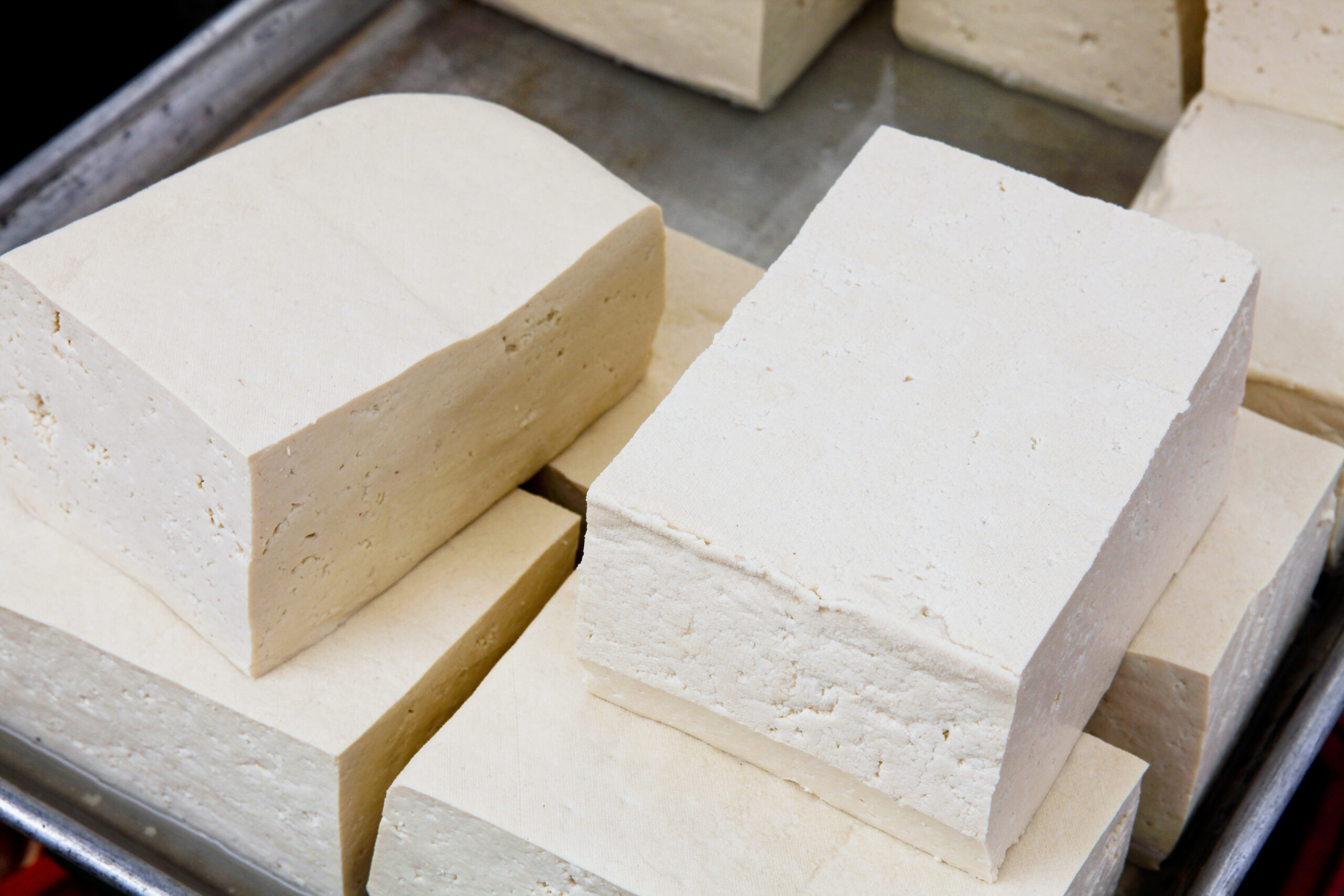
Fresh tofu is made by coagulating soymilk with a coagulant (nigari, gypsum, or acid) and pressing the curds into a block. At this stage, the proteins are largely intact. The flavor is mild. The texture is firm or soft, depending on how much water was pressed out.
Fermentation changes all of that.
Mold enzymes — particularly proteases — break soy protein into peptides and free amino acids. Lipases break fats into fatty acids. The texture shifts from firm to creamy. The flavor moves from neutral to intensely savory, salty, and complex. In some preparations, the aroma becomes so strong that the food is called “stinky tofu” without any irony.
This is the same fundamental process that occurs in cheese ripening. Microorganisms colonize a protein-rich substrate, produce enzymes, and those enzymes transform the food over time. Fermented tofu has been called “Chinese cheese” for exactly this reason — the parallel is not metaphorical. The biochemistry is genuinely similar.
Sufu: The Classic Mold-Fermented Tofu
Sufu (also called furu, doufu-ru, or fermented bean curd) is the most widely known form of tofu fermentation. It originated in China, with records dating back to at least the Wei Dynasty (220–265 CE), and spread across East and Southeast Asia over centuries.
The production of sufu involves two distinct fermentation phases — a structure that will be familiar to anyone who understands Korean jang production.
Phase one: pehtze (mold growth). Fresh tofu blocks are cut into small cubes and inoculated with mold — most commonly Actinomucor elegans, though Mucor and Rhizopus species are also used depending on the region and tradition. The mold grows over the surface of the tofu over three to five days at controlled temperature and humidity, forming a dense white mycelium that envelops each cube.
During this phase, the mold produces extracellular enzymes — proteases, lipases, and amylases — that begin breaking down the tofu’s proteins and fats. The mold mycelium also physically binds the tofu, giving it structural integrity that will be important in the next phase.
Phase two: brining and ripening. The mold-covered cubes are placed in jars and submerged in a salt brine, often mixed with rice wine and sometimes with chili, sesame oil, or other flavorings. The high salt concentration (typically 10 to 15 percent) halts active mold growth but does not deactivate the enzymes the mold already produced.
Over weeks to months, those enzymes continue working in the brine — breaking proteins into free amino acids (including glutamic acid, the compound behind umami), and breaking fats into fatty acids that contribute to the characteristic aroma. The texture gradually transforms from firm tofu into something creamy and spreadable.
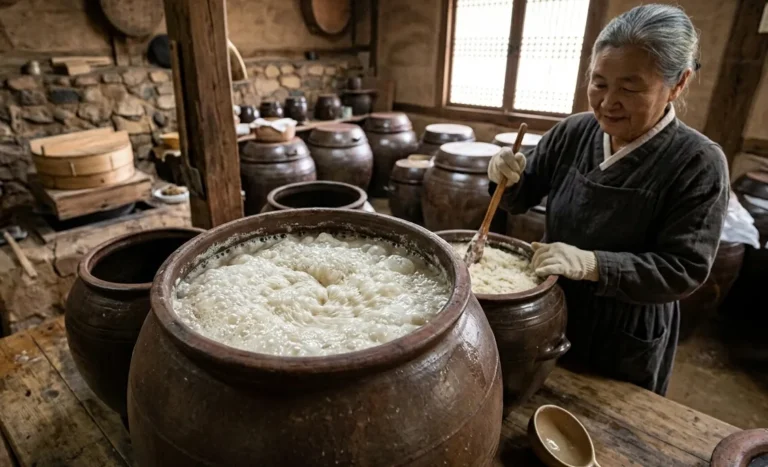
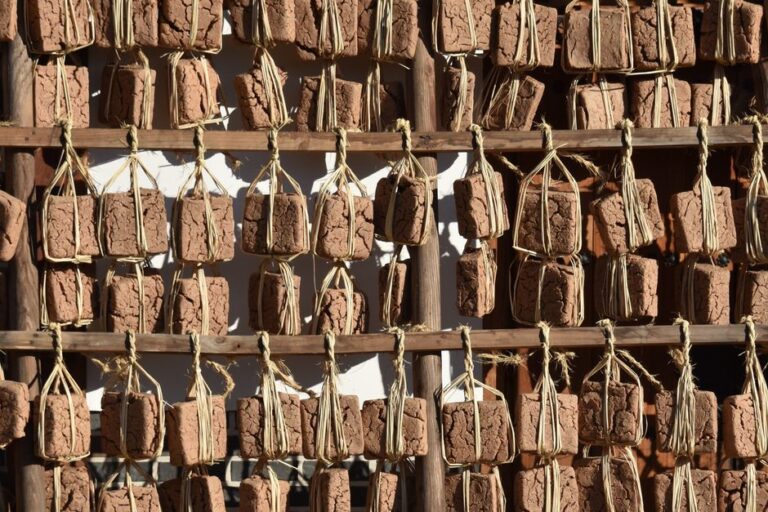
This two-phase structure — solid-state mold fermentation followed by brine aging — is remarkably similar to the traditional Korean process for making doenjang. In doenjang production, meju (mold-fermented soybean blocks) is aged in salt brine. In sufu production, pehtze (mold-fermented tofu cubes) is aged in salt brine. Different starting material, similar microbial strategy.
Stinky Tofu: Bacterial Fermentation at the Extreme
If sufu is the refined end of tofu fermentation, stinky tofu (chou doufu) is the other end — unapologetically pungent, and one of the most polarizing fermented foods in the world.
Stinky tofu is made by soaking fresh tofu in a fermented brine that can contain fermented vegetables, bamboo shoots, shrimp, mustard greens, and various herbs. The brine itself is the product of months or even years of microbial activity — a complex community of bacteria that includes Bacillus species, Enterococcus, and various lactic acid bacteria.
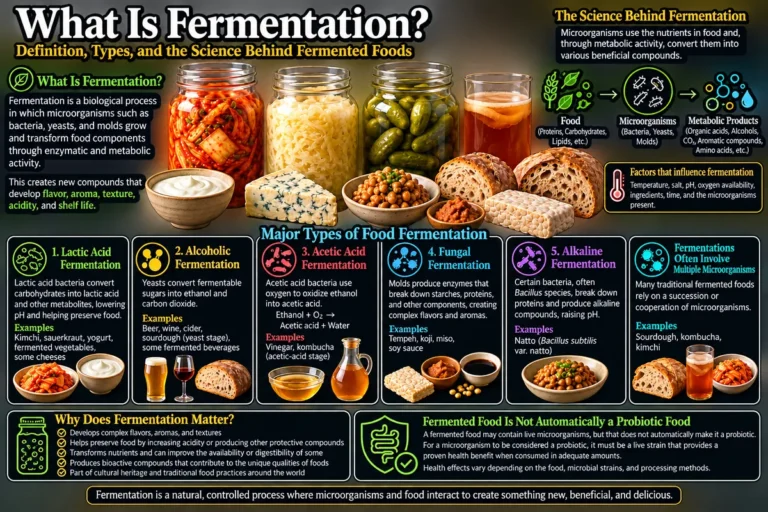
The fermentation of stinky tofu is classified as alkaline fermentation. While lactic acid bacteria produce acid in the early stages, protein-degrading Bacillus species eventually dominate. Their proteases break soy protein into amino acids and peptides, releasing ammonia in the process. The pH rises to 8 or 9 — the opposite direction from the acid fermentation of kimchi or sauerkraut.
The smell comes primarily from the ammonia and from volatile sulfur compounds produced during protein breakdown. The flavor, however, is deeply savory — concentrated umami from the accumulated free amino acids, balanced by the salt in the brine.
This is a useful reminder that not all fermentation produces acid. Alkaline fermentation — also seen in natto and in the early stages of Korean meju production — is a distinct category with its own microbial logic, its own flavor profile, and its own relationship to protein breakdown.
How Tofu Fermentation Compares to Other Soybean Fermentations
Soybeans are one of the most widely fermented substrates in the world. Tofu fermentation is one branch of a much larger tree.
Sufu (fermented tofu): Mold grows on coagulated soy protein (tofu), followed by brine aging. The starting material is already processed — the soybeans have been made into soymilk, coagulated, and pressed. Fermentation acts on a relatively refined substrate.
Doenjang / miso (fermented soybean paste): Mold and bacteria ferment whole or crushed cooked soybeans. In Korean doenjang, meju blocks are fermented with Bacillus subtilis and Aspergillus, then aged in salt brine. The starting material is minimally processed whole beans, and the fermentation is more complex and longer than sufu production.
Tempeh: Rhizopus oligosporus grows through cooked soybeans, binding them into a firm cake within 24 to 48 hours. No salt brine. No months of aging. The fermentation is fast, and the product is eaten fresh. The mold breaks down some proteins and anti-nutritional factors, but the transformation is less dramatic than in sufu or doenjang.
Natto / cheonggukjang: Bacillus subtilis ferments cooked soybeans rapidly (one to three days), producing intense glutamic acid, a sticky polyglutamic acid texture, and a strong ammonia aroma. Like stinky tofu, this is alkaline fermentation — protein breakdown that raises pH rather than lowering it.
Soy sauce (ganjang / shoyu): The liquid separated from brine-aged soybean fermentation. In Korean ganjang, this liquid is separated from doenjang after months of brine aging. In Japanese shoyu, koji-inoculated soybeans and wheat are fermented in brine with added yeast cultures.
Each of these products starts with the same raw material — soybeans — but the microorganisms, the processing method, and the fermentation conditions produce entirely different foods. Tofu fermentation occupies a specific niche: it starts with a more refined substrate (coagulated soy protein rather than whole beans) and produces a product that is closer in character to aged cheese than to any other soy ferment.
The Molds Behind Tofu Fermentation
The choice of mold determines the character of the finished product.
Actinomucor elegans is the most traditional mold for sufu production. It produces strong proteases and grows a dense, cohesive mycelium that holds the tofu cubes together during brining. The flavor it produces tends to be smooth and relatively mild for a fermented product.
Mucor species — particularly M. racemosus and M. hiemalis — are also used. They produce a slightly different enzyme profile and can contribute different aroma compounds to the finished sufu.
Rhizopus species appear in some regional sufu traditions and are the primary mold in tempeh production. Rhizopus grows faster than Actinomucor and produces strong amylases in addition to proteases.
In Okinawan tofuyo — the Japanese adaptation of fermented tofu — Monascus purpureus (red mold) is used alongside Aspergillus, producing the distinctive red color and a uniquely sweet, wine-like flavor that sets tofuyo apart from mainland Chinese sufu.
This diversity of molds producing different results from the same substrate is one of the most instructive aspects of tofu fermentation. The soybean did not determine the outcome. The microorganism did.
Regional Variations Across Asia
Fermented tofu is not a single product. It is a category that spans cultures and continents.
China: The birthplace of sufu. White sufu (bai furu) is the mildest. Red sufu (hong furu) is colored with red yeast rice and has a sweeter, wine-like character. Chili sufu incorporates Sichuan chili for heat. Stinky tofu varies dramatically by region — Changsha-style is deep-fried, Taiwanese-style is grilled or fried, Nanjing-style is served in broth.
Japan (Okinawa): Tofuyo uses Monascus and Aspergillus molds with awamori (Okinawan rice spirit) instead of salt brine. The result is lower in sodium and has a distinctive aged, almost wine-like flavor. Tofuyo is considered a delicacy rather than an everyday food.
Vietnam: Chao is the Vietnamese equivalent of sufu, typically made with rice wine and salt. It appears as a condiment alongside rice and other dishes.
Korea: Fermented tofu (balhyo dubu, 발효두부) is less traditionally prominent than in Chinese cuisine, but tofu does appear in fermented contexts — most notably when fresh tofu is added to kimchi jjigae made with aged kimchi, where it absorbs the fermentation-derived compounds from the surrounding broth. Korean cuisine applied its fermentation technology more extensively to whole soybeans (doenjang, cheonggukjang) and to vegetables (kimchi) than to tofu specifically.
The Biochemistry: What Actually Changes
The transformations during tofu fermentation are measurable and dramatic.
Protein breakdown: Free amino acid content increases substantially during fermentation. Glutamic acid — the primary umami compound — can increase by several hundred percent compared to fresh tofu. This is the source of the intense savory flavor that makes fermented tofu a condiment rather than a neutral ingredient.
Fat breakdown: Lipases produced by the mold break soy lipids into free fatty acids. Some of these fatty acids are volatile and contribute to the aroma — both the pleasant savory notes and, in stinky tofu, the less pleasant ones.
Texture change: The protein matrix of fresh tofu is a gel held together by calcium or magnesium bridges between soy protein molecules. As proteases break these proteins into smaller fragments, the gel structure weakens. The texture shifts from firm to soft to creamy. In well-aged sufu, you can spread it like butter.
Bioactive compounds: Some research has identified bioactive peptides in fermented tofu, including peptides with antioxidant or ACE-inhibitory activity in laboratory settings. However, these findings are from in vitro studies and should not be interpreted as clinical health benefits. Fermented tofu is food, not medicine.
Tofu Fermentation and the Bigger Picture
Tofu fermentation demonstrates several principles that apply across all fermented foods.
First, the same substrate can produce completely different foods depending on which microorganism you introduce. Soybeans become doenjang with Bacillus and Aspergillus. They become tempeh with Rhizopus. They become natto with Bacillus subtilis alone. Tofu becomes sufu with Actinomucor. The organism is the variable that determines the outcome.
Second, the two-phase fermentation structure — microbial growth phase followed by enzymatic aging phase — appears across multiple traditions. Korean doenjang, Chinese sufu, and many aged cheeses all follow this pattern. The microorganisms do their work first, producing enzymes. Then those enzymes do their work over time, transforming the food long after active microbial growth has stopped.
Third, fermentation can take a food that is nutritionally adequate but sensorially bland and turn it into something with concentrated flavor, complex aroma, and entirely new textural properties. Fresh tofu is useful. Fermented tofu is compelling.
That transformation — from useful to compelling — may be the best single-sentence summary of what fermentation does to food.
This content is for informational purposes only and is not medical advice.