How Vinegar Is Born: The 2-Stage Fermentation Process
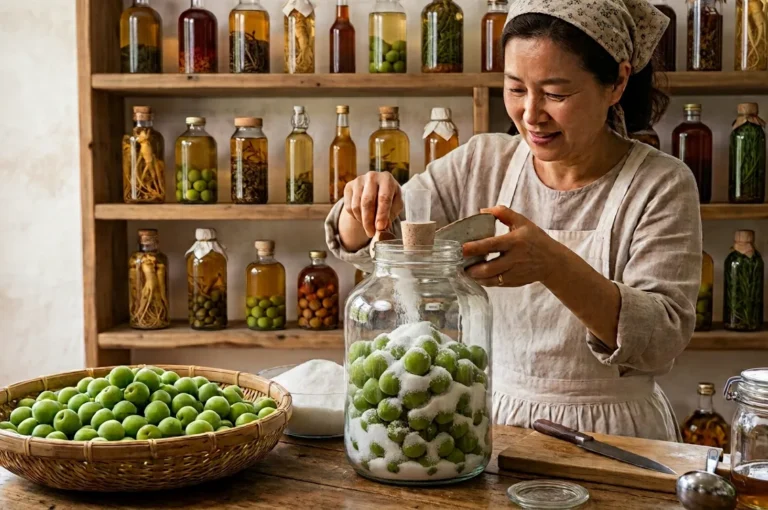
AI-generated illustration (not a photograph).
Vinegar is not a single fermentation. It is two.
The first stage is alcoholic fermentation. Yeasts convert sugars into ethanol and carbon dioxide. The second stage is acetic acid fermentation. Acetobacter bacteria oxidize the ethanol into acetic acid, the compound that gives vinegar its sour taste.
These two stages happen sequentially. The first requires anaerobic conditions. The second requires oxygen. Understanding this sequence explains why homemade fruit wine sometimes turns sour unexpectedly, and why that transformation is not spoilage but a second fermentation completing what the first one started.
Fermentation Doesn’t Stop After One Round
One of the biggest misconceptions when people first learn about fermentation is thinking it’s a single event. Grapes ferment into wine, wine sits around and changes — that’s the rough mental model most people have. But vinegar actually goes through two separate fermentations.
Stage 1 is alcoholic fermentation — the conversion of sugar into alcohol. Yeast (Saccharomyces cerevisiae and related species) consume sugars and produce alcohol along with carbon dioxide. This is how grape juice becomes wine and cooked rice becomes makgeolli. The key condition here: keep oxygen out. Yeast produces alcohol under anaerobic conditions.
Stage 2 is acetic acid fermentation — the conversion of alcohol into acetic acid. A different microorganism, Acetobacter, consumes that alcohol and produces acetic acid, which is the compound responsible for vinegar’s sharp sourness. This stage requires the opposite condition: oxygen. Acetobacter is aerobic — it needs air to work. That’s the crucial insight. The two stages require opposite conditions.
Both stages need to happen in sequence for real vinegar to form. Vinegar is made from alcohol, so both stages are needed. Acetic acid bacteria that act on sugar directly tend to make other acids, such as gluconic acid, not vinegar. The alcohol step also shapes vinegar’s aroma and character, which is part of why apple cider vinegar smells different from rice vinegar. The character of the vinegar comes from the alcohol it was made from.
Where Does Acetobacter Actually Come From?
This is the question most first-time vinegar makers get stuck on. Do you need to add Acetobacter? Or does it just appear? The answer is both.
In natural fermentation, Acetobacter is already present in the environment. It lives on fruit skins, wooden surfaces, and fermentation vessels. When you leave an alcohol-containing liquid open to the air, wild Acetobacter drifts in and starts colonizing. This is the logic behind traditional vinegar-making. Traditional vinegar makers reuse barrels and vessels, which can already carry acetic acid bacteria.
In more controlled modern methods, you inoculate by adding a starter vinegar — unpasteurized, naturally fermented vinegar that still contains live Acetobacter. A small amount added to your alcohol gives the bacteria a head start and makes the process more reliable.
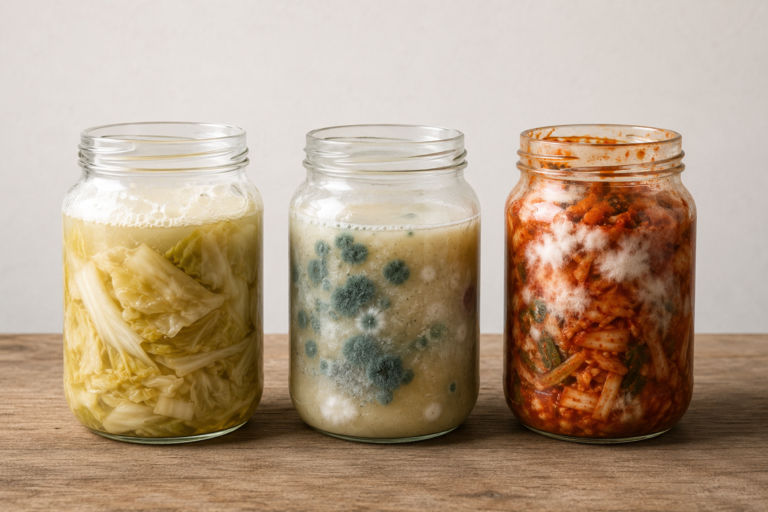
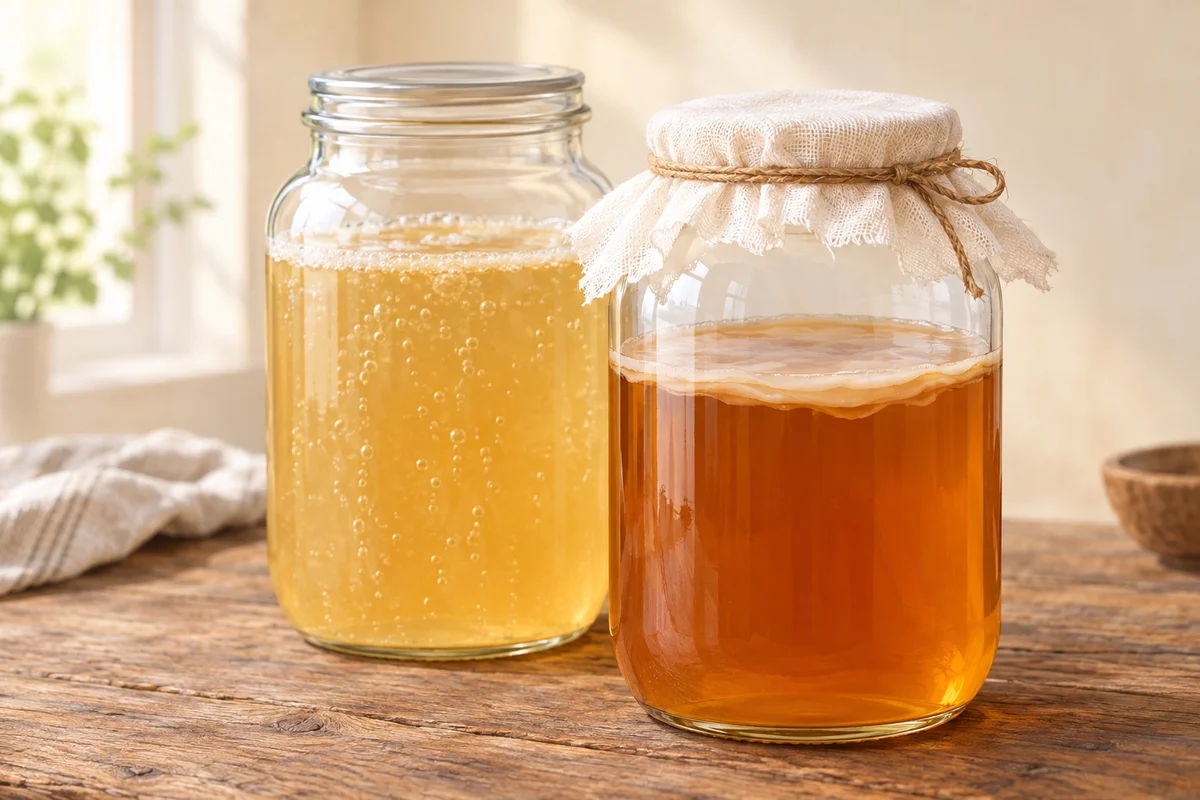
You can also see the fermentation working with your own eyes. A thin, whitish film will start forming on the surface of the liquid. That is the vinegar mother, a mat made by acetic acid bacteria, largely of cellulose that the bacteria produce. A smooth, thin, slightly gelatinous film is normal, and many beginners mistake it for mold. Mold looks different: fuzzy, dry, or powdery spots in white, green, blue, or black. If you see mold, discard the whole batch. A healthy mother can be used to start your next batch.
Practical Tips for Making Vinegar at Home
Knowing the theory helps, but most failures happen because of small details that get overlooked. Here’s what actually matters.
Tip 1 – Keep Alcohol Concentration Between 5–8%
Acetobacter works best within a specific alcohol range. Too low and there’s not enough fuel; fermentation will be weak. Too high and the alcohol itself becomes toxic to the bacteria. Many home guides suggest about 5–8% ABV. If your homemade wine or fruit brew came out stronger than that, dilute it with water before starting acetic fermentation. Starting with anything above 10% ABV often leads to slow or failed fermentation.
Tip 2 – Open-Air Doesn’t Mean Fully Uncovered
Acetobacter needs oxygen, but leaving a container completely open invites contamination from dust and unwanted microbes. The traditional approach is to cover the opening with breathable cotton cloth or Korean hanji paper, secured with a rubber band. Air passes through; debris and insects don’t. Fruit flies in particular are strongly attracted to vinegar smells, and they can carry unwanted microbes into the jar. A tight cloth cover keeps most flies and debris out, though it doesn’t make contamination impossible.
Tip 3 – Stir Gently Once a Day to Speed Things Up
Acetobacter congregates at the surface of the liquid, where oxygen is available. If the bacteria stay only at the top, fermentation is slow. Giving the liquid one gentle stir per day with a clean spoon can help oxygen reach more of the liquid. Be gentle, since you don’t want to break up the vinegar mother mat. Timing varies a lot with temperature, alcohol level, and starter, so don’t rely on a fixed number of days.
Tip 4 – Aim for 25–30°C (77–86°F)
Acetobacter likes warmth. Below 20°C (68°F), fermentation slows significantly. Above about 35°C (95°F), many strains slow down or struggle. Korean summers are essentially ideal for making vinegar. In winter, you’ll need to actively manage the temperature of your fermentation space. If your ferment seems stuck, check the temperature first.
Tip 5 – Check Acidity, but Don’t Over-Trust pH Strips
Taste and smell are the first checks: the vinegar should be clearly sour, with the smell of alcohol faded. A pH strip can support that, and a reading around 3.5 or lower fits the sourness of vinegar. But pH strips are only a rough guide. The UC Master Food Preservers note that pH strips are not reliable for food safety, and that vinegar for canning must be at least 5% acidity, which homemade vinegar can’t guarantee. Use homemade vinegar for eating, not for canning or preserving other foods.
Recipe: Homemade Apple Cider Vinegar
Apple cider vinegar is the easiest starting point for beginners. Apples have good natural sugar content and develop a pleasant aroma after acetic fermentation.
Ingredients
- 1 kg ripe apples
- 500 ml still water
- 100 g sugar
- 100 ml unpasteurized natural fermented vinegar (starter vinegar)
- Pinch of salt (optional)
Equipment
- 2–3 liter glass jar
- Breathable cotton cloth or hanji paper
- Rubber band
Steps
- Wash the apples thoroughly and chop them small, skin on. Remove the seeds and stems. The skins carry wild Acetobacter, so organic apples are preferred if available.
- Combine the chopped apples, sugar, and water in the glass jar. Stir until the sugar fully dissolves.
- Cover the opening with breathable cloth and secure with a rubber band. Place in a warm spot at 25–28°C (77–82°F) for 7–10 days. This is Stage 1 — alcoholic fermentation. Stir once daily. Bubbling is a good sign; it means fermentation is active.
- After 7–10 days, strain out the apple solids. At this point, the liquid should smell faintly of alcohol and may still have some fizz.
- Add 100 ml of starter vinegar to the strained liquid. Cover again with cloth and ferment at the same temperature for 20–30 days. This is Stage 2 — acetic acid fermentation. Stir gently once a day. A thin white film forming on the surface means fermentation is on track.
- When it tastes clearly sour and no longer smells of alcohol (a pH strip reading around 3.5 or lower is a rough supporting sign), the vinegar is ready. Strain it, transfer it to bottles, and store it in the refrigerator. If you see mold at any point, discard it.
The finished vinegar works well in salad dressings, diluted as a drink (10 parts water to 1 part vinegar), or added at the end of cooking for brightness and acidity.
The Philosophy Behind Vinegar
Something becomes clear when you make vinegar. Fermentation isn’t about control — it’s about setting the right conditions. Give Acetobacter what it needs, and it does the work on its own. You’re not creating sourness directly. You’re creating the environment where microorganisms create it for you.
Vinegar isn’t failed wine. It’s wine that moved to its next stage. The progression from Stage 1 to Stage 2 fermentation follows a direction that nature already has built in. Leave alcohol exposed to air long enough, and it will eventually become acetic acid. Humans figured this out thousands of years ago, learned to guide the process, and built entire culinary traditions around it.
Most vinegar sold today is also made by fermentation, but on an industrial scale. In the submerged method, air is pumped through large tanks, and alcohol can turn to vinegar within hours, compared with months for the traditional slow method (Encyclopedia.com). Even distilled white vinegar is made by fermentation first and then distilled. Fast production, filtering, and often pasteurization mean there is little of the aging that gives slow-made vinegar its depth, so the flavor is simpler.
Making vinegar teaches you both stages of fermentation through direct experience. You learn how to make alcohol, then you watch that alcohol become something else entirely. For anyone starting out with fermentation, this is one of the best entry points there is. Once the two-stage logic makes sense, every other fermented food becomes easier to understand.
If you have leftover fruit wine sitting around, don’t throw it out. Drape a piece of cotton cloth over the jar, secure it, and set it somewhere warm. Open it in three or four weeks. You’ll likely find vinegar. That’s the second stage of fermentation, happening right in your kitchen.
About This Guide
The author, Hoon Kwak, has worked in food distribution for about 20 years. He has not personally made vinegar from every recipe on this site. This guide describes the two-stage fermentation and a basic method that follows common home-fermentation guidance. It is a starting point, not a tested formula.
Frequently Asked Questions
Why did my fruit wine turn into vinegar?
Wild acetic acid bacteria, when they get air, convert alcohol into acetic acid. See how to make traditional Korean vinegar at home.
Is the film on top mold?
A smooth, thin, gelatinous film is likely the vinegar mother. Fuzzy, dry, or colored spots are mold, and then the batch should be discarded.
Can I use homemade vinegar for canning?
No. Its acidity is unknown, and canning recipes require vinegar of at least 5% acidity.
How is vinegar different from alcohol fermentation?
Alcohol fermentation is done by yeast without oxygen. Vinegar adds a second step in which acetic acid bacteria need oxygen. See the science of makgeolli for the first stage, and the science of acetic acid fermentation.
Sources
- Vinegar. Encyclopedia.com. encyclopedia.com
- UC Master Food Preservers, San Joaquin. Preservation Notes: vinegar. ucanr.edu
Cautions and Disclaimer
The fermented vinegar described in this article is a fermented food intended for general healthy eating. It is not recommended as a treatment or preventive measure for any specific medical condition. If you have a sensitive digestive system or experience acid reflux symptoms, consult a qualified healthcare professional before consuming. Vinegar is highly acidic and may irritate the stomach lining if consumed undiluted on an empty stomach. Always dilute before drinking.
This content is for informational purposes only and is not medical advice.