Vinegar Fermentation: The Science of Acetic Acid and Korean Traditional Vinegar
Vinegar is one of the oldest fermented products in human history. It is also one of the most misunderstood.
Most people think of vinegar as a cooking ingredient — something you buy in a bottle and pour onto food. But vinegar is a fermentation product, and understanding how it is made reveals a process that is fundamentally different from the lactic acid fermentation behind kimchi or the alcohol fermentation behind makgeolli. For a closer look at the two-stage fermentation mechanism itself, see how vinegar is born.
Korean traditional vinegars — particularly persimmon vinegar (gam sikcho) and brown rice vinegar (hyeonmi sikcho) — demonstrate this process with particular clarity.
Vinegar Is a Two-Stage Fermentation
This is the most important thing to understand about vinegar, and it is the thing most people miss.
Vinegar requires two separate fermentation stages, performed by two different groups of microorganisms, in sequence.
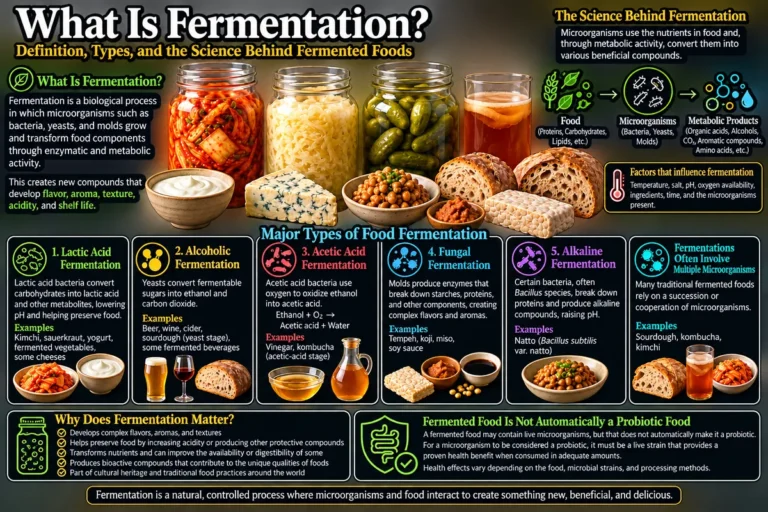
Stage one: alcohol fermentation. Yeasts convert sugars into ethanol (alcohol) and carbon dioxide. This is the same process that produces wine, beer, and makgeolli. Without this stage, there is no substrate for vinegar production.
Stage two: acetic acid fermentation. Acetic acid bacteria — primarily from the genus Acetobacter — oxidize ethanol into acetic acid. This is the compound that gives vinegar its sour taste and its preservative properties.
The chemistry is straightforward: ethanol + oxygen → acetic acid + water. But the biology is more complex than the equation suggests.
Acetic acid bacteria are obligate aerobes — they require oxygen to function. This is why vinegar fermentation happens at the surface of the liquid, where the bacteria form a film (sometimes called the “mother of vinegar”) at the air-liquid interface. Submerge the bacteria, cut off their oxygen, and the process stops.
This is the opposite of alcohol fermentation, where many yeasts work best in low-oxygen environments. The two stages have contradictory oxygen requirements, which is why they must happen sequentially rather than simultaneously.
Korean Persimmon Vinegar: A Case Study
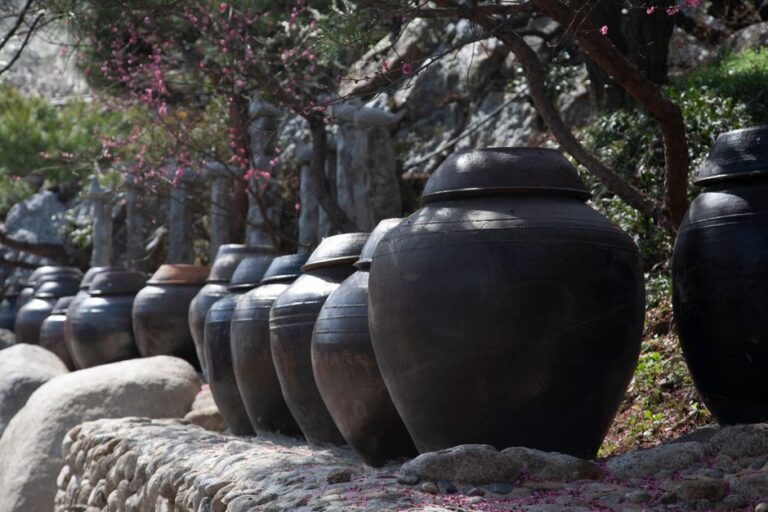
Persimmon vinegar (gam sikcho, 감식초) is one of the most traditional Korean vinegars, made primarily in southern regions where persimmon trees are abundant.
The process begins with ripe persimmons. Persimmons are naturally high in sugar — often 15 to 20 percent by weight when fully ripe — which makes them an excellent substrate for the first fermentation stage. Wild yeasts present on the fruit skin begin converting those sugars into alcohol once the fruit is crushed and placed in a jar.
Over several weeks, the alcohol concentration rises. When it reaches roughly 5 to 8 percent, the environment becomes favorable for acetic acid bacteria, which begin converting the alcohol into acetic acid. This transition can happen naturally if the jar is loosely covered, allowing oxygen access to the surface.
The entire process — from fresh persimmon to finished vinegar — can take three to six months or longer, depending on temperature and conditions. The result is a vinegar with a complex flavor profile that reflects both the fruit’s original character and the metabolic products of two sequential fermentations.
This is fundamentally different from industrial vinegar production, which uses selected bacterial cultures, forced aeration, and temperature control to complete the acetic acid fermentation in days rather than months. The speed is different. The microbial community is different. And the flavor complexity is different.
Brown Rice Vinegar and Grain-Based Fermentation
Korean brown rice vinegar (hyeonmi sikcho) follows the same two-stage logic but with a grain substrate instead of fruit.
Grain introduces an additional step. Rice starch must first be broken down into sugars before yeast fermentation can begin. This saccharification step — typically accomplished through nuruk or koji enzymes — adds a third microbial process to the sequence.
So grain-based vinegar actually involves three transformations: starch → sugar (by mold enzymes), sugar → alcohol (by yeasts), alcohol → acetic acid (by acetic acid bacteria). Three different groups of microorganisms, working sequentially, each dependent on the output of the previous stage.
This cascade is one of the more elegant examples of microbial cooperation in food fermentation. No single organism can convert rice starch into acetic acid. The transformation requires a relay — each organism performing one step and creating the conditions for the next.
The Mother of Vinegar
If you have ever made vinegar at home, or seen a jar of unpasteurized vinegar, you may have noticed a thick, gelatinous film floating on the surface. This is the “mother of vinegar” — a cellulose biofilm produced by acetic acid bacteria, primarily Acetobacter species.
The mother is not the vinegar itself. It is the habitat where the bacteria live and work. The cellulose matrix holds the bacteria at the air-liquid interface, exactly where they need to be to access both the ethanol below and the oxygen above.
The mother can be transferred from one batch to the next as a starter — similar to how a sourdough starter carries its microbial community from one bread to the next. Traditional Korean vinegar makers often maintained a mother across many batches, effectively cultivating a stable community of acetic acid bacteria adapted to their particular substrate and environment.
Why Oxygen Changes Everything
The oxygen requirement of acetic acid fermentation has practical consequences that separate vinegar making from most other fermentations.
In kimchi, sauerkraut, and most lactic acid fermentations, you want to minimize oxygen exposure. Anaerobic or low-oxygen conditions favor lactic acid bacteria and suppress aerobic spoilage organisms.
In vinegar, you need oxygen. Without it, the acetic acid bacteria cannot oxidize ethanol. This is why traditional vinegar is fermented in wide-mouth vessels with cloth covers rather than sealed jars. The wide opening maximizes the surface area where gas exchange can occur.
But there is a limit. Too much airflow can introduce unwanted microorganisms or cause excessive evaporation. The traditional solution — a cloth cover that allows gas exchange while blocking insects and debris — is a simple but effective environmental control.
This oxygen dependency also explains a common home fermentation failure. People sometimes try to make vinegar in sealed jars and wonder why nothing happens. The yeasts produced alcohol just fine in the sealed environment, but the acetic acid bacteria never had the oxygen they needed to do the second stage.
Vinegar as Preservation
Acetic acid is an effective antimicrobial agent. At the concentrations found in vinegar — typically 4 to 8 percent acetic acid — most pathogenic bacteria cannot survive. This is why vinegar has been used as a preservative for thousands of years, across virtually every food culture.
Korean cuisine uses vinegar in pickled preparations, dipping sauces, and as a seasoning. The acidity provides flavor contrast in the same way that lactic acid from kimchi fermentation does, but the sensory character is different — sharper, more volatile, and without the rounded complexity that lactic acid fermentation produces.
A Different Kind of Fermentation
Vinegar fermentation is worth understanding because it breaks several assumptions that people develop from learning about kimchi or soybean fermentation.
It requires oxygen rather than excluding it. It depends on sequential rather than simultaneous microbial activity. It converts an already-fermented product (alcohol) into something else entirely. And it demonstrates that fermentation is not one process but a family of processes, each with its own microbial logic, its own environmental requirements, and its own relationship to time.
Korean traditional vinegars carry this lesson clearly. A bottle of aged persimmon vinegar represents months of sequential microbial work — sugars becoming alcohol becoming acid — with no step skippable and no shortcut that produces the same result.
This content is for informational purposes only and is not medical advice.
Frequently Asked Questions
What is the difference between gam sikcho and regular vinegar?
Gam sikcho (persimmon vinegar) is made by fermenting ripe persimmons directly, allowing wild yeasts to convert their natural sugars to alcohol before acetic acid bacteria complete the second fermentation. Regular commercial vinegar is often made from diluted alcohol and fermented industrially under controlled conditions, which can result in a less complex flavor profile.
Can I make Korean traditional vinegar at home?
Yes, though it requires patience. Traditional vinegar making involves two sequential fermentations: first converting sugars to alcohol, then allowing acetic acid bacteria to oxidize that alcohol into vinegar. This typically takes weeks to months depending on temperature and the starting ingredients.
Why does homemade fruit wine sometimes turn sour unexpectedly?
This is usually acetic acid fermentation happening naturally. If a fermenting wine is exposed to oxygen, airborne Acetobacter bacteria can colonize it and begin converting the alcohol into acetic acid. This is not spoilage in the harmful sense – it is a second, distinct fermentation process completing what the first one started.
Is unfiltered traditional vinegar safe to drink?
Unfiltered vinegar containing visible strands or cloudiness, sometimes called the vinegar mother, is generally safe and is actually a sign of active fermentation culture. However, anyone with specific health conditions should consult a professional before consuming any fermented product regularly.