Kimchi: Complete Guide to Korea’s Most Famous Fermented Food
A sourced guide to kimchi: where it came from, how it ferments, the main types, what human research shows about health, and how to store it.

A sourced guide to kimchi: where it came from, how it ferments, the main types, what human research shows about health, and how to store it.

Baechu kimchi is the kimchi most people picture: napa cabbage, salted, coated in a red paste of chili, garlic, and ginger, then left to ferment. The recipe below makes one large cabbage, about 2 kg (4.5 lb), which fills a 2-liter container. It uses a classic method with salted-then-rinsed cabbage, a sweet rice paste, and…
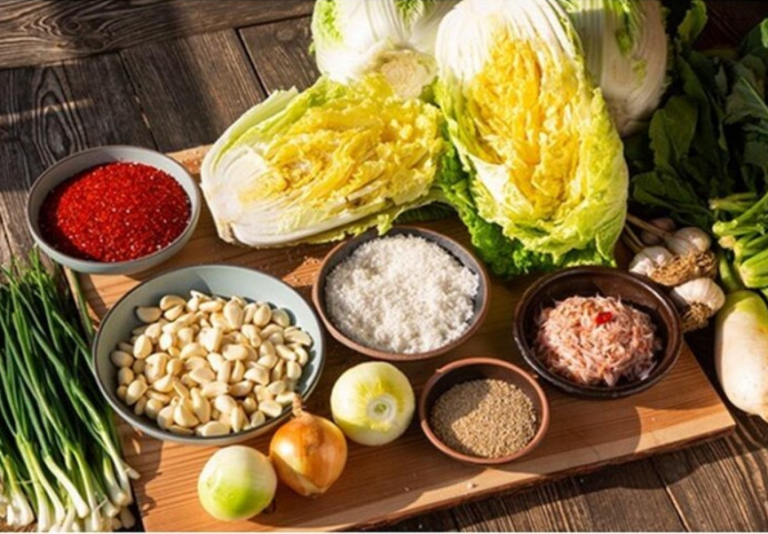
How to use ready-made kimchi seasoning: what is in it, making simple kimchi with it, other dishes it suits, and when the result is really fermented.
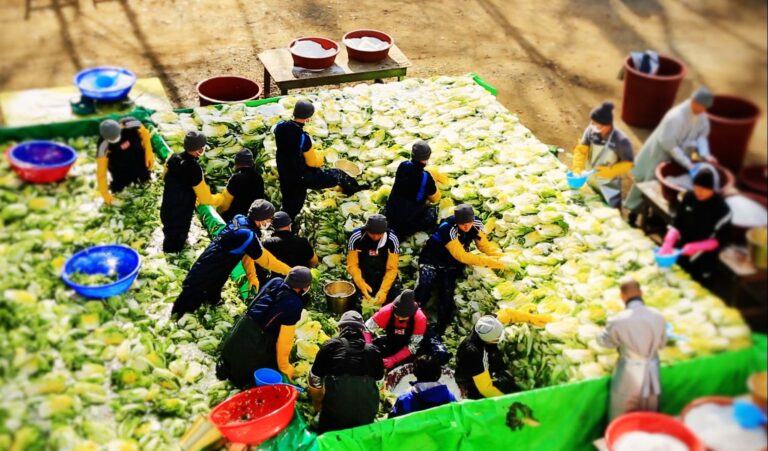
Kimjang is Korea’s late-autumn kimchi making. Why the timing matters, what happens inside the jar, and the roles of salt, jeotgal and rice paste.
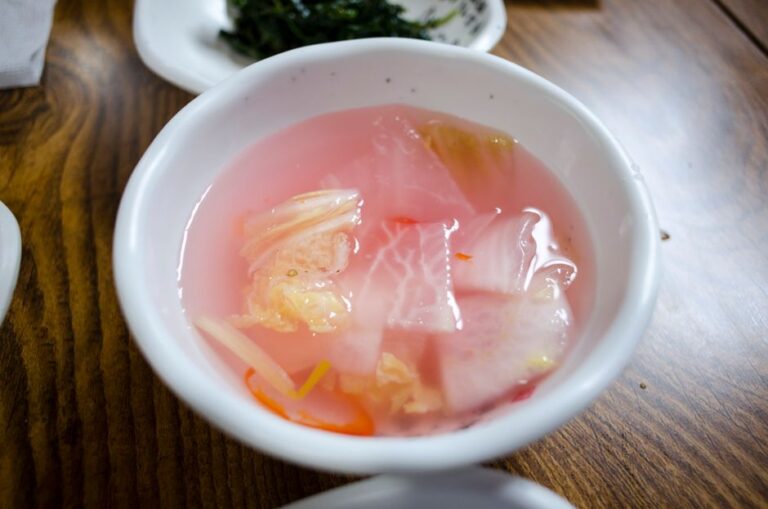
What happens in water kimchi: what ferments, why the brine turns sour and bubbly, how temperature changes it, and how to tell when it is ready.
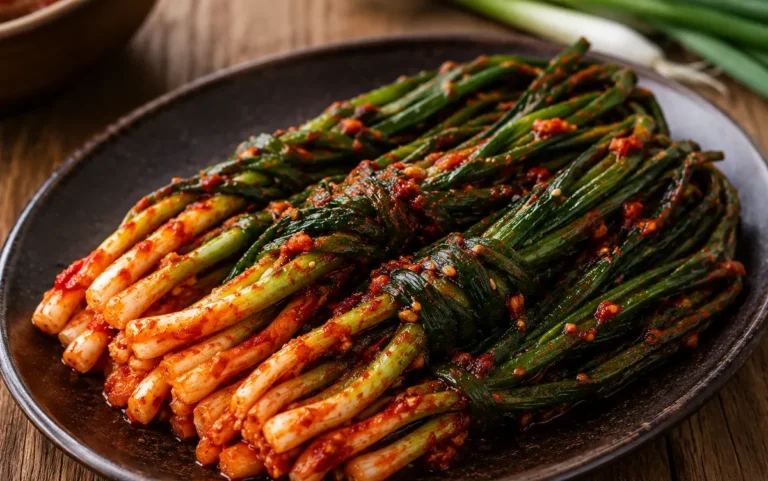
What happens when green onions ferment: how they differ from cabbage, the role of salt, why pa kimchi suits barbecue, and how to make it.

Mukeunji (묵은지, also mugunji) is napa cabbage kimchi aged for months or years until deeply sour and soft. How it compares with fresh kimchi, how long it takes, and how to cook it.

Oi sobagi is cucumber kimchi: scored, stuffed with a spicy filling and ready the same day. Why it ferments fast, and a 10-minute recipe.
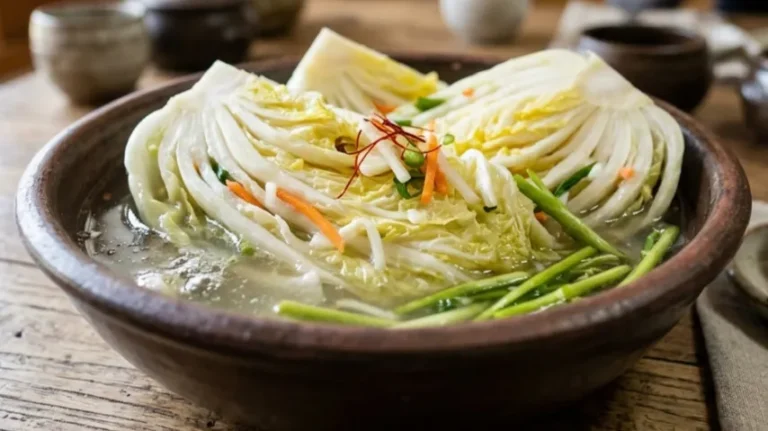
Baek kimchi is kimchi made without chili. What it tastes like, how it ferments, and why it suits people who cannot eat spicy food.
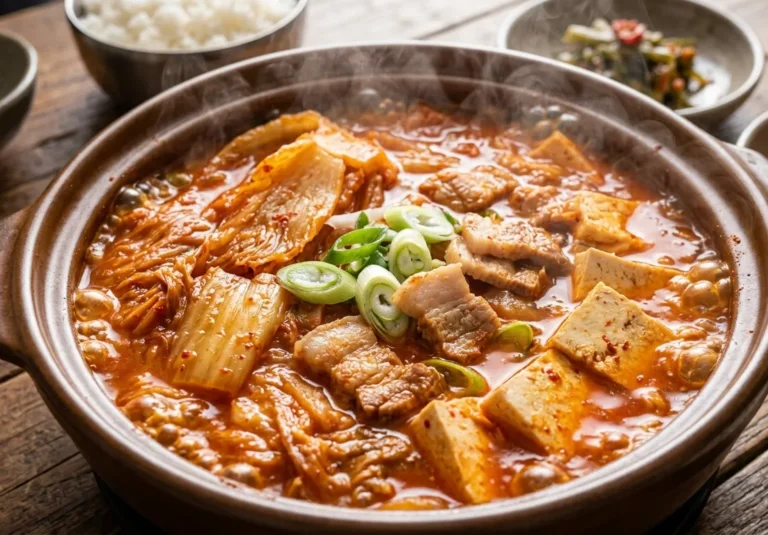
Kimchi jjigae is built on well-fermented kimchi. Why sour kimchi makes the best stew, and a step-by-step recipe.