Water Kimchi: What Is Really Happening Inside the Jar?
Water kimchi is easy to underestimate.
There is no thick red paste covering the vegetables. The seasoning is light, the vegetables are cut into small pieces, and most of what you see in the jar is simply water.
But leave it at room temperature for a while and that water starts to change.
The taste becomes slightly sour. The smell becomes deeper. Sometimes you can see tiny bubbles in the liquid.
Something is happening inside the jar.
That something is fermentation.
Water Kimchi Is More Than Vegetables in Salt Water
Nabak kimchi is one of the better-known types of mul kimchi, or water kimchi.
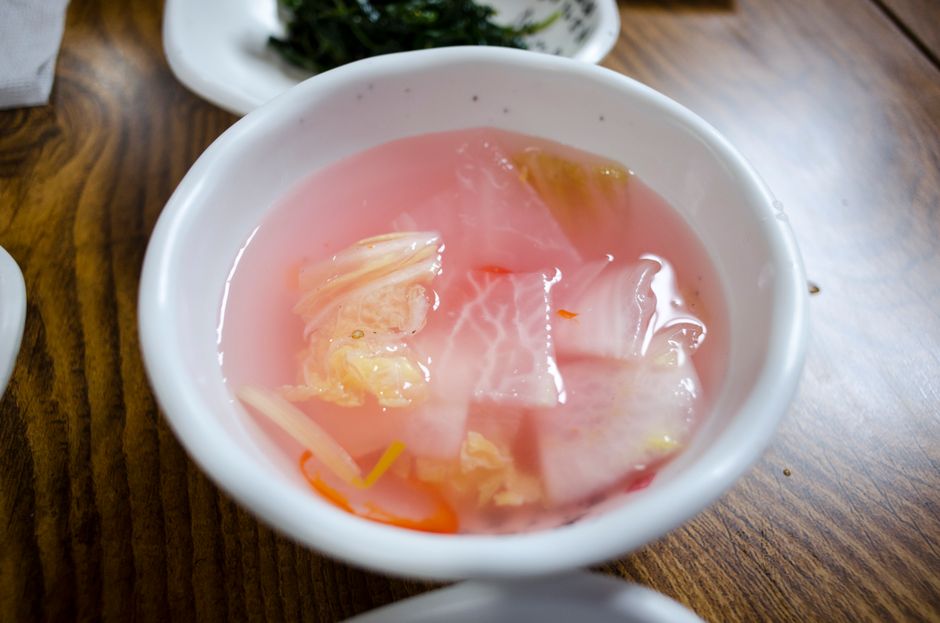
Napa cabbage and Korean radish are usually cut into thin pieces and placed in a lightly salted brine. Garlic, ginger, green onion and a small amount of gochugaru are often added.
The red pepper is not there to make the kimchi hot. In many versions, it is mainly used to give the broth a light pink or reddish color.
This is what makes nabak kimchi different from the kimchi most people are familiar with.
The liquid is not just something left over after the vegetables are seasoned.
The liquid becomes part of the food.
And during fermentation, it changes along with the vegetables.
So What Actually Ferments?
The answer is microorganisms.
Fresh vegetables already carry microorganisms on their surfaces. You don’t normally need to add a special starter culture to make traditional kimchi ferment.
Once the vegetables are mixed with salt and placed in the right conditions, different microorganisms begin competing for nutrients.
Among them are lactic acid bacteria.
Kimchi fermentation involves several groups of lactic acid bacteria, including microorganisms from the genera Leuconostoc, Weissella, and Lactobacillus. Which microorganisms become dominant can change depending on the ingredients, salt concentration, temperature and stage of fermentation.
This is one reason two batches of kimchi made from the same recipe don’t always taste exactly the same.
Fermentation is not a fixed chemical reaction.
It is a biological process.
Salt Does More Than Add Flavor
Salt is one of the most important parts of kimchi fermentation.
When cabbage and radish are salted, water moves out of the vegetable cells. This changes the environment around the microorganisms and also helps create the brine.
But salt does not simply “make fermentation happen.”
The concentration matters.
Too little salt can change the microbial balance and the texture of the vegetables. More salt can slow microbial growth and change the speed and character of fermentation.
This is why changing the amount of salt in a kimchi recipe can produce a surprisingly different result.
You are not just changing the taste.
You are changing the environment in which the microorganisms live.
Why Does the Water Become Sour?
This is probably the most noticeable change in water kimchi.
Freshly made nabak kimchi doesn’t have much acidity. It tastes mostly like salted vegetables with the flavor of garlic, ginger and other seasonings.
Then, over time, the taste starts to change.
Lactic acid bacteria use carbohydrates available in the vegetables and produce organic acids and other compounds during fermentation.
As acidity increases, the pH decreases.
That is where the familiar sour taste comes from.
It isn’t vinegar that makes properly fermented water kimchi sour.
The microorganisms are doing the work.
And the change happens gradually.
At first you may barely notice it. A day later the difference can be obvious.
What About Those Little Bubbles?
Sometimes a jar of water kimchi develops tiny bubbles.
That can happen because some microorganisms produce carbon dioxide during fermentation.
The amount can vary considerably depending on the microorganisms involved and the fermentation conditions.
So bubbles can be a sign that fermentation is active, but they should not be used by themselves to decide whether kimchi is ready or safe to eat.
Taste, smell, appearance and texture all matter.
And if the food develops obvious mold or a clearly rotten or abnormal smell, it should not be eaten simply because it is “fermented.”
Fermentation is not the same thing as spoilage.
Knowing the difference matters.
Temperature Can Change the Whole Process
This is where many home recipes become misleading.
You will often see instructions such as “leave it out for two days.”
But two days in a cool kitchen is not the same as two days in a warm kitchen.
Temperature affects microbial growth, and that changes the speed of fermentation.
A warm environment can make fermentation move much faster. A cooler environment can slow it down considerably.
That is why I don’t think fermentation should be treated like baking, where you can simply follow a fixed time and expect the same result every time.
With kimchi, you need to pay attention to the food.
Taste it.
Smell it.
Look at the vegetables.
The goal is not to reach a particular number of hours.
The goal is to reach the flavor and acidity you want.
Why Does the Texture Change?
There is another change that is easy to notice.
Fresh radish and cabbage are crisp.
As fermentation continues, the texture gradually changes.
Acidification and microbial activity affect the plant tissues, and the vegetables eventually become softer.
This is one reason water kimchi is usually enjoyed while the vegetables still have some crunch.
More fermentation does not necessarily mean better kimchi.
At some point, the fresh character starts disappearing and the sourness becomes stronger.
That point is different for everyone.
Some people like young, lightly fermented water kimchi.
Others prefer it after the sourness has developed further.
Is Water Kimchi a Healthy Food?
This is where it is easy to exaggerate.
Fermented foods are often described online as if they were medicines.
They aren’t.
Kimchi can contain live microorganisms, organic acids and many compounds produced during fermentation. Research into fermented foods and the gut microbiome is interesting, but that does not mean water kimchi can prevent or treat a particular disease.
The more accurate way to look at it is simpler.
Fermentation changes the food.
It changes the microorganisms.
It changes the acidity.
It changes the flavor and aroma.
Those changes may have nutritional and biological consequences, but the effect on human health depends on the food, the fermentation process and the individual.
So water kimchi should first be appreciated as food.
The science is interesting enough without turning it into a miracle food.
A Simple Way to Make Nabak Kimchi
Making it at home isn’t complicated.
Cut napa cabbage and Korean radish into thin pieces.
Lightly salt the vegetables and let them sit for a while so they release some moisture.
Prepare a lightly salted brine separately.
Add garlic, ginger and green onion. If you want the traditional pale color, steep some gochugaru in the liquid and remove the flakes afterward.
Put everything into a clean container and pour in the brine.
The vegetables should remain well covered by the liquid as much as possible.
Then comes the part that cannot be written perfectly into a recipe.
Wait.
And watch.
The exact fermentation time depends on the temperature of your kitchen, the amount of salt, the vegetables you used and the microorganisms already present on them.
Start tasting as the flavor changes.
Once the water develops the clean, mild acidity you like, move the kimchi to the refrigerator.
Cold temperatures slow fermentation, although they do not stop it completely.
The flavor will continue to change.
The Water Is the Interesting Part
This is what I find most interesting about water kimchi.
At the beginning, the liquid is basically salted water carrying the flavor of vegetables and seasonings.
A few days later, it is something completely different.
The microorganisms have consumed available nutrients.
Organic acids have accumulated.
The pH has fallen.
The aroma has changed.
The vegetables have changed.
And the liquid itself has become part of the fermented food.
You can taste the fermentation directly.
That is what makes water kimchi such a good example of Korean fermentation.
You don’t need complicated equipment to see the process.
You can put vegetables, salt and water into a jar and simply watch what happens.
The jar looks quiet.
But inside, microorganisms are changing the food every day.
And that is the real science of water kimchi.