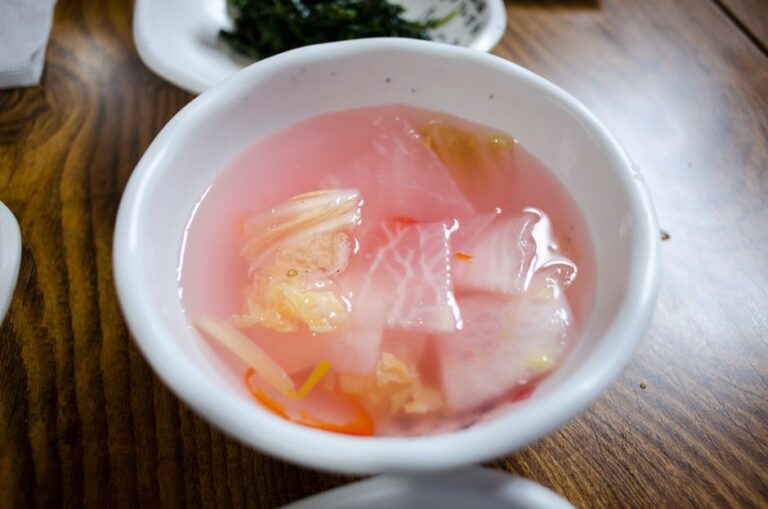
Beyond Kimchi: How Ready-Made Korean Seasoning Brings Fermented Flavor Into Everyday Cooking
Making kimchi from scratch requires more preparation than most people expect.
You salt and drain the cabbage, prepare gochugaru, garlic, ginger, and fermented seafood, cook rice paste, and then mix everything into a balanced seasoning. Traditional kimchi making is a food culture built over generations — but not everyone needs to prepare the seasoning from zero every time.
Recently, ready-made kimchi seasoning — pre-blended packs containing the core ingredients already mixed and proportioned — has become another option for home cooks.
These products can simplify the seasoning step of kimchi making. They can also be used as a flavor base for dishes beyond kimchi.
So what is the relationship between these convenient seasonings and fermentation? And how can they be used outside of making kimchi?
What Is Kimchi Seasoning?
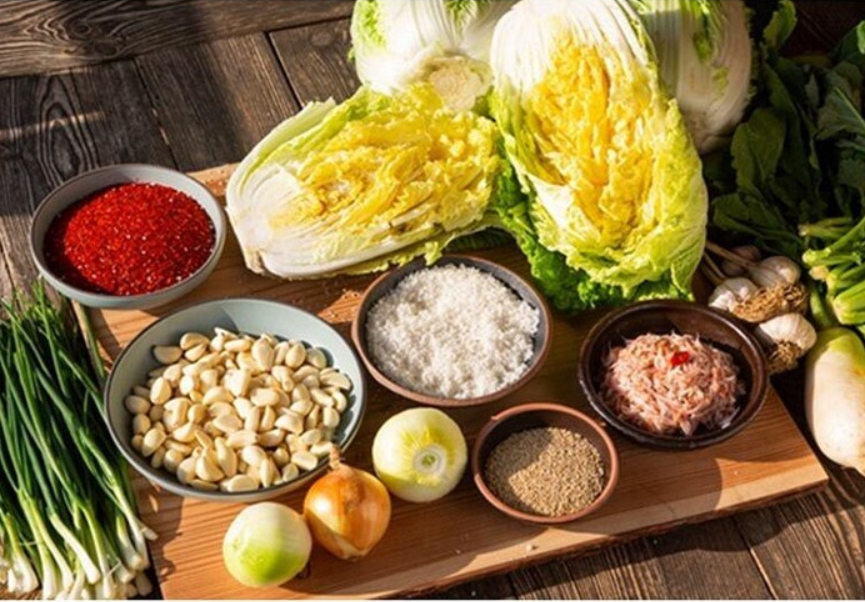
Traditional kimchi seasoning typically includes gochugaru, garlic, ginger, scallions, and other aromatic vegetables. Depending on the region and type of kimchi, fermented seafood such as saeujeot or myeolchijeot, fish sauce, and glutinous rice paste may also be used.
Each ingredient does more than add flavor.
Salt affects osmotic pressure and moisture control. Gochugaru, garlic, and ginger contribute aroma and taste. Fermented seafood adds umami and various compounds produced during its own fermentation.
When kimchi begins to ferment, the microorganisms present on the vegetables and in the seasoning interact with each other, and the microbial community changes over time.
Lactic acid bacteria play a particularly important role in kimchi fermentation. In the early stages, genera such as Leuconostoc and Weissella may be prominent. As fermentation progresses and acidity increases, acid-tolerant species such as Lactiplantibacillus plantarum can become more dominant.
However, the same microbial succession does not occur identically in every batch of kimchi. The condition of the cabbage, salt concentration, temperature, seasoning composition, and storage conditions all influence how the microbial community develops and how the final flavor turns out.
One Seasoning, More Than One Dish
The most obvious use for ready-made kimchi seasoning is making kimchi. But it is worth thinking one step further.
The gochugaru, garlic, ginger, and fermented seafood extract in kimchi seasoning form a combination of strong flavors that can work in other dishes as well. Rather than limiting the seasoning to kimchi alone, it can serve as a concentrated flavor base for everyday cooking.
For example, it can be used in kimchi, fried rice, spicy noodles, quick vegetable side dishes, tofu and mushroom dishes, pork and chicken marinades, stir-fries, and soups or stews.
How to Make Simple Kimchi With Ready-Made Seasoning
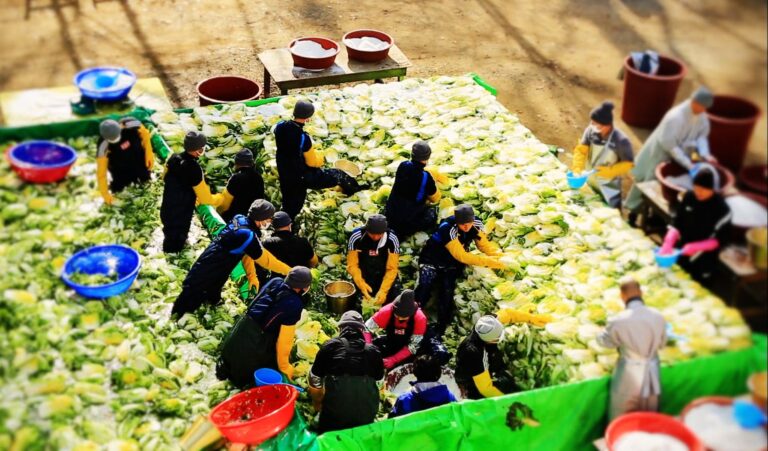
Salt the cabbage. Cut napa cabbage into an appropriate size and salt it. The amount of salt and time needed will vary depending on the size and condition of the cabbage, so follow the guidance provided with the product or your own experience.
Drain the cabbage. Once the cabbage has wilted sufficiently, rinse it if needed and drain it well. Too much moisture dilutes the seasoning and affects the final texture.
Mix the seasoning. Spread the ready-made seasoning evenly over the drained cabbage. You can add julienned radish, scallions, garlic chives, or carrots according to your preference.
Pack into a container. Place the seasoned kimchi in a clean container and minimize contact with air. From this point, fermentation can begin under suitable conditions, and the acidity, aroma, and umami will change over time.
It Works on Other Vegetables Too
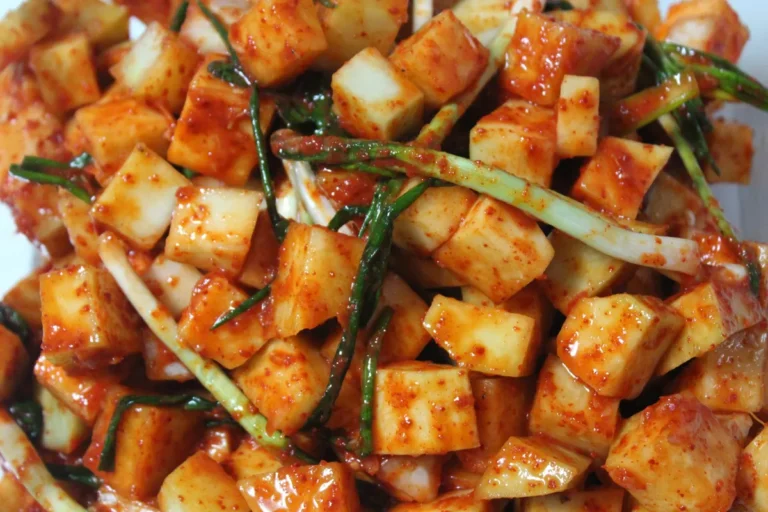
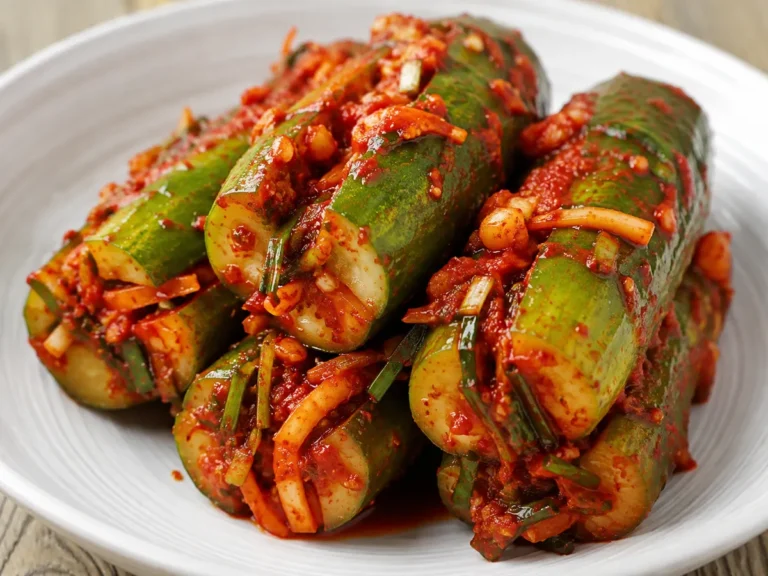
You do not need napa cabbage to use kimchi seasoning. Cucumber, radish, regular cabbage, garlic chives, and other vegetables can be tossed with a small amount of the seasoning to create a quick spicy side dish.
The important distinction here is that adding seasoning and fermentation occurring are not the same thing.
Fried Rice
Kimchi seasoning pairs well with fried rice. Prepare rice along with vegetables, meat, or an egg, and add a small amount of seasoning to taste. Start with less than you think you need and adjust as you go. A drizzle of sesame oil at the end adds a nutty aroma.
Spicy Noodles
Mix the seasoning with cooked noodles for a fast spicy noodle dish. Add soy sauce, vinegar, sesame oil, or a touch of sugar to steer the flavor in your preferred direction. A simple combination of noodles, kimchi seasoning, vinegar, and sesame oil can produce a satisfying bibim-style cold noodle.
Tofu and Mushrooms
Mild ingredients like tofu and mushrooms pair well with bold seasonings. Mix a small amount of the seasoning with water or cooking oil and toss it with pan-fried tofu or mushrooms. Mushrooms are especially good partners because their natural umami complements the garlic, gochugaru, and fermented notes in the seasoning.
Pork and Chicken
The seasoning can work as a quick marinade or finishing sauce for meat. Coat thinly sliced pork or chicken with a small amount and let it rest briefly before cooking. Because the product may already contain salt, sugar, and fermented seafood ingredients, start with a smaller amount than you expect to need.
Soups and Stews
A small amount of kimchi seasoning can be stirred into soups, stews, or braised dishes to add red pepper heat, garlic depth, and savory complexity. This works particularly well in dishes that already use doenjang or gochujang.
Is This Seasoning Actually “Fermented”?
This is an important question from a fermentation perspective.
The fact that a kimchi seasoning contains fermented ingredients does not automatically make the seasoning itself a fermented food. For example, the product may include jeotgal or fish sauce — ingredients that have undergone fermentation. But whether living microorganisms remain in the finished seasoning depends on how the product was manufactured and stored.
Furthermore, if you add the seasoning to fried rice, meat, or soup and cook it with heat, the resulting dish is not a fermented food. You are using the flavor of fermented ingredients, not creating fermentation.
On the other hand, if you combine the seasoning with salted vegetables and store them under conditions where microorganisms can grow and produce organic acids over time, actual fermentation can take place.
Two things are worth distinguishing:
Using fermented ingredients — incorporating the flavor compounds and umami that fermentation has already produced.
Creating a fermented food — establishing conditions where living microorganisms carry out fermentation in the dish itself.
These two things are related, but they are not the same.
A Shortcut for Cooking, Not a Shortcut for Fermentation
The real value of ready-made kimchi seasoning is not that it eliminates the entire traditional kimchi-making process. It simplifies the seasoning preparation step.
When it comes to actually fermenting kimchi, the factors that matter — salt concentration, temperature, moisture, ingredient condition, microbial environment — remain just as important regardless of whether the seasoning was homemade or pre-made.
The preparation can be made easier. But fermentation is still a process.
How to Start
If you are using ready-made kimchi seasoning for the first time, there is no need to follow a rigid recipe. Because products differ in salt content, sweetness, spice level, and fermented ingredient concentration, starting with a small amount and tasting as you go is the safest approach.
As a starting point: 1 spoon of seasoning + 1 serving of rice; 1 spoon of seasoning + noodles + vegetables; a small amount + tofu or mushrooms; 1-2 spoons + sliced pork or chicken.
These are not fixed recipes. They are starting points for your own experiments.
From Kimchi Seasoning to Everyday Flavor Base
Traditional kimchi seasoning is an essential part of making kimchi. But the combination of gochugaru, garlic, ginger, and fermented seafood inside it does not need to stay confined to one dish.
Seen this way, ready-made seasoning is less a replacement for traditional kimchi and more a tool that makes Korean fermented flavors easier to bring into everyday cooking.
Fermentation Is a Process. Seasoning Is a Tool.
The methods for making kimchi can change with the times. You can prepare the seasoning from scratch, or you can use a pre-blended product. What matters is not confusing fermentation with seasoning.
Simplifying the preparation does not erase the principles of fermentation. If anything, convenient tools like these let us bring the flavors of traditional fermented foods into our daily meals in more ways than before.
Frequently Asked Questions
Does ready-made kimchi seasoning produce the same fermentation as traditional seasoning?
Kimchi made with either approach can undergo lactic acid fermentation under suitable conditions. However, not all products have the same microbial composition, and the speed and pattern of fermentation will depend on the product’s formulation, salt content, sugar content, the condition of the cabbage, and storage temperature. The fermentation process is fundamentally similar, but the microbial community and final flavor profile may differ.
Can I use kimchi seasoning for dishes other than kimchi?
Yes. The combination of gochugaru, garlic, ginger, and fermented seafood extract works as a concentrated flavor base for fried rice, noodles, tofu, mushrooms, meat marinades, and soups. When used in cooked dishes, you are applying the flavor of fermented ingredients rather than creating fermentation itself.
How long does kimchi made with ready-made seasoning last?
Properly fermented and refrigerated kimchi can generally be stored for an extended period. However, rather than stating a universal shelf life, it is more accurate to say that storage time depends on refrigeration temperature, salt concentration, initial hygiene, acidity, and storage conditions. Both safety and flavor continue to change over time.
Can I add my own jeotgal or garlic to ready-made seasoning?
Yes. You can use the pre-made seasoning as a base and layer additional ingredients on top. Extra raw garlic, a spoonful of saeujeot, julienned Korean radish, and sliced scallions are the most common additions. This hybrid approach combines the convenience of pre-measured ratios with the personalization of homemade seasoning.
Is using ready-made seasoning the same as making fermented food?
Not necessarily. If you add the seasoning to cooked dishes like fried rice or stir-fries, you are using fermented-ingredient flavors, not creating a fermented food. If you combine it with properly salted vegetables and allow microorganisms to produce organic acids over time under suitable conditions, then fermentation can take place. The distinction between using fermented ingredients and creating fermented food is important.