Baechu Kimchi Recipe: Traditional Napa Cabbage Kimchi, Step by Step
Baechu kimchi is the kimchi most people picture: napa cabbage, salted, coated in a red paste of chili, garlic, and ginger, then left to ferment. The recipe below makes one large cabbage, about 2 kg (4.5 lb), which fills a 2-liter container. It uses a classic method with salted-then-rinsed cabbage, a sweet rice paste, and a seasoning mix, and it includes a section on what is happening in the jar.
If you plan to make a larger batch in late autumn, see our guide to kimjang, the tradition of making kimchi in bulk for winter. For the science behind the souring, see how lactic acid bacteria build kimchi’s flavor.
Ingredients
There is no single standard recipe for baechu kimchi. The Korea Tourism Organization describes it as salted cabbage filled with a spiced mixture, and notes that each region and family has its own specific recipe. The amounts below are a reasonable starting point, not an official standard. Adjust the salt, gochugaru, and fish sauce to your own taste, and rely on the texture of the cabbage rather than the clock when salting.
For salting
- 1 large napa cabbage, about 2 kg (4.5 lb)
- About 200 g coarse sea salt (makes a roughly 10% brine with the water below), plus 1 to 2 tablespoons for the thick white stems
- 2 liters (about 2 quarts) water
For the rice paste
- 2 tablespoons sweet (glutinous) rice flour
- 1 cup water
- 1 tablespoon sugar
For the seasoning
- ¾ cup coarse gochugaru (Korean red pepper flakes); use ½ cup for milder kimchi
- 3 tablespoons fish sauce (anchovy or sand lance)
- 1 tablespoon salted shrimp (saeujeot), chopped; or use 1 more tablespoon of fish sauce
- 8 garlic cloves, minced
- 1 tablespoon grated fresh ginger
- 150 g (about 1 cup) Korean radish (mu), cut into thin matchsticks
- 4 scallions, cut into short lengths
- Optional: mustard greens (gat), cut into short lengths and folded in with the scallions. Many households add them; the amount is up to you.
- Optional: fresh raw oysters, added in some regions. Use only very fresh oysters, fold them in just before stuffing, and plan to eat that kimchi sooner than a batch made without them.
Use gochugaru, not gochujang. Gochujang is a fermented pepper paste with a different flavor and texture, and it is not a substitute. Our guide to gochujang vs. gochugaru explains the difference.
Step 1: Salt the Cabbage
Cut the cabbage in half through the core, then in half again to make quarters. Cutting only part of the way down and pulling the last bit apart by hand keeps the leaves from tearing.
Dissolve the 200 g of salt in the 2 liters of water. Dunk each cabbage quarter in the brine, then lift it out and sprinkle a little extra salt between the thick white stems at the base, where the leaves are densest. Place the quarters in a large bowl, pour the remaining brine over, and weigh them down with a plate so they stay under the surface.
Leave for about 4 to 6 hours, depending on the size and freshness of the cabbage, turning it over once or twice. Rather than relying on the clock, check the thickest white stem: it should bend without snapping, and the leaves should feel flexible and slightly translucent.
Step 2: Rinse and Drain
Rinse each quarter three times under cold water, rubbing gently between the leaves to wash away loose salt. Taste the tip of a white stem. It should taste pleasantly salty, like a lightly salted pickle, not harsh. If it is too salty, rinse again. Set the quarters cut side down on a rack or in a colander and drain for about 30 minutes.
Salt does two jobs here. It draws water out of the cabbage, which changes its texture, and it shifts the conditions in the jar so that salt-tolerant lactic acid bacteria have an advantage over many spoilage organisms. Our article on how salt controls fermentation goes deeper.
Step 3: Make the Rice Paste
Whisk the rice flour into the cup of water in a small pot. Cook over medium heat, stirring, until it thickens like thin porridge, about 3 to 5 minutes. Stir in the sugar and let the paste cool completely. The starch thickens the seasoning, helping it cling to the leaves and spread evenly.
Step 4: Make the Seasoning Paste
In a large bowl, mix the cooled rice paste with the gochugaru, fish sauce, salted shrimp, garlic, and ginger. Let it sit for 10 minutes so the gochugaru softens and darkens. Fold in the radish and scallions.
Wear gloves for the next steps. Gochugaru will not hurt your skin the way a fresh chili can, but it stings if you touch your eyes later.
Step 5: Stuff the Cabbage
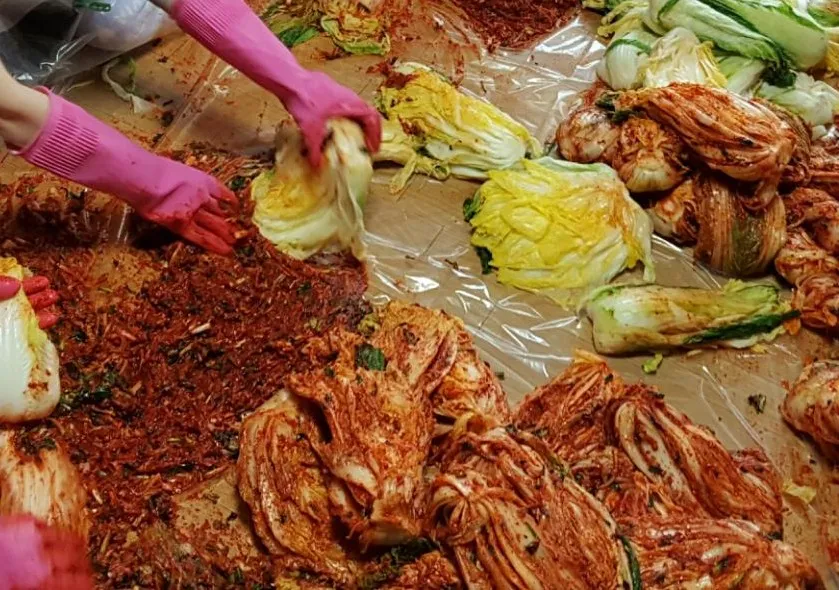
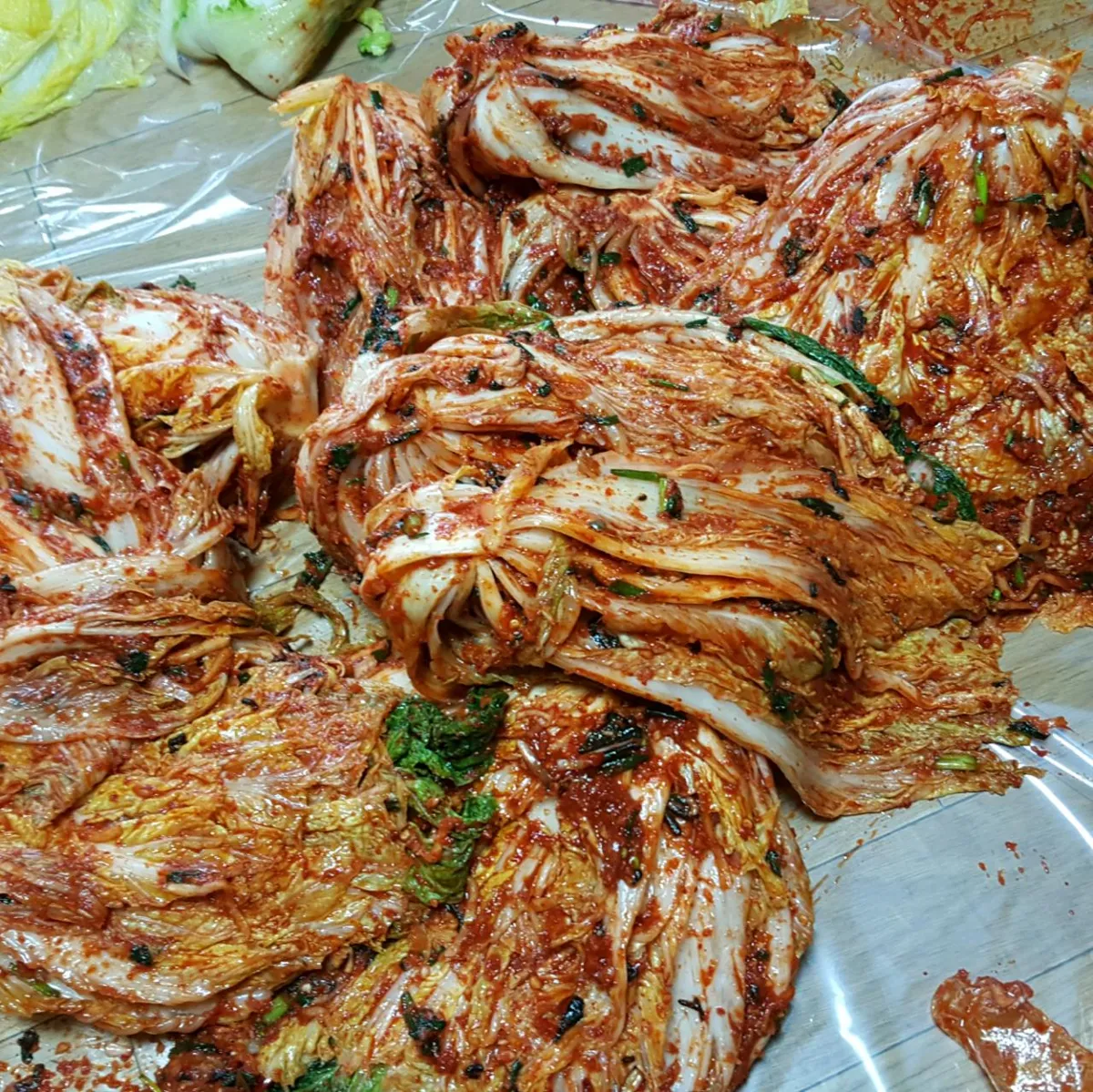
Work one quarter at a time. Spread a thin layer of seasoning between every leaf, starting from the outer leaves and moving in, and give the thick stem end a bit more. Do not overload. A thin, even coat does the job. Fold the outer leaf around the quarter to hold it in a neat bundle.
Step 6: Pack and Ferment
Pack the bundles tightly in a clean container, cut side up, pressing down to push out air pockets. Leave 2 to 3 cm (about 1 inch) of space at the top, because fermentation produces gas and the liquid rises. Press a sheet of plastic wrap or the outer cabbage leaf on top, then close the lid.
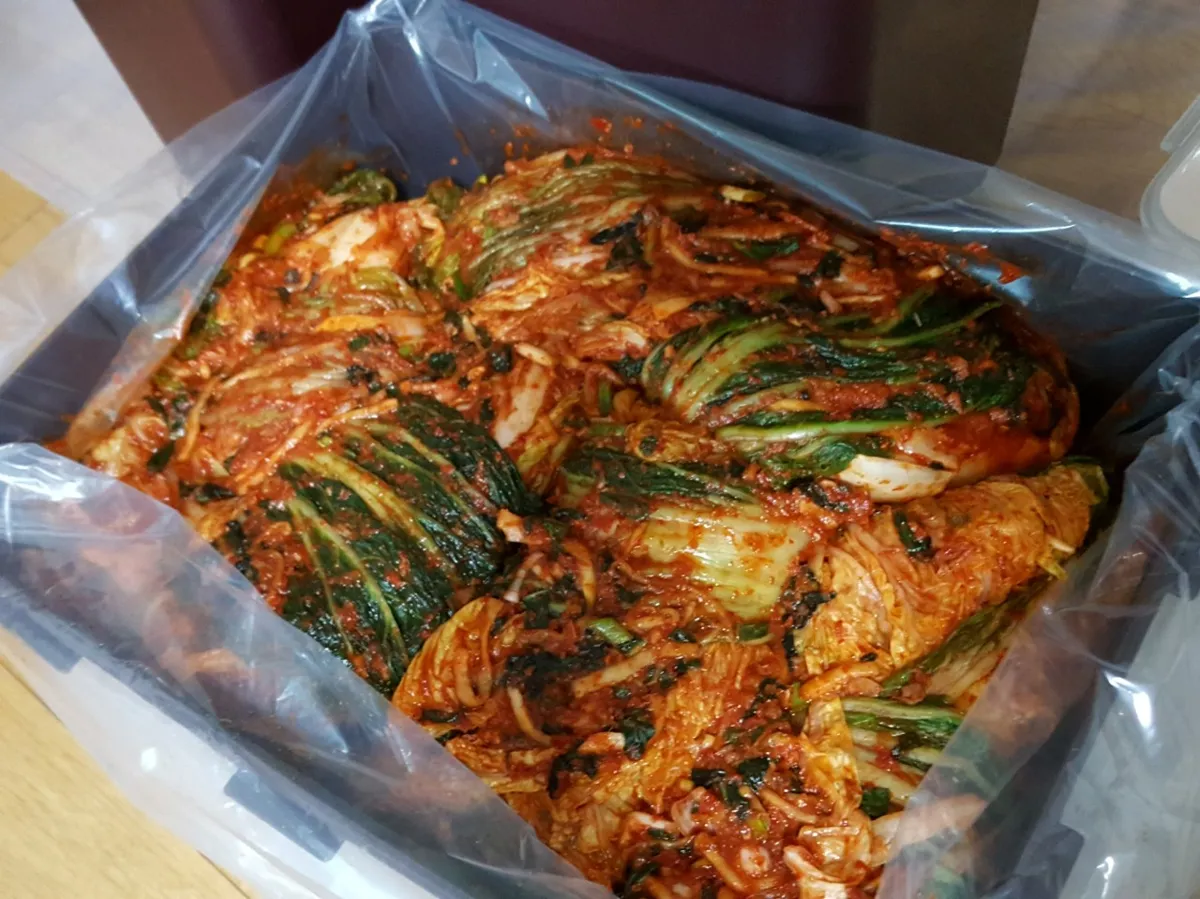
Leave the container at room temperature for 1 to 2 days, longer in a cool room and shorter in a warm one. Open it once a day to release gas and press the kimchi down so it stays under its own liquid. When you see small bubbles and the smell turns pleasantly sour, move the container to the refrigerator.
What Is Happening in the Jar
Kimchi ferments through lactic acid bacteria already present on the vegetables and ingredients. A metagenomic study that followed kimchi for 29 days found a community dominated by Leuconostoc, Lactobacillus, and Weissella (Jung et al., 2011). The balance changes as fermentation progresses, with different lactic acid bacteria becoming more or less abundant at different stages and temperatures. Some of these bacteria produce lactic acid and carbon dioxide, contributing to kimchi’s sourness and the bubbles you may see in the container.
The World Institute of Kimchi, in its overview All About Kimchi, describes four stages of ripening: unripe, ripe, very ripe, and overripe. It puts the best flavor at roughly 0.3 to 0.8 percent acidity. Past about 1.0 percent, the crisp flavor is lost, and in the overripe stage lactic acid bacteria stop growing and yeast takes over, causing sourness and sliminess. Our article on the science of kimchi shows the stages in a table.
How to Tell When It Is Ready
- Fresh (day 1 to 3 at room temperature, then refrigerated): crisp, lightly salty, mildly tangy. Good for those who like young kimchi.
- Ripe (about 1 to 3 weeks in the refrigerator): well rounded, with clear acidity and a fuller fermented character.
- Aged: after extended storage, kimchi becomes increasingly sour and soft. Kimchi aged for a long period can develop the deep acidity and softened texture associated with mukeunji, which is best cooked in stews, pancakes, and fried rice.
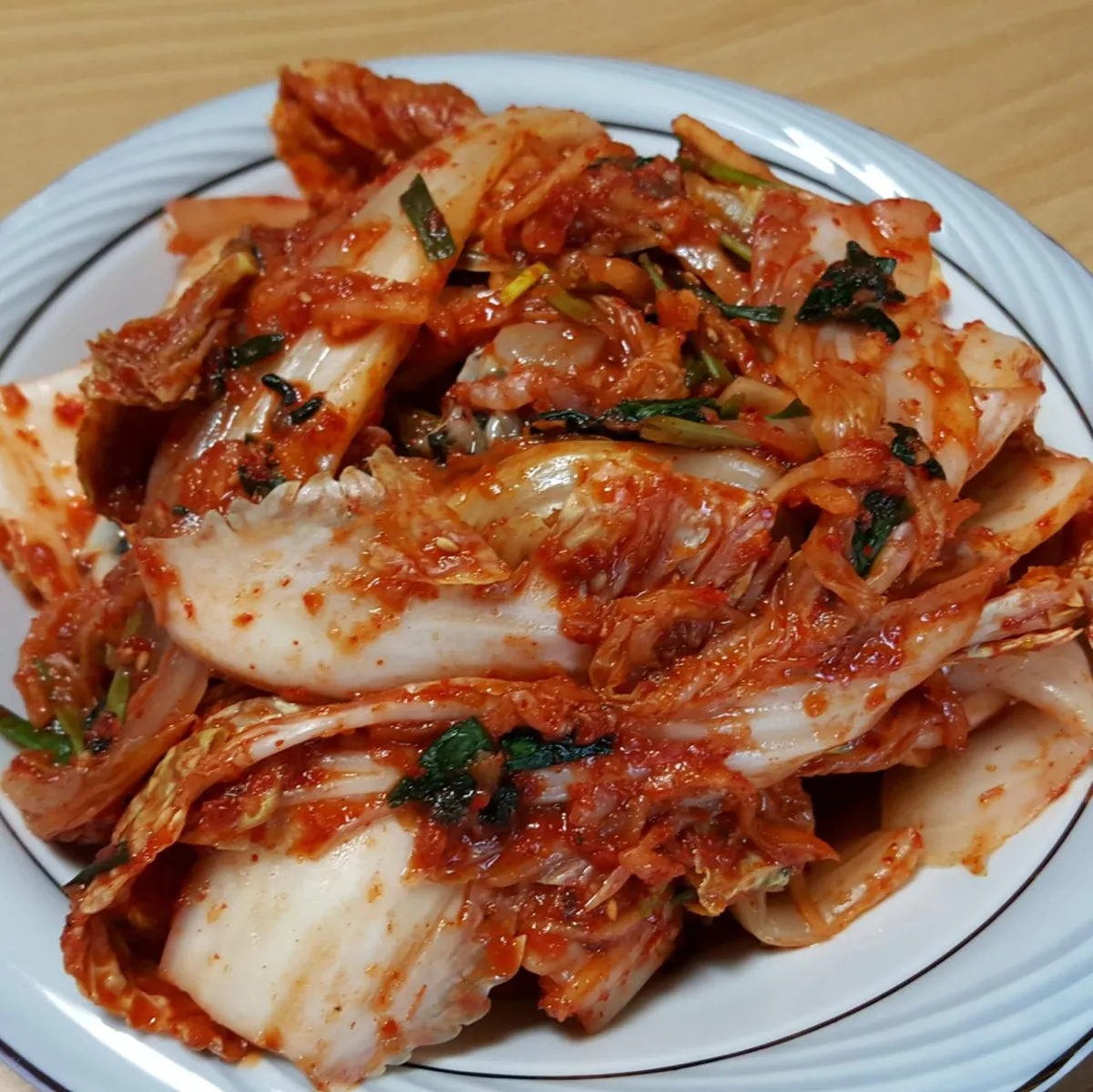
Timing depends on temperature and on how much salt and seasoning went in, so treat these as a guide, not a schedule. Taste a piece every few days and decide when you like it.
Storage and Safety
Keep kimchi refrigerated once it reaches the sourness you like. Always use clean utensils and keep the kimchi pressed under its liquid, which reduces its exposure to air. If you see fuzzy or spreading growth on the surface, especially green, black, pink, or other unusual colors, discard the kimchi. A flat white film can have several causes and cannot be identified by looking at it, so when in doubt, throw it out, and do not taste kimchi to decide whether it is safe. For more on keeping fermented foods, see our guide to storing fermented foods.
Kimchi is high in sodium. People who need to limit sodium should eat it in small portions.
Variations
- Vegan kimchi: leave out the fish sauce and salted shrimp. For extra savory depth, use a vegan soy sauce, kelp broth, or additional vegetables and aromatics. The flavor differs, but it ferments well.
- Milder kimchi: reduce the gochugaru to ½ cup.
- Cut kimchi (mak-kimchi): cut the salted cabbage into bite-size pieces before mixing. It is quicker and easier for beginners. For more styles, see kimchi varieties by region.
Frequently Asked Questions
How long does baechu kimchi take to ferment?
At room temperature, noticeable souring begins within one to two days. In the refrigerator, ripening takes one to three weeks. The exact timing depends on temperature, salt, and ingredients.
Can I make baechu kimchi without fish sauce or salted shrimp?
Yes. Leave them out and use kelp broth, a vegan soy sauce, or extra aromatics for savory depth. The flavor will be less funky and cleaner, but the kimchi still ferments.
Why is my kimchi too salty?
Usually the cabbage was not rinsed enough or was salted for too long. Rinse three times and taste a white stem before seasoning. Too-salty kimchi can be balanced by eating it with rice or adding it to stews.
Is white film on kimchi mold?
A white film can have several causes, and you cannot reliably tell yeast from mold by looking. Fuzzy, spreading, or colored growth (green, black, pink) means the kimchi should be discarded. Keeping the kimchi pressed under its liquid reduces its exposure to air. When in doubt, throw it out.
About This Recipe
The author, Hoon Kwak, has worked in food distribution for about 20 years, including work with a kimchi factory, and his family made meju and looked after jang crocks. This recipe follows common Korean home practice and the sources below; it is not a laboratory-tested formula, and amounts are a starting point to adjust to taste. For related recipes and science, see white kimchi, kimchi jjigae, and troubleshooting home fermentation.
References
- Korea Tourism Organization. Kimchi (Baechukimchi). VISITKOREA. english.visitkorea.or.kr
- World Institute of Kimchi. All About Kimchi. WiKim
- Jung JY, et al. (2011). Metagenomic analysis of kimchi, a traditional Korean fermented food. Applied and Environmental Microbiology. PubMed
This content is for informational purposes only and is not medical advice.