Oi Sobagi – Stuffed Cucumber Kimchi in 10 Minutes
Most kimchi takes days. Oi sobagi takes hours.
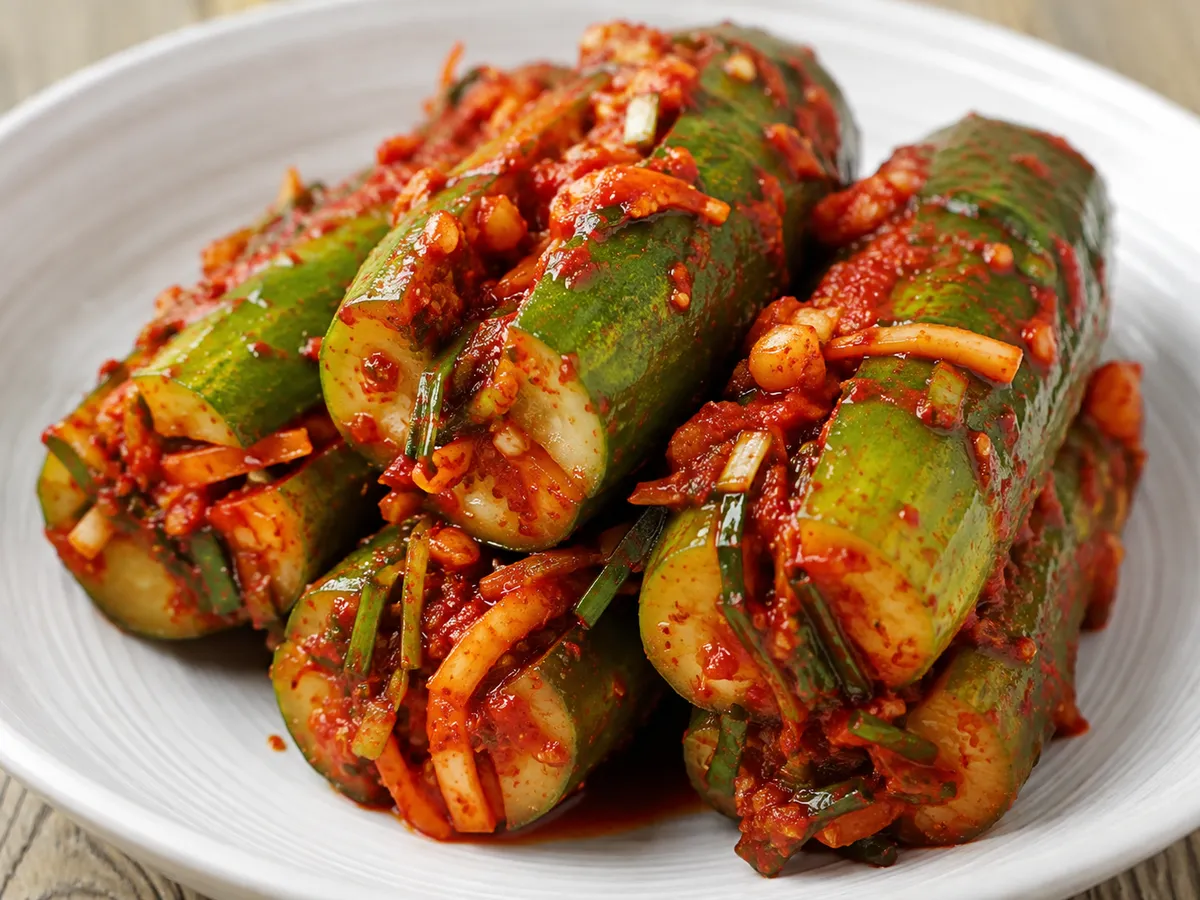
This is a cucumber kimchi ? scored, stuffed with a spicy filling, and ready to eat the same day. It exists because Korean summers are hot and patience is short. The cucumbers are almost entirely water, which means salt penetrates fast, fermentation begins quickly, and the window between fresh and fermented is narrow.
Oi sobagi translates roughly to
Why Cucumber Kimchi Ferments So Fast (and Why That Matters)
The reason oi sobagi is ready so quickly comes down to surface area and water content. Cucumbers are mostly water — around 96% by weight, according to the USDA FoodData Central database. That moisture creates an environment where lactic acid bacteria can get to work fast. The salt you apply at the start draws that water out through osmosis, concentrates the sugars and nutrients in the flesh, and gives the bacteria exactly what they need to begin fermentation within hours.
Compare that to baechu kimchi, where the thick cabbage leaves need a long salting period and a much longer ferment to develop full flavor. Cucumbers are thin-walled and porous. The filling touches the flesh directly. The math just works faster.
What you get is kimchi that’s still in its early, bright, punchy stage when you eat it. The lactic acid is just beginning to build. The garlic is still sharp. The cucumber snaps. Some people actually prefer oi sobagi fresh or semi-fermented over the deeply sour long-fermented kind. Both are legitimate. They’re just different expressions of the same process.
This speed also matters for nutrition. Research published in the Journal of Medicinal Food (Choi et al., 2013) found that kimchi contains beneficial lactic acid bacteria — primarily Lactobacillus species — that may help support gut microbiome diversity. The fermentation in oi sobagi, even brief, does produce these bacteria. Some studies suggest that regular consumption of fermented vegetables may be associated with improvements in digestive health markers, though the evidence is still developing and individual responses vary.
Sodium warning: Kimchi is a high-sodium food. One serving of cucumber kimchi can contain anywhere from 200 to 400 mg of sodium depending on preparation. The American Heart Association recommends no more than 2,300 mg of sodium per day for most adults, with an ideal limit of 1,500 mg for those managing blood pressure. If you’re on a sodium-restricted diet, portion size matters here.
Three Things Most Recipes Don’t Tell You
Here’s where it gets interesting. Most oi sobagi tutorials follow the same template: salt cucumbers, make paste, stuff them, wait. That’s accurate but incomplete. There are a few things that genuinely change the outcome, and they don’t get talked about enough.
1. The cucumber variety is not interchangeable.
You want Korean cucumbers (sometimes called Kirby cucumbers or pickling cucumbers in US grocery stores) or Persian cucumbers. Not English cucumbers. Not the big wax-coated supermarket ones. The reason is texture. Large cucumbers have too much water and too little structural integrity. They turn soft within hours. Korean and Kirby cucumbers have thinner walls, denser flesh, and a skin that holds up to the salt and acid without collapsing. If you use the wrong cucumber, you’ll get a mushy result and assume you did something wrong. You didn’t — you just used the wrong ingredient.
2. The cut angle controls how much filling stays inside.
Standard oi sobagi instructions say to cut a cross into the cucumber, leaving the bottom intact. What they don’t specify is the depth and angle. If you cut too shallow, the filling falls out. If you cut too deep, the cucumber splits entirely during stuffing. The right depth is about three-quarters of the cucumber’s length. Cut from the top, not the bottom. And leave at least a centimeter of uncut flesh at each end — this acts like a hinge that holds the whole thing together while you work.
3. Salting time changes the crunch permanently.
Most recipes say to salt the cucumbers for 15 to 30 minutes. That’s a range wide enough to produce two completely different textures. Fifteen minutes gives you a cucumber that’s still firm, almost raw-feeling, with mild fermentation. Thirty minutes produces something more pliable and more fully seasoned. If you want maximum crunch, go shorter on the salt time and eat the kimchi the same day. If you want a more developed, pickle-like texture that holds up over three or four days in the fridge, go longer. Neither is wrong. But you need to decide before you salt, not after.
Bonus tip most people skip entirely: Rinse your cucumbers after salting and before stuffing. Just a quick rinse under cold water, then pat dry. It removes excess surface salt so the filling seasoning comes through clearly instead of getting buried under brine. This one step makes the flavoring much more balanced.
The Recipe: Oi Sobagi in 10 Minutes
This recipe makes approximately 8 to 10 stuffed cucumber pieces. It ferments lightly at room temperature for 2 hours, then moves to the fridge. Ready to eat the same day.
Ingredients
For the cucumbers:
- 4 to 5 Korean cucumbers or Kirby cucumbers (about 700g total)
- 2 tablespoons coarse sea salt or kosher salt (not table salt — the grain size matters for even distribution)
- 1 cup cold water
For the filling:
- 3 tablespoons gochugaru (Korean red pepper flakes — coarse grind preferred)
- 1 tablespoon fish sauce (use soy sauce or miso paste for a vegan version)
- 1 teaspoon salted shrimp, finely minced (optional, but adds depth — omit for vegan)
- 4 cloves garlic, minced or grated fine
- 1 teaspoon fresh ginger, grated
- 1 teaspoon sugar or honey
- 3 stalks green onion, cut into thin 1-inch pieces
- 1/2 cup Asian chives (buchu), cut into 1-inch pieces — if unavailable, use additional green onion
- 1/2 medium carrot, julienned thin (optional, adds color and crunch)
Steps
- Wash the cucumbers well. Cut off both ends. Score each cucumber by cutting a cross from one end, going about three-quarters of the way down the length. Leave the bottom centimeter intact. The cucumber should open like four petals when gently pressed but stay connected at the base.
- Dissolve the 2 tablespoons of salt in 1 cup of cold water in a wide bowl. Lay the cucumbers in the brine. Let them soak for 15 to 20 minutes, turning once halfway through. They should soften slightly but still hold their shape.
- While the cucumbers brine, combine all filling ingredients in a bowl. Mix thoroughly with your hands or a spoon until a paste forms. Taste it — it should be aggressively seasoned, salty, spicy, and a bit funky. Remember, it’s going to season an entire cucumber once stuffed, so it needs to be bold at this stage.
- Remove the cucumbers from the brine. Rinse briefly under cold water. Pat dry with a clean cloth or paper towel.
- Working over your filling bowl to catch any drips, gently open each cucumber along the scored cuts and pack the filling in. Use your fingers to press it into the center. You want the filling to touch as much cucumber flesh as possible. Don’t be shy here — under-stuffed oi sobagi is underwhelming.
- Place the stuffed cucumbers in a container with a lid. A glass container works best. Leave them at room temperature for 1.5 to 2 hours in a warm kitchen (around 70°F / 21°C). If your kitchen runs cold, give it an extra 30 minutes.
- Transfer to the refrigerator. Eat within 3 to 4 days for best texture. The cucumbers will continue fermenting slowly in the fridge, becoming more sour over time. Day one is fresh and crisp. Day three is punchy and pickled. Both are worth eating.
Serving suggestion: Slice each stuffed cucumber into thirds or halves before plating. Serve alongside rice and soup, or as a banchan (side dish) with grilled meat.
Fermentation and What’s Actually Happening in the Jar
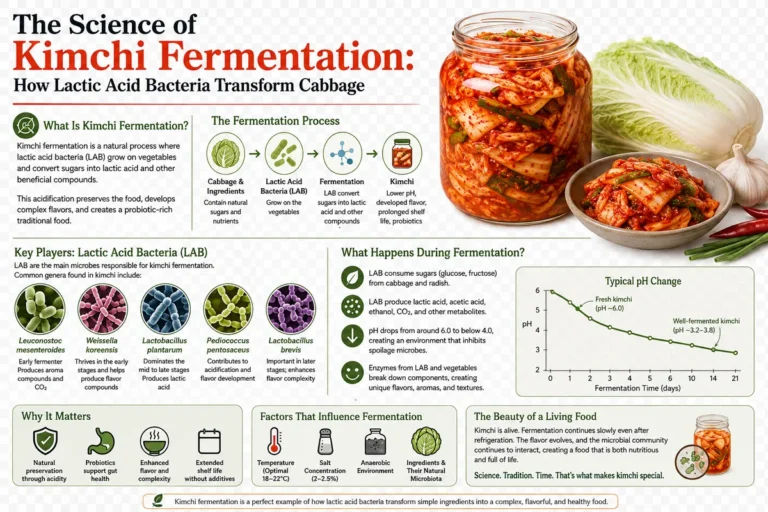
Once the cucumbers are stuffed and sitting at room temperature, fermentation begins almost immediately. The lactic acid bacteria already present on the vegetables and in the gochugaru paste start converting sugars into lactic acid. This drops the pH of the environment, which preserves the food naturally and produces that characteristic sour tang.
With oi sobagi, you’re catching it in the early stage of this process. The pH hasn’t dropped far yet. The bacteria are active but the acidity is gentle. This is sometimes called “fresh kimchi” or “geotjeori” style — though technically geotjeori refers to unfermented kimchi dressed fresh. Oi sobagi does ferment, just briefly.
A 2021 review article in Microorganisms (Park et al., 2021) noted that the fermentation of kimchi involves a succession of bacterial communities — early fermentation is dominated by heterogeneous bacteria, while later stages see Lactobacillus and Leuconostoc species dominate as acid levels rise. What this means practically: fresh oi sobagi has a different bacterial profile than week-old oi sobagi. Neither is better or worse from a safety standpoint, as long as the food is kept at proper temperatures, but the flavors and microbial composition do shift.
One thing worth knowing: the garlic in the filling isn’t just flavor. Allicin, the active compound in garlic, has demonstrated antimicrobial properties in laboratory studies (Borlinghaus et al., 2014, Molecules). In kimchi specifically, garlic may help shape the microbial environment during early fermentation by suppressing certain non-beneficial bacteria while lactic acid bacteria establish themselves. Some researchers have examined this interaction in kimchi studies, though it remains an area of ongoing research rather than settled science.
The gochugaru also contributes more than heat. Red pepper powder contains capsaicin, and some studies suggest capsaicin may have anti-inflammatory properties, though research in this area is still evolving and the amounts in a typical serving of kimchi are modest. A 2019 study in Critical Reviews in Food Science and Nutrition (Chung et al.) reviewed capsaicin’s potential bioactive effects, while noting that more human clinical trials are needed before strong conclusions can be drawn.
Storage, Variations, and When to Throw It Out
Oi sobagi lives in the fridge, not on the counter. After your initial 1.5 to 2 hour room-temperature ferment, move it to cold storage and keep it there. The ideal fridge temperature for kimchi is around 39°F / 4°C — which is pretty much standard refrigerator temperature. At this temp, fermentation slows dramatically but doesn’t stop entirely.
Eat it within 4 days. Unlike baechu kimchi, which can age in the refrigerator for weeks or even months and still be excellent (just very sour), cucumber kimchi loses its structural integrity quickly. By day five or six, the cucumbers get soft and waterlogged. They’re not dangerous — they just stop being pleasant. The whole point of oi sobagi is the crunch, and once that’s gone, you’ve missed the window.
A few variations worth trying:
- White (non-spicy) oi sobagi: Omit the gochugaru and replace with finely julienned radish, green onion, garlic, and ginger. Add a teaspoon of salt to the filling. This version is called “baek kimchi” style and has a clean, refreshing flavor. Good for people who don’t tolerate spice.
- Mustard green filling: Replace or supplement the chives with young mustard greens. Adds a peppery, slightly bitter note that works really well with the cool cucumber.
- Sesame finish: Before serving, drizzle with a few drops of toasted sesame oil and sprinkle sesame seeds. This isn’t traditional but it’s very good.
- Anchovy-forward version: Increase the fish sauce to 2 tablespoons and add a teaspoon of anchovy paste to the filling. Intensifies the umami considerably.
How to tell if it’s gone bad: Trust your nose. Good kimchi smells sour, garlicky, and funky in an appealing way. Bad kimchi smells off — slimy, rotten, or ammonia-like. Visible mold (fuzzy growth, not just brine cloudiness) means throw it out. Brine cloudiness on its own is normal and expected in fermented vegetables.
If you see a cucumber that’s entirely collapsed and soft within the first two days, it’s likely a cucumber variety issue (see tip number one above) rather than spoilage. The kimchi may still be safe but the texture won’t recover. Learn from it and use a different cucumber next time.
This content is for informational purposes only and is not medical advice.