Fermented Foods & Gut Health: What Probiotics Do Inside You
Everyone knows probiotics are good for you. But ask someone exactly why, and the answer gets fuzzy fast. “Good for your gut,” they’ll say. “Helps your immune system, maybe.” That was me for a long time. I was eating fermented foods regularly without really understanding what was happening inside my body. Once I learned, things shifted. The way I eat, the foods I choose — all of it changed a little. Here’s what I found out.
Your Gut Is Basically a City
There are roughly 100 trillion bacteria living in your gut. That number is hard to visualize. In terms of weight, it comes out to about 1–2 kilograms. This entire community is called the gut microbiome — a complex ecosystem of beneficial bacteria, harmful bacteria, and neutral ones sitting somewhere in between. The balance between these groups has a serious impact on your health.
When beneficial bacteria decline, harmful ones move in and take over. The consequences go well beyond an upset stomach or constipation. Chronic inflammation, immune dysfunction, and even shifts in mood and cognitive function can follow. The gut and brain are directly connected via the vagus nerve — the long nerve that links your brain to your internal organs. That sinking feeling you get when your stomach is off? Not a coincidence, according to research published in Nature Reviews Neuroscience on the gut-brain axis.
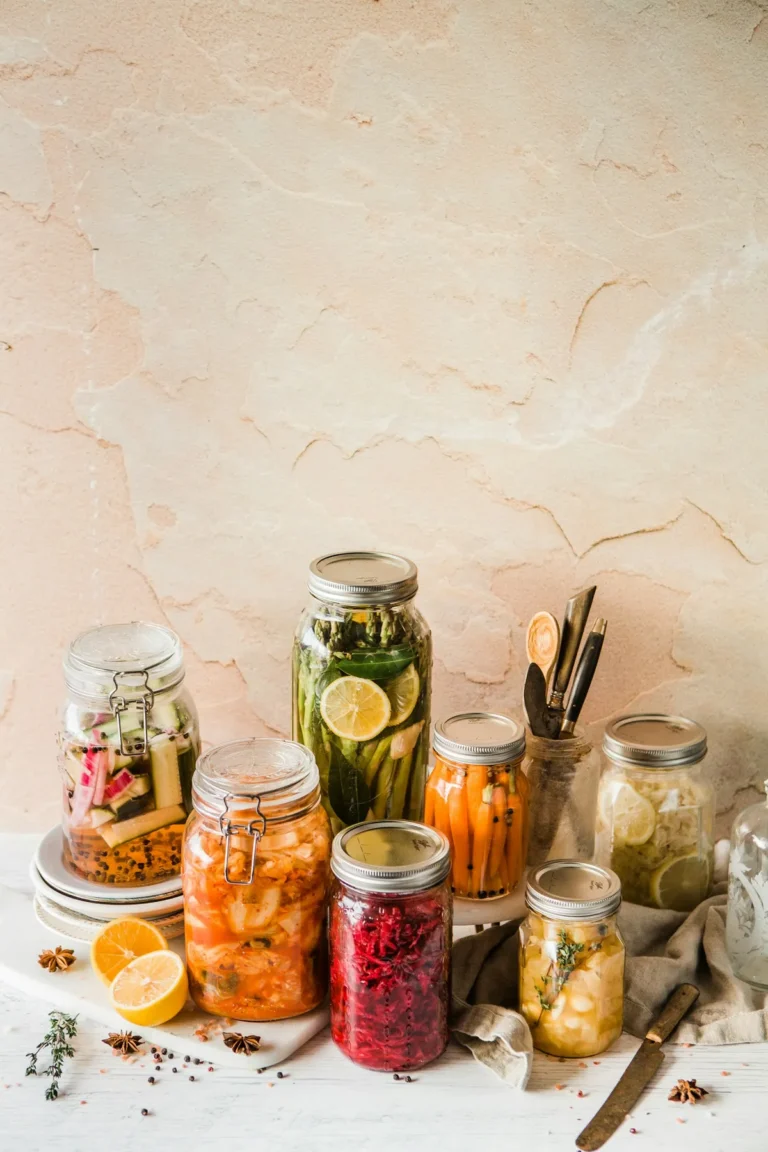
Lactic acid bacteria (LAB), commonly called probiotics, help tip the balance back toward the beneficial side. They physically colonize space in the gut and create an acidic environment that makes it harder for harmful bacteria to thrive. Fermented foods are one of the most natural ways to deliver these bacteria to your system.
What Probiotics Actually Do Once They’re Inside You
When lactic acid bacteria enter the gut, several things happen at once.
- They produce lactic acid. This keeps the gut environment acidic. Most harmful bacteria struggle to survive in acidic conditions — a natural suppression effect that requires no extra effort on your part.
- They strengthen the gut lining. When the intestinal mucosa (the inner wall of your gut) weakens, undigested particles and bacterial fragments can leak into the bloodstream. This is sometimes called leaky gut, or intestinal hyperpermeability. Probiotic bacteria may help reinforce the tight junctions between mucosal cells, potentially reducing this leakage. Some research, including studies reviewed by the NIH’s National Center for Complementary and Integrative Health, suggests this is a meaningful effect, though more large-scale human trials are ongoing.
- They help train immune cells. About 70% of your immune cells are concentrated in the gut. Beneficial bacteria and immune cells exchange signals constantly. A healthier bacterial balance may support a more calibrated immune response — not overactive, not underactive.
- They produce short-chain fatty acids (SCFAs). When lactic acid bacteria and other beneficial microbes break down dietary fiber, they generate SCFAs. These compounds serve as a primary energy source for intestinal cells and act as anti-inflammatory signaling molecules. Butyrate in particular is directly involved in gut lining repair and regeneration. Research published in Cell Host & Microbe has highlighted butyrate’s role in maintaining mucosal integrity.
Not All Fermented Foods Work the Same Way
Fermented foods are not interchangeable. The type and quantity of bacteria, along with the accompanying nutrients, vary significantly from one food to the next. Here’s what’s worth knowing.
Kimchi
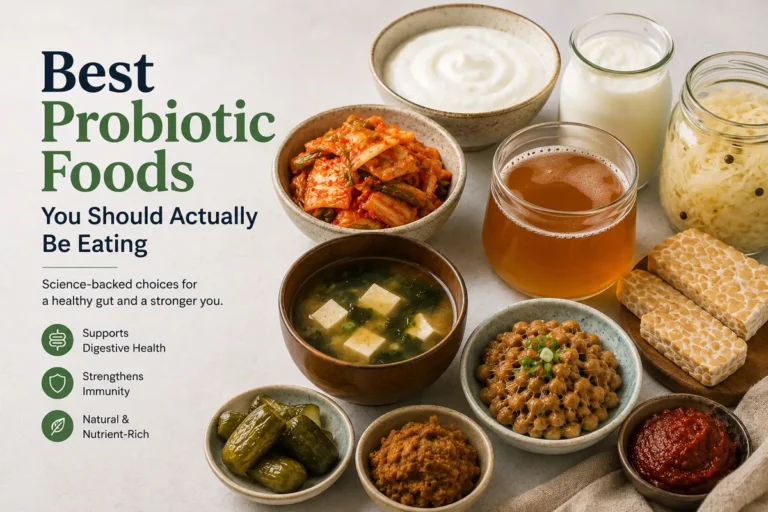
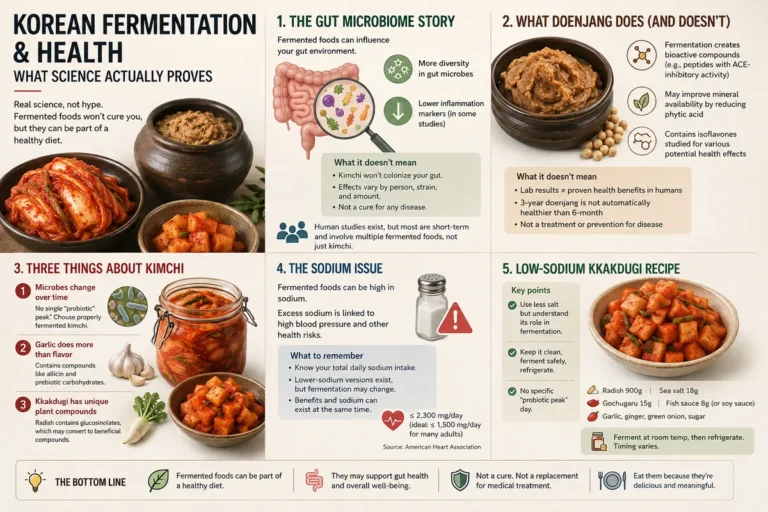
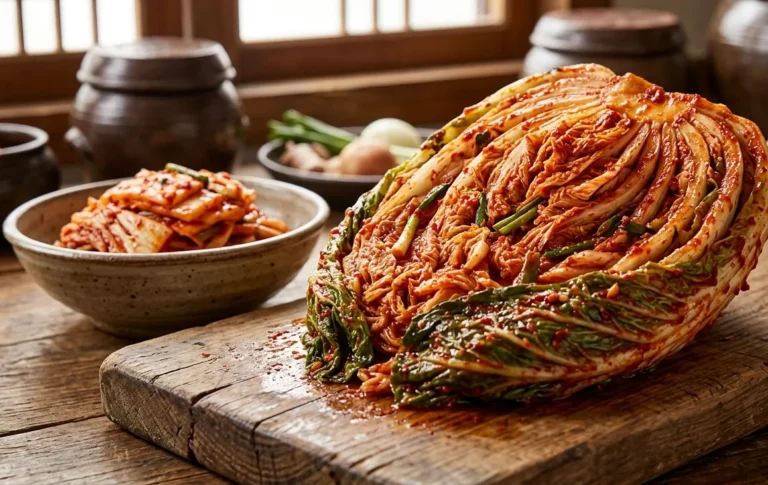
Kimchi is rich in Lactobacillus-family bacteria. The dominant strains shift as fermentation progresses — early, middle, and late stages each have their own microbial profile. Older, more sour kimchi tends to contain higher concentrations of live bacteria. That said, kimchi is also high in sodium. If you’re eating large portions at every meal, it’s worth tracking your total daily sodium intake against recommended guidelines. The World Health Organization recommends staying under 2,000 mg of sodium per day for adults.
Doenjang (Korean Fermented Soybean Paste)
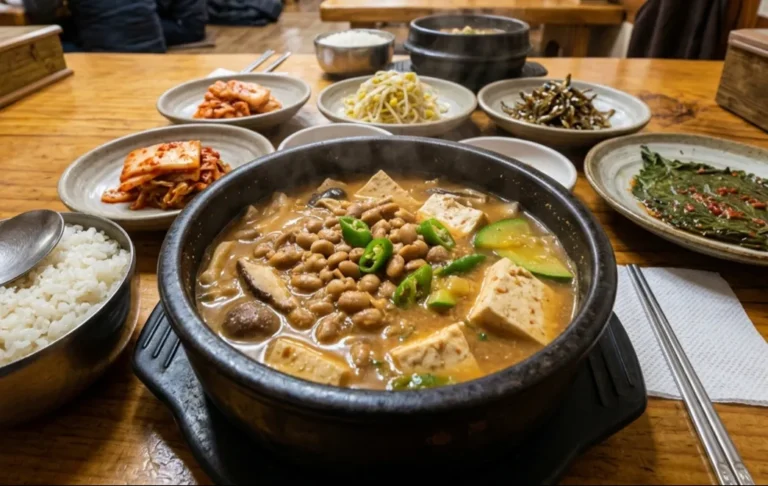
During fermentation, the proteins in doenjang break down into amino acids, making it easier to digest and more bioavailable than unfermented soy. Bacillus subtilis is one of the key bacteria involved. Doenjang is also significant in sodium, so adjusting how much you add when making soup or stew is a sensible move.
Cheonggukjang (Fast-Fermented Soybean Paste)
Cheonggukjang ferments quickly at higher temperatures, giving Bacillus-family bacteria a strong foothold. The density of beneficial bacteria is very high. Many people avoid it because of the intense smell. Keeping fermentation time under 48 hours produces a noticeably milder aroma if that’s a barrier for you.
Yogurt
Among Western fermented foods, yogurt is the most accessible. One catch: many commercial products are heat-treated after fermentation, which kills the live cultures. Before buying, look for labels that say “live and active cultures” or “contains live bacteria.” The National Yogurt Association in the U.S. has established a Live & Active Cultures seal as a reference point for consumers.
Tips That Actually Make a Difference
Drink the kimchi brine
When you eat kimchi, the liquid is where a huge concentration of live bacteria lives. Most people pour it down the drain. Don’t. Add it to a stew, or just drink a small amount directly. Your probiotic intake goes up significantly with almost no extra effort.
Heat kills live cultures
Kimchi fried rice and doenjang jjigae (soybean paste stew) are delicious. But cooking destroys the live bacteria. If your goal is to consume live cultures, eat kimchi fresh, use raw doenjang as a dipping paste (ssamjang style), or eat yogurt cold and unheated.
Feed the bacteria you’re putting in
Probiotics need food to survive and stay active. Prebiotics — dietary fibers that beneficial bacteria feed on — help them colonize more effectively and last longer. Garlic, onion, banana, and oats are strong prebiotic sources. It’s not a coincidence that garlic is a core ingredient in kimchi. The flavor is part of it, but the functional benefit is real. Research published in Frontiers in Nutrition supports the synergistic effect of combining probiotics with prebiotic fiber sources.
What May Change When You Eat Consistently
Short-term loading of fermented foods can have some effect, but meaningfully shifting the composition of your gut microbiome takes time. Studies suggest it takes at least three to four weeks of dietary change before statistically significant differences in gut bacterial composition appear — a finding supported by research in Cell on diet and microbiome dynamics.
When you first start increasing fermented food intake, go slow. As incoming bacteria compete with existing ones for space, you may temporarily experience gas or bloating. This isn’t a bad sign. It’s a sign something is shifting. If it’s uncomfortable, scale back and increase gradually.
People who eat fermented foods consistently tend to report similar changes over time. More regular bowel movements. Less heaviness after meals. Getting sick less often during cold and flu season. Some notice fewer skin breakouts. All of these connect back to the same network: gut health and immune function working in a closer balance.
Where to Start Today
You don’t need a dramatic overhaul. One fermented food per day is enough to begin. A small plate of fresh kimchi. A spoonful of raw doenjang as a dipping paste. A cup of plain yogurt. Small, consistent, and over weeks it compounds.
One more thing worth keeping in mind: if you’re taking antibiotics, consider increasing your fermented food intake at the same time. Antibiotics wipe out harmful bacteria, but they take beneficial bacteria down with them. Many people supplement with fermented foods or probiotic capsules during and after antibiotic courses. Just don’t take them at the same time as the antibiotic itself — space them at least two hours apart to avoid the antibiotic reducing the probiotic’s effectiveness. This recommendation is echoed by guidance from several clinical pharmacology sources and the NHS.
Fermented foods come from very old food traditions. The science behind why they work is still being actively studied, but the core principles hold up. The kimchi and doenjang on your table every day carry an entire microbial ecosystem inside them. Knowing that changes how you eat them.
⚠️ Important Note: This article is written for general health information purposes only. Fermented foods and probiotic consumption are not recommended here as a means of preventing or treating any specific disease. If you have a digestive condition, immune-related condition, or are currently undergoing treatment, please consult a qualified healthcare professional before making dietary changes. Fermented foods such as kimchi, doenjang, and cheonggukjang contain significant amounts of sodium. Individuals with high blood pressure or kidney disease should carefully monitor and limit their intake of these foods.
This content is for informational purposes only and is not medical advice.