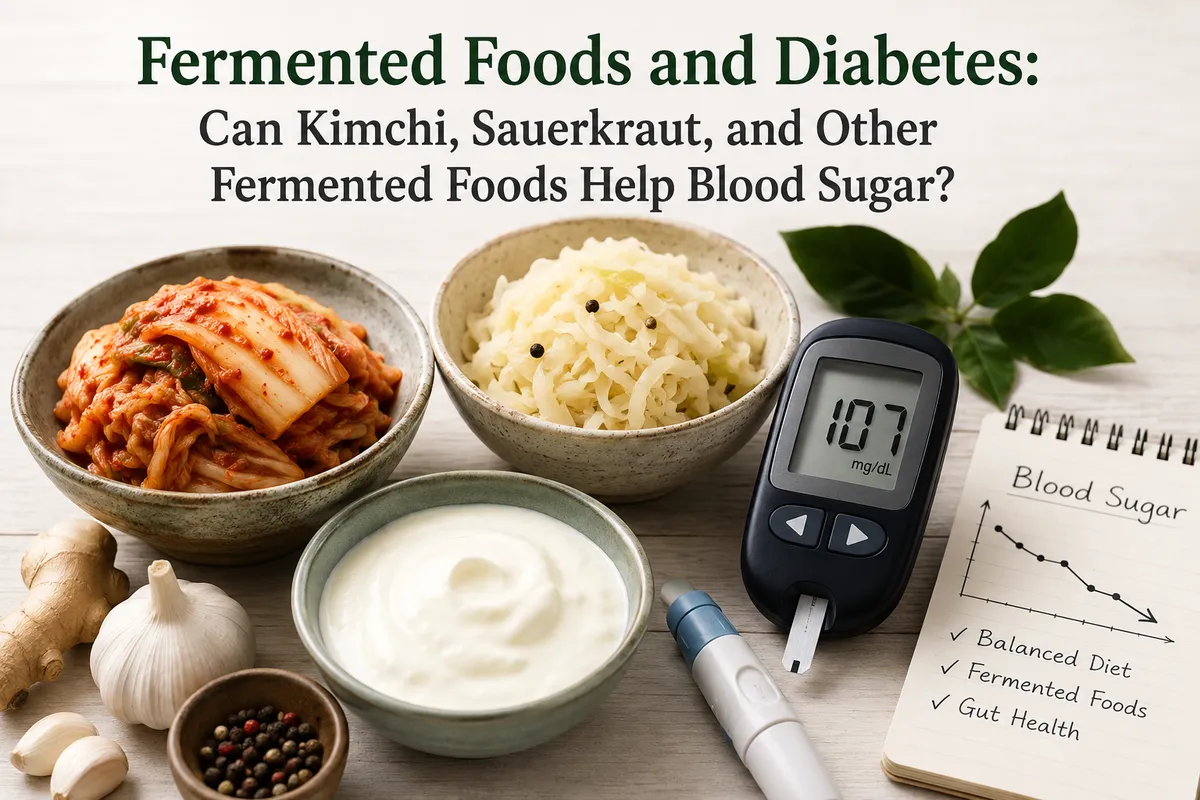
Fermented Foods and Diabetes: Can Kimchi, Sauerkraut, and Other Fermented Foods Help Blood Sugar?
If you have searched for information about diabetes and diet, you have probably come across claims about fermented foods. Kimchi lowers blood sugar. Sauerkraut is good for diabetics. Fermented foods fix insulin resistance.
The reality is more complicated than the headlines suggest — but also more interesting. There is real scientific research on fermented foods and blood sugar regulation. Some of it is promising. None of it is conclusive enough to replace medical advice.
This article looks at what the research actually shows, which fermented foods have been studied, and what people managing diabetes or prediabetes should realistically expect.
Can Fermented Foods Help With Diabetes?
The short answer is: possibly, but not as a treatment.
Several lines of research suggest that fermented foods may have modest effects on blood sugar regulation. The mechanisms that researchers have proposed include improved gut microbiome composition, increased production of short-chain fatty acids, enhanced insulin sensitivity, and the bioactive compounds produced during fermentation.
However, most of the evidence comes from laboratory studies, animal models, or small human trials. Large-scale clinical trials specifically testing fermented foods as a diabetes intervention are limited.
The responsible way to interpret this research: fermented foods may be a useful part of a diabetes-friendly diet, but they are not a substitute for medication, exercise, or medical supervision.
Does Kimchi Lower Blood Sugar?
This is one of the most frequently asked questions about kimchi and health, and it deserves a careful answer.
Some studies have found associations between kimchi consumption and improved metabolic markers. A commonly cited study found that fermented kimchi was associated with changes in fasting blood glucose and insulin resistance compared to fresh kimchi in a small group of overweight participants. The fermented version — with its higher concentration of lactic acid bacteria and organic acids — showed more favorable results than the unfermented version.
Other research has examined the effect of kimchi consumption on markers related to metabolic syndrome, including blood glucose, with some studies reporting modest improvements in participants who consumed kimchi regularly as part of a traditional Korean diet.
What these studies do not show is that kimchi directly lowers blood sugar in a clinically significant way for people with established diabetes. The effects observed are modest. The study populations are small. And the overall dietary pattern — not kimchi alone — is likely a major factor.
The bottom line: Kimchi is a low-calorie, fiber-containing, fermented food that can be part of a diabetes-friendly diet. Claiming that it lowers blood sugar as a treatment overstates what the evidence supports.
Is Sauerkraut Good for Diabetics?
Sauerkraut shares the same fermentation biology as kimchi — lactic acid bacteria converting sugars into organic acids — so many of the same potential mechanisms apply.
Sauerkraut is very low in calories and carbohydrates. A typical serving contains roughly 1 to 2 grams of net carbohydrates, which means it has minimal direct impact on blood glucose levels. For people counting carbohydrates as part of diabetes management, sauerkraut is essentially negligible.
Some research on fermented vegetables generally — not sauerkraut specifically — has suggested that the organic acids and live bacteria in fermented vegetables may support gut health in ways that could indirectly influence blood sugar regulation.
Does sauerkraut lower blood sugar directly? There is no strong clinical evidence for this specific claim. Does sauerkraut raise blood sugar? Given its very low carbohydrate content, it is unlikely to cause significant blood sugar spikes.
The bottom line: Sauerkraut is a safe, low-carbohydrate food for most people with diabetes. It is not a blood sugar treatment, but it is unlikely to cause problems and may contribute beneficial bacteria and organic acids as part of an overall healthy diet.
Fermented Foods and the Gut Microbiome: The Diabetes Connection
This is where the science gets most interesting — and most preliminary.
Research over the past decade has established that the gut microbiome plays a role in metabolic health. Some studies have found that people with type 2 diabetes tend to have less microbial diversity in their gut compared to people without diabetes.
Fermented foods can introduce live microorganisms into the digestive system. A study published in Cell by Stanford researchers found that a diet high in fermented foods was associated with increased microbiome diversity and decreased markers of inflammation.
The theory connecting these findings: fermented foods may improve gut microbial diversity, which may reduce chronic low-grade inflammation, which may improve insulin sensitivity. Each step has some supporting evidence, but the complete pathway has not been demonstrated in a definitive clinical trial.
This is important to say clearly: the gut microbiome connection is a promising research direction, not a proven treatment pathway.
Does Fermentation Reduce Sugar in Food?
Yes, in a literal biochemical sense. During fermentation, lactic acid bacteria consume sugars and convert them into lactic acid and other organic compounds. The sugar content of fermented vegetables is therefore lower than the sugar content of the same vegetables before fermentation.
For kimchi, the sugar reduction is relatively modest because the starting sugar content of napa cabbage is already low. For fermented dairy products like yogurt, the reduction can be more significant.
However, this sugar reduction does not make fermented foods a meaningful tool for blood sugar management by itself. The quantities are small compared to the total carbohydrate load of a full meal.
Which Fermented Foods Are Best for Blood Sugar?
Based on the available evidence, the fermented foods most relevant to blood sugar management share these characteristics: low in carbohydrates, containing live bacteria, and consumed regularly as part of an overall healthy diet.
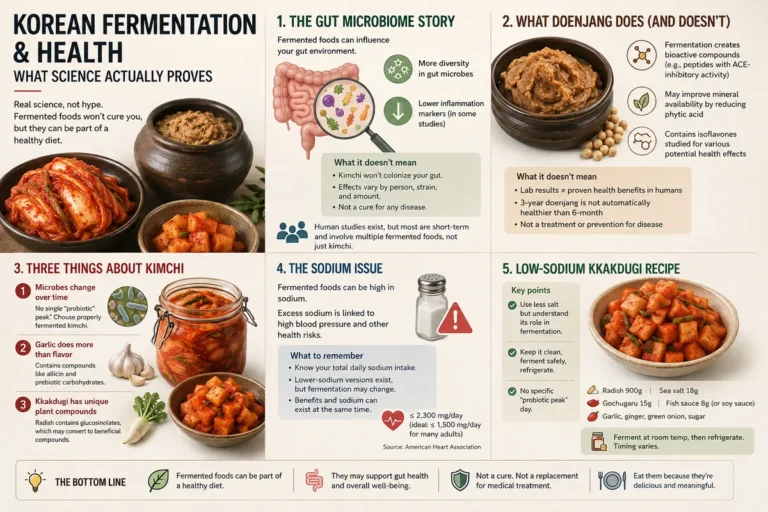
Kimchi: Low calorie, contains fiber, live lactic acid bacteria, and capsaicin from gochugaru. Watch the sodium content.
Sauerkraut: Very low carbohydrate, contains live bacteria when unpasteurized. Choose unpasteurized versions for live bacteria.
Plain yogurt and kefir: Fermented dairy with live cultures and lower lactose content than unfermented milk.
Doenjang: Contains bioactive peptides and isoflavones from soy fermentation.
Vinegar: Small amounts consumed with meals have been shown in some studies to blunt post-meal blood sugar spikes.
What Fermented Foods Should Diabetics Be Careful With?
Sweetened fermented drinks: Commercial kombucha often contains added sugar. Check the label.
Fermented rice products: Makgeolli and other fermented grain beverages contain residual sugars and alcohol. Both can affect blood sugar.
Fruit-based fermented products: Korean maesil-cheong is roughly 50 percent sugar by weight.
High-sodium fermented foods: Many fermented foods — kimchi, sauerkraut, fish sauce, doenjang — are high in sodium.
The Honest Summary
Fermented foods are not a diabetes treatment. No fermented food has been clinically proven to lower blood sugar enough to replace medication or lifestyle management.
What fermented foods can be is part of a healthy dietary pattern. Low-carbohydrate fermented vegetables like kimchi and sauerkraut add flavor, fiber, and potentially beneficial microorganisms to meals without adding significant calories or carbohydrates.
But today, the evidence supports inclusion, not prescription. Eat fermented foods because they are good food. Do not eat them expecting them to manage your blood sugar.
If you have diabetes or prediabetes, talk to your doctor or a registered dietitian about how fermented foods can fit into your overall dietary plan.
This content is for informational purposes only and is not medical advice. If you have diabetes or other medical conditions, consult a qualified healthcare professional.