How to Make Traditional Korean Vinegar at Home
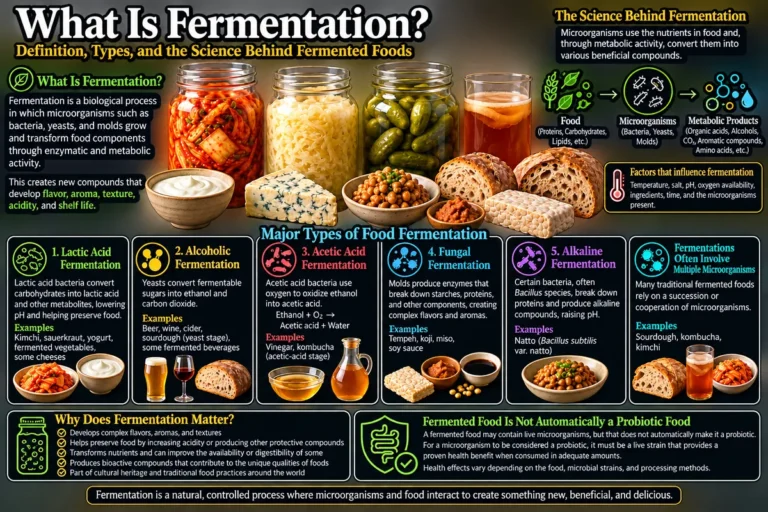
Korean vinegar begins where alcohol fermentation ends.
When rice wine or fruit wine is exposed to air under the right conditions, acetic acid bacteria convert the ethanol into acetic acid. The liquid turns sour. What was a drink becomes a seasoning.
This two-stage process ? first alcohol, then acid ? is the same biochemistry behind every vinegar tradition in the world. But Korean vinegar has its own history, its own microbial path, and its own role in a cuisine built around fermented foods.
A Brief History of Korean Vinegar
Records of vinegar use in Korea stretch back to the Three Kingdoms period. The Goryeo Dogyeong (高麗圖經), a historical document from the Goryeo dynasty, notes that Koreans regularly used vinegar in their cooking. By the Joseon dynasty, detailed vinegar recipes had made their way into major culinary texts — including the Eumsik dimibang (飮食知味方, ca. 1670) and the Gyuhap chongseo (閨閤叢書, 1809).
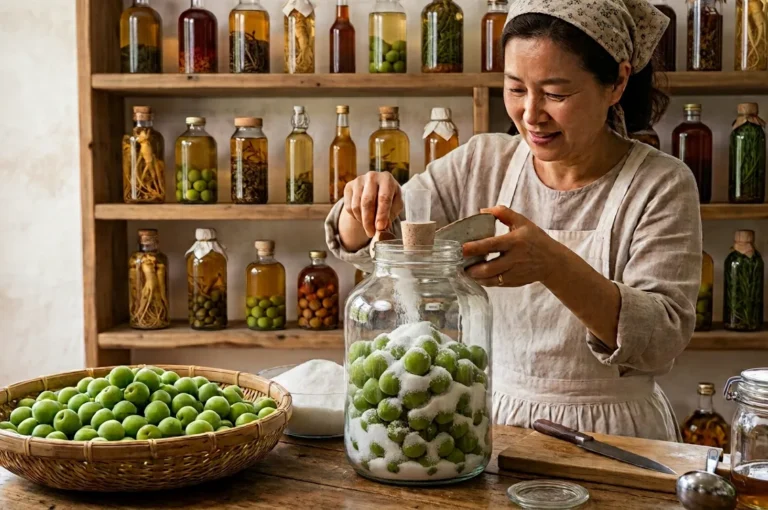
Traditional Korean vinegar falls into two broad categories: grain vinegar and fruit vinegar. Grain vinegars made from rice, barley, and sorghum formed the backbone of Korean food culture. Fruit vinegars — made from persimmons, maesil plums, and bokbunja raspberries — grew out of regional traditions that celebrated local ingredients. Jeolla Province’s persimmon vinegar and Gyeongsang Province’s rice vinegar are living culinary legacies, each shaped by the climate and produce of their home regions.
Beyond flavor, vinegar played a practical role in traditional Korean life. It acted as a natural preservative, extending the shelf life of foods. It was also a staple of royal court cuisine, appearing in cold vegetable dishes, raw fish preparations, and the beloved dipping sauce chojang.
The Science: How Traditional Vinegar Is Made
Traditional vinegar is the product of a two-stage fermentation process. Understanding both stages is the key to making great vinegar.
Stage 1: Alcoholic Fermentation (Anaerobic)
First, yeast — primarily Saccharomyces cerevisiae — breaks down the sugars in the raw ingredients (glucose, fructose, etc.) into ethanol and carbon dioxide. The reaction looks like this:
C₆H₁₂O₆ → 2C₂H₅OH + 2CO₂
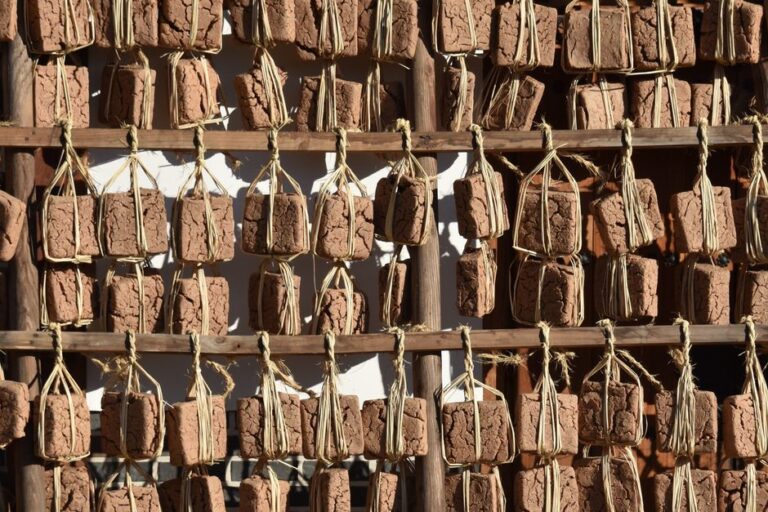
For grain vinegars, there’s an extra step before this can happen. Yeast can’t ferment starch directly, so nuruk — a traditional Korean fermentation starter made from wheat or rice — first converts the starch into fermentable sugars through saccharification. Korean nuruk is a complex ecosystem of molds (Aspergillus, Rhizopus, Mucor), wild yeasts, and lactic acid bacteria. That rich microbial community is exactly what gives traditional Korean fermented foods their layered, complex flavor.
Stage 2: Acetic Acid Fermentation (Aerobic)
In the second stage, acetic acid bacteria — mainly Acetobacter aceti and Acetobacter pasteurianus — take over. Given oxygen, these bacteria oxidize the ethanol into acetic acid (vinegar’s defining compound):
C₂H₅OH + O₂ → CH₃COOH + H₂O
This is where vinegar actually becomes vinegar. But the acetic acid is only part of the story. During this stage, hundreds of trace compounds also form — organic acids, amino acids, polyphenols. The longer and slower the fermentation, the more of these compounds accumulate, giving the vinegar a mellow, rounded taste that a quick industrial process simply can’t replicate.
Traditional Rice Vinegar vs. Commercial Vinegar
| Category | Traditional Rice Vinegar | Commercial Synthetic Vinegar |
|---|---|---|
| Production method | Natural fermentation (months to years) | Chemical synthesis or rapid fermentation |
| Main components | Acetic acid + organic acids + amino acid complex | Diluted glacial acetic acid |
| Acetic acid content | 4–7% | 6–9% (adjustable) |
| Free amino acids | Abundant (especially glutamic and aspartic acid) | Virtually none |
| Polyphenols | Present | Absent |
| Flavor profile | Soft and complex | Sharp and one-dimensional |
Traditional Korean Rice Vinegar Recipe (Home Version)
This recipe is adapted from Joseon-era culinary texts, updated for the modern home kitchen. Be patient — you’re looking at a minimum of 3 to 6 months from start to finish. That waiting time is what makes it worth it.
Ingredients (makes approximately 1.5L)
- Glutinous rice or regular short-grain rice: 500g
- Traditional nuruk starter: 100g (commercially available nuruk works fine)
- Water: 1.5L (chlorine-free filtered water, or water that has been boiled and cooled)
- Seed vinegar (joncho): 50ml, optional — use existing traditional vinegar to speed up fermentation
- Wide-mouth glass jar (2L or larger): 1
- Hanji (Korean traditional paper) or thin cotton cloth: enough to cover the jar opening
Step-by-Step Instructions
Step 1: Cook and Cool the Rice
Rinse the rice thoroughly and soak for at least 2 hours. Cook it into godubap — a slightly firm, dry-style steamed rice. Spread it out on a wide surface and let it cool completely to 25–30°C before moving on.
Step 2: Make the Mash (First Fermentation)
Sterilize your glass jar. Add the cooled rice, nuruk, and water, then mix well. If you have seed vinegar, add it now. Cover the jar opening with hanji or cotton cloth and secure it with a rubber band. Store in a warm spot at 25–30°C.
Step 3: Manage the Alcoholic Fermentation
For the first 1 to 2 weeks, stir the mash once or twice daily with a clean wooden spoon or chopsticks. This limits oxygen exposure and helps prevent contamination. Active bubbling means the fermentation is working. After about 3 to 4 weeks, the bubbling will slow down — at this point, you have something close to makgeolli, a milky rice wine.
Step 4: Strain the Liquid
Strain the mash through a fine cotton cloth or sieve to remove all solids. You’ll be left with a clear liquid with roughly 6–8% alcohol content. Transfer this liquid into a sterilized wide-mouth glass container or traditional earthenware jar.
Step 5: Start the Acetic Acid Fermentation (Second Fermentation)
Acetic acid bacteria need oxygen. Cover the container with cotton cloth — do not seal it shut. Keep it at 25–30°C away from direct sunlight. Within 2 to 4 weeks, a white film will begin forming on the surface of the liquid. This is the vinegar mother (초산균 막), and it’s a very good sign. Do not disturb it or skim it off.
Step 6: Age It
The vinegar’s sourness will intensify as fermentation progresses. A minimum of 3 months is required, but 6 months to a year of aging produces something noticeably smoother and more complex. Taste a small amount occasionally to check the acidity as it develops.
Step 7: Finish and Store
Once the vinegar has reached your preferred acidity, strain it again through a clean cloth and transfer it into sealed glass bottles. Store in the refrigerator. Save the vinegar mother — it can be used as a starter culture (joncho) for your next batch.
Key Tips for Success
- Temperature matters: Acetic acid bacteria work best between 25–30°C. In winter, you’ll need to keep the vinegar warm. In summer, watch out for over-fermentation.
- Sterilize everything: To prevent contamination from unwanted microbes, boil all tools and containers before use.
- Don’t seal the jar during the second fermentation: Acetic acid bacteria require oxygen. A sealed container will stop fermentation in its tracks.
- Keep pests out: The cloth cover protects the liquid from fruit flies and other insects. This is especially important during warm months.
What’s Actually Inside Traditional Rice Vinegar
A well-fermented traditional Korean rice vinegar contains acetic acid at 4–7%, along with a diverse range of organic acids including citric acid, malic acid, succinic acid, and tartaric acid. The nuruk fermentation process also contributes more than 20 types of free amino acids, various vitamins, and polyphenols derived from the original grain. The nutritional profile is far more complex than simple diluted acetic acid — which is exactly what you’re drinking when you reach for a bottle of standard commercial vinegar.
Note: The nutritional information in this article is for general educational purposes and is not intended as medical advice.
Final Thoughts
Making traditional Korean vinegar is a slow, deeply satisfying practice. You’re not just producing a condiment — you’re participating in a fermentation tradition that stretches back over a thousand years. Start a batch, be patient with it, and you’ll end up with something your ancestors would recognize.