Nuruk: The Wild Fermentation Starter Behind Korean Alcohol and Jang
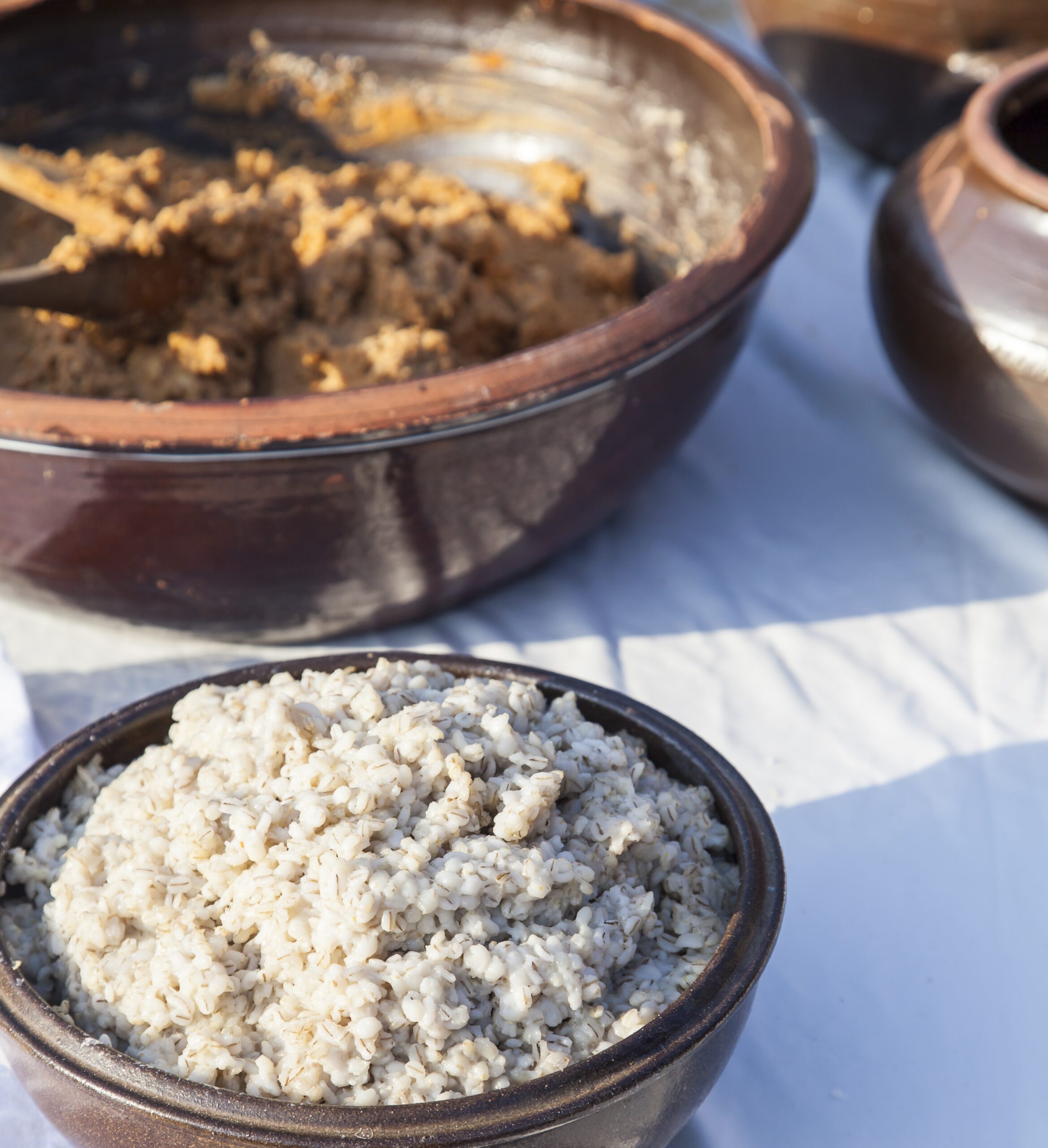
There is a hard, pale disc that sits at the beginning of nearly every traditional Korean fermentation.
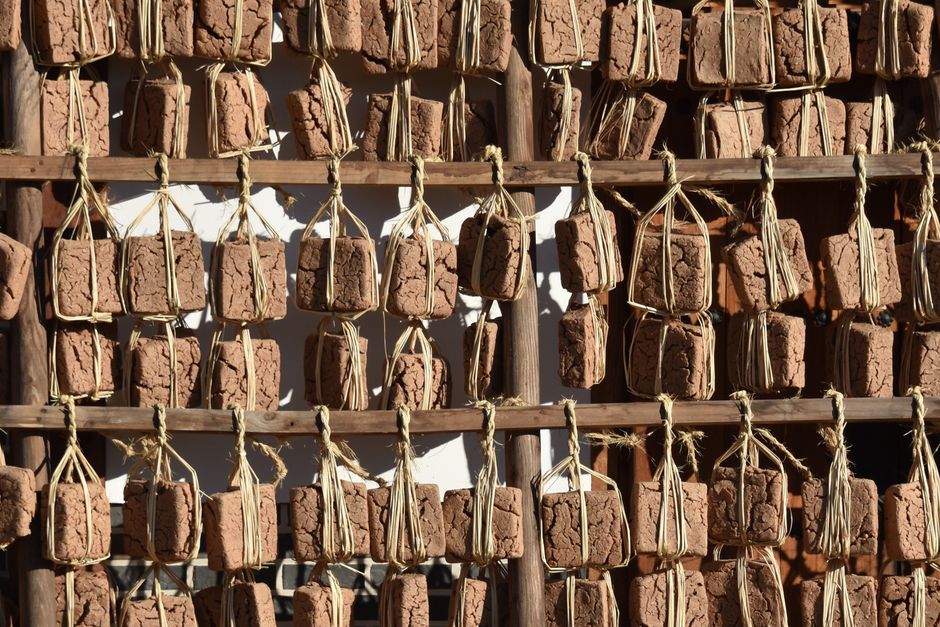
It does not look like much. A rough-surfaced cake of compressed grain, sometimes the size of a hand, sometimes larger. It smells earthy, faintly sweet, slightly musty. Its surface may show patches of white or yellow mold. It looks, to the uninitiated, like something that should be discarded.
That disc is nuruk.
And without it, makgeolli would not exist. Neither would cheongju, traditional soju, or the oldest versions of doenjang and ganjang.
Nuruk is not a single ingredient in the way that yeast is a single ingredient. It is a living ecosystem — molds, wild yeasts, and bacteria coexisting in a block of fermented grain. Understanding what nuruk is and how it works means understanding the foundation on which Korean fermentation culture was built.
What Nuruk Is
Nuruk is a fermentation starter made from grain — most commonly wheat, but also rice or barley.
The grain is coarsely ground or left partially whole, moistened, and pressed into flat disc shapes. These discs are placed on straw or rice stalks in a warm, ventilated space and left to ferment spontaneously for two to eight weeks. During that time, wild microorganisms from the surrounding environment colonize the grain.
No cultures are added.
No specific strains are inoculated.
The microbial community develops entirely on its own, shaped by the local air, the local temperature, the local humidity, and the microbial populations present in the production environment.
When the process is complete, the nuruk contains a complex ecosystem of organisms working in concert. Researchers at the Korea Food Research Institute have documented over 100 distinct microbial species in a single nuruk sample. That diversity is not incidental. It is the defining characteristic of nuruk and the primary reason Korean traditional ferments taste the way they do.
The Microorganisms Inside Nuruk
Three groups of organisms coexist within a mature nuruk disc, and each performs a different function.
The first group is filamentous fungi — molds. The dominant genera are Aspergillus, Rhizopus, and Mucor. These organisms produce hydrolytic enzymes, particularly amylases and proteases, that break down the starches and proteins in grain into simpler molecules. Amylases convert starch into fermentable sugars. Proteases break proteins into amino acids and peptides. Without these enzymes, the raw grain would remain largely inaccessible to the other organisms in the system.
The second group is wild yeasts, including Saccharomyces cerevisiae and various Pichia species. These organisms convert the sugars produced by the molds into ethanol and carbon dioxide. This is the alcoholic fermentation that produces makgeolli, cheongju, and the base liquid from which traditional soju is distilled.
The third group is bacteria, primarily lactic acid bacteria such as Lactobacillus and Pediococcus species, along with Bacillus subtilis. The lactic acid bacteria produce organic acids that lower the pH of the fermenting mixture, creating conditions that suppress many spoilage organisms. Bacillus species contribute to protein breakdown and produce compounds that influence the final flavor profile.
These three groups do not work sequentially in the way that the microbial succession in kimchi or sauerkraut proceeds. In nuruk, they coexist simultaneously, each group’s metabolic activity supporting or modifying the activity of the others. The molds provide sugars for the yeasts. The bacteria create acidity that shapes which molds and yeasts thrive. The yeasts produce alcohol that further alters the microbial environment.
This simultaneous, multi-kingdom fermentation is what makes nuruk unusual among fermentation starters worldwide.
Nuruk and Koji: A Necessary Distinction
The comparison arises naturally because both nuruk and koji serve similar functions — they provide enzymes that convert grain starches into fermentable sugars.
But the two starters are fundamentally different in their microbial philosophy.
Koji is a controlled, single-species culture. In Japanese fermentation tradition, koji production involves inoculating steamed grain with a specific strain of Aspergillus oryzae (or occasionally Aspergillus sojae or Aspergillus luchuensis) under carefully managed temperature and humidity conditions. The goal is precision. One organism. One enzymatic profile. Predictable, reproducible results.
Nuruk is deliberately wild. The grain is exposed to whatever microorganisms exist in the production environment. The resulting culture is variable, complex, and unique to its place of origin. Different regions, different seasons, and different production environments produce nuruk with different microbial compositions.
This is why traditional Korean brewers speak of a sense of place in their ferments with a specificity that resembles the way winemakers discuss terroir. It is not metaphor. The wild microbes in the nuruk literally reflect where they came from.
The practical consequence is that koji produces cleaner, more predictable fermentation outcomes. Nuruk produces rougher, more complex, and more variable results. Neither approach is superior. They represent different fermentation philosophies — one prioritizing control, the other embracing microbial diversity.
| Nuruk (Korea) | Koji (Japan) | |
|---|---|---|
| How it starts | Left open to the environment; nothing is added | Inoculated with a purchased pure culture |
| Main organisms | A mixed community — molds such as Aspergillus and Rhizopus, plus wild yeasts and bacteria | Mainly Aspergillus oryzae, grown alone |
| Substrate | Usually crushed wheat, sometimes rice or barley, pressed into a cake | Steamed rice or barley, kept as loose grains |
| Form | Dense disc or brick | Loose, fluffy grain covered in white mold |
| Yeast | Wild yeast arrives with the mold, so nuruk can ferment and raise alcohol on its own | Brewer’s yeast is added separately for sake |
| Result | Makgeolli, takju, traditional vinegars; batches vary | Sake, miso, soy sauce; highly repeatable |
The short version: koji is a single organism a brewer chooses, and nuruk is a small ecosystem a brewer inherits. That is also why nuruk-brewed makgeolli from two producers can taste noticeably different, while sake breweries can hold a house style for decades. Our guide to the molds used in fermentation goes further into what each organism contributes.
The Types of Nuruk
Not all nuruk is the same. The base grain, the grind size, and the intended use produce distinct varieties.
Wheat nuruk, called milnuruk, is the most common type. Made from coarsely ground whole wheat, it is the standard starter for brewing makgeolli and cheongju. Its flavor contribution is earthy and slightly sweet.
Rice nuruk, called ssal-nuruk, is made from rice and superficially resembles Japanese koji, though the production method differs. It is often used in sweet fermented preparations.
Barley nuruk, called bori-nuruk, uses barley as the base grain and imparts a distinctively nutty, savory character to the finished product.
Within these grain categories, further distinctions exist based on grind size. Jogok uses coarsely ground grain. Segok uses more finely milled grain, providing greater surface area for microbial colonization and faster enzyme production. Bungok is made from finely ground wheat flour and is used in premium yakju and high-grade cheongju production, where a more refined flavor is desired.
Each type carries a different balance of organisms, produces a different enzymatic profile, and contributes differently to the final product. A brewer choosing nuruk is making a decision about flavor, fermentation speed, and complexity.
A History Compressed Into Grain
Nuruk-based fermentation appears in Korean records stretching back to the Three Kingdoms period.
The Samguk Sagi and Samguk Yusa, among Korea’s oldest surviving historical texts, record that grain wines were being brewed in Silla and Goguryeo. This tells us that nuruk-based fermentation was already an established practice by the seventh century.
During the Goryeo dynasty, brewing culture grew more sophisticated. By the Joseon period, nuruk had become central to domestic life. Detailed recipes for making nuruk and brewing traditional liquors appeared in landmark culinary texts — the Eumsik dimibang, written by the noblewoman Jang Gye-hyang in the seventeenth century, the Gyuhap chongseo, and the Gosa chalyo among them.
What makes the Joseon period especially important is the tradition of gayangjoo — household brewing. Individual families developed their own nuruk recipes and brewing methods. Because microbial communities vary naturally according to climate and local environment, each household’s nuruk carried a distinct microbial signature. This is why regional liquors like Andong soju, Igangju, and Munbaeju each developed their own unmistakable character. The terroir was embedded in the nuruk itself.
Japanese colonial rule in the early twentieth century disrupted this tradition profoundly. Colonial alcohol regulations pushed households away from home brewing and toward industrially produced alcohol. After liberation, those regulations evolved into modern licensing laws that continued to restrict traditional home brewing for decades.
The revival of interest in traditional Korean fermentation — particularly in traditional alcohol production — has brought nuruk back into wider attention. Small-scale nuruk producers and traditional brewers are working to recover techniques and microbial traditions that were nearly lost. Research institutions have begun systematically cataloging the microbial diversity of traditional nuruk from different regions, creating a scientific record of something that was previously transmitted only through practice.
How Nuruk Works in Practice
When nuruk is added to cooked grain — steamed rice, most commonly — and mixed with water, the enzymes produced by the molds immediately begin breaking down starches.
This process, called saccharification, converts complex carbohydrates into simple sugars — glucose, maltose, and other fermentable molecules. Unlike the two-stage process used in Western brewing, where malting (enzyme production) and fermentation (sugar conversion to alcohol) happen separately, nuruk-based fermentation is a parallel process. Saccharification and alcoholic fermentation occur simultaneously in the same vessel. The molds produce sugars. The yeasts consume them and produce alcohol. The process continues until the sugars are exhausted or the alcohol concentration inhibits further yeast activity.
This parallel fermentation is called byeonghaeng bokbalhyo in Korean fermentation terminology. It is one of the distinguishing features of nuruk-based alcohol production and one of the reasons traditional Korean rice wines can achieve relatively high alcohol levels — sometimes 15 to 18 percent — without distillation.
The bacteria in the nuruk contribute organic acids throughout this process. The resulting acidity helps suppress unwanted organisms and contributes the slight tartness that characterizes well-made makgeolli.
Making Nuruk
Traditional nuruk production is straightforward in concept and demanding in execution.
The grain is coarsely ground, moistened to form a stiff dough, and pressed into disc shapes. The discs are placed on straw in a warm, humid environment — traditionally a dedicated nuruk room with controlled ventilation. Temperature and humidity must be managed carefully. Too much moisture encourages the wrong organisms. Too little prevents adequate colonization.
Over the following two to eight weeks, the discs develop visible mold growth on their surfaces. The interior dries and hardens as the microorganisms consume moisture and starch. The nuruk is turned periodically to ensure even colonization.
When complete, the nuruk is dried thoroughly for storage. Well-made nuruk can be stored for months before use, with the organisms entering a dormant state that reactivates when the nuruk is rehydrated and mixed with cooked grain.
The process sounds simple. The difficulty lies in managing the environmental conditions precisely enough to encourage a healthy microbial community while preventing the establishment of organisms that produce off-flavors or potentially harmful metabolites. This is why traditional nuruk making was a skilled craft, learned through years of practice and observation.
What Nuruk Produces
The flavor contribution of nuruk extends far beyond the alcohol it helps create.
During fermentation, the complex microbial community in nuruk produces a wide range of metabolites — organic acids, esters, higher alcohols, aldehydes, and volatile aromatic compounds. These metabolites interact to create the flavor profiles characteristic of traditional Korean fermented beverages.
Makgeolli’s characteristic combination of sweetness, slight tartness, effervescence, and earthy depth is a direct expression of nuruk’s microbial diversity. The slight funkiness that distinguishes traditional makgeolli from commercial versions made with purified yeast and enzyme preparations reflects the broader metabolite profile that wild fermentation produces.
In traditional jang production, nuruk plays a supporting role alongside meju. The enzymes in nuruk assist in breaking down the grain components of the fermentation mixture, while the meju contributes the soybean-derived enzymes and microorganisms that drive the primary flavor development.
The Living Starter
Most fermentation starters used around the world today are products of controlled microbiology. Commercial yeast is a single, isolated strain. Industrial koji is produced with standardized Aspergillus cultures. Even sourdough starters, while containing mixed cultures, are typically maintained and refreshed under consistent conditions.
Nuruk remains different.
It is still, in its traditional form, a product of place and chance and accumulated knowledge. Each batch reflects the microorganisms present in the air, on the straw, in the grain, and in the room where it was made. Each batch is unique.
That variability is exactly what industrial fermentation has spent decades trying to eliminate. And it is exactly what makes traditional Korean ferments taste the way they do.
The rough disc of compressed grain does not look like the foundation of a cuisine’s fermentation tradition.
But that is what it is.
This content is for informational purposes only and is not medical advice.
Related Reading
Buying Nuruk Outside Korea
Nuruk is harder to find abroad than koji, but it is not rare. Korean grocery stores usually carry it in the dry-goods aisle near rice flour and malt, sold as a pressed disc or as coarse powder in a sealed bag, and online Korean grocers ship it internationally.
A few things to check before buying:
- Whole disc or powder. Powder dissolves and starts working faster, which suits a first batch. Whole discs keep longer and are broken up by hand before use.
- Look at the date. Nuruk is alive. Old stock ferments slowly and unpredictably, which is the most common reason a first attempt at homemade makgeolli stalls.
- Smell it if you can. Good nuruk smells earthy and faintly sweet, like a grain field after rain. Sharp mustiness or any ammonia note means it has been stored badly.
- Store it cold and dry. Sealed in the refrigerator or freezer, it holds its activity for months. In a warm kitchen it fades.
Substituting koji for nuruk works, but it changes the drink rather than replacing the ingredient. Koji brings the enzymes and none of the wild yeast, so a koji-based rice brew needs yeast added and ends up cleaner and simpler than makgeolli made with nuruk.
Frequently Asked Questions
What is nuruk made of?
Nuruk is made by mixing crushed wheat (or sometimes rice or barley) with water, shaping it into flat discs, and allowing wild molds, yeasts, and bacteria from the environment to colonize it over several weeks. No commercial starters are added — it relies entirely on ambient microorganisms.
How is nuruk different from koji?
Both are grain-based fermentation starters, but koji (used in Japanese fermentation) is inoculated with a single selected strain of Aspergillus oryzae. Nuruk uses a wild, mixed culture — multiple mold species, wild yeasts, and bacteria ferment together, creating a more complex and unpredictable microbial ecosystem.
Can I make nuruk at home?
Yes, but it requires patience and the right conditions. You need crushed wheat, a warm and humid environment for incubation, and 2 to 4 weeks of controlled fermentation. The results vary depending on your local microbiome, which is part of what makes homemade nuruk unique.
What is nuruk used for?
Nuruk is essential for making makgeolli (Korean rice wine), soju, and traditional jang (fermented pastes like doenjang and ganjang). It provides the enzymes that break down starches into sugars, which then ferment into alcohol or develop the deep umami flavors in Korean sauces.
Can I use koji instead of nuruk to make makgeolli?
You can, and the result will be drinkable, but it will not taste like traditional makgeolli. Koji supplies the enzymes that convert rice starch into sugar, but not the wild yeasts and bacteria that nuruk brings with it, so you have to add yeast yourself and the finished drink is cleaner and less complex.
Where can I buy nuruk?
Korean grocery stores usually stock it near rice flour and malt, in disc or powder form, and Korean online grocers ship internationally. Check the production date, keep it sealed in the refrigerator or freezer, and use powder rather than a whole disc for a first batch.