How to Store Fermented Foods the Right Way
How long kimchi, doenjang, gochujang and jeotgal keep, at what temperature and in which containers, plus the signs that a ferment has gone bad.
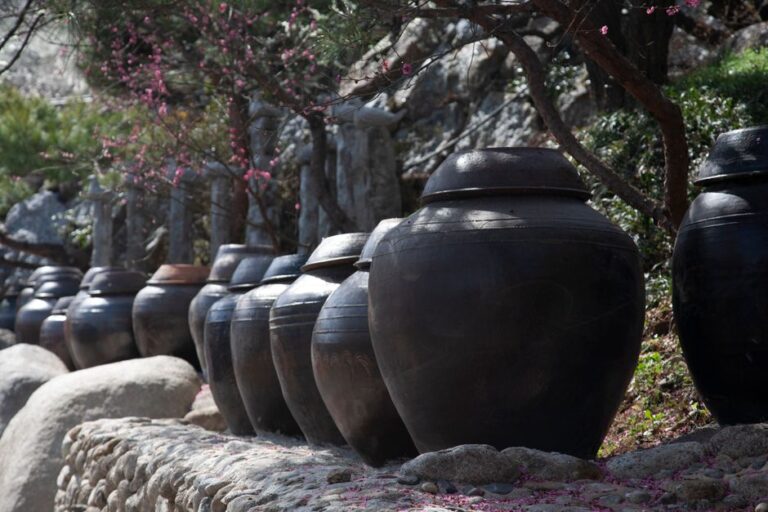
How long kimchi, doenjang, gochujang and jeotgal keep, at what temperature and in which containers, plus the signs that a ferment has gone bad.
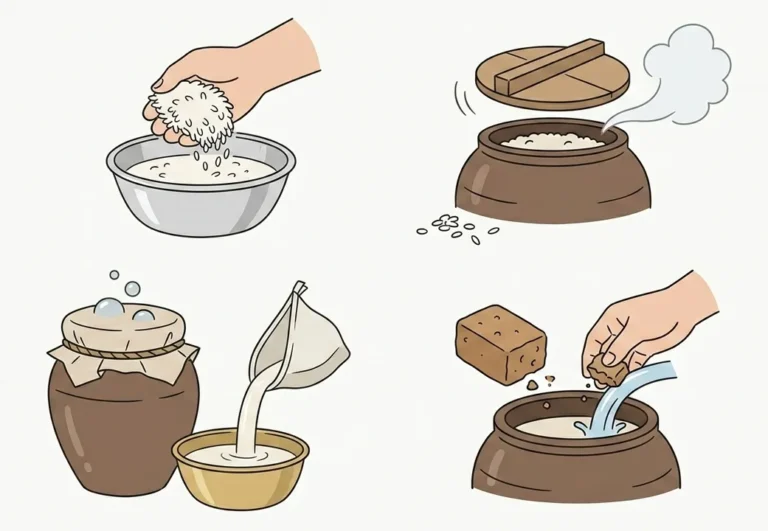
Most people try makgeolli for the first time and think it’s a mistake. It’s cloudy. It’s thick. It smells faintly of bread dough and wet grain, and the flavor hits somewhere between sweet, sour, and something almost funky. They assume it went bad. It didn’t. That’s just what makgeolli is — and once you understand…
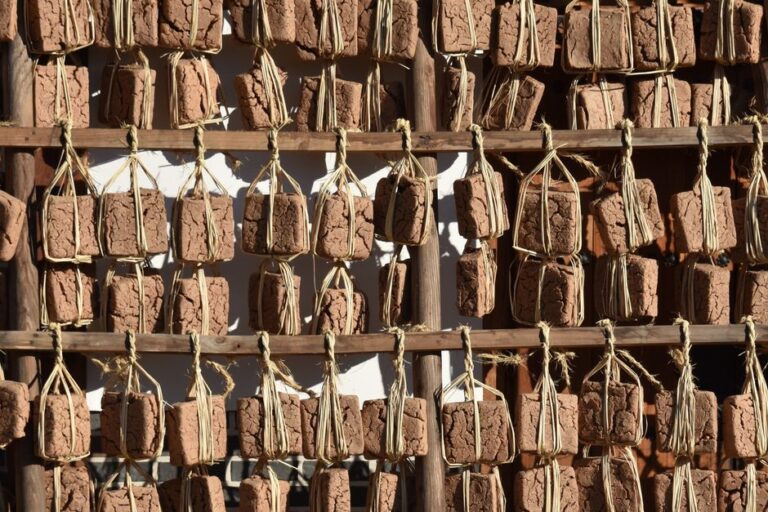
Nuruk is Korea’s grain-based wild starter for makgeolli. What lives in it, how it differs from Japanese koji, how it is made, and where to buy it.
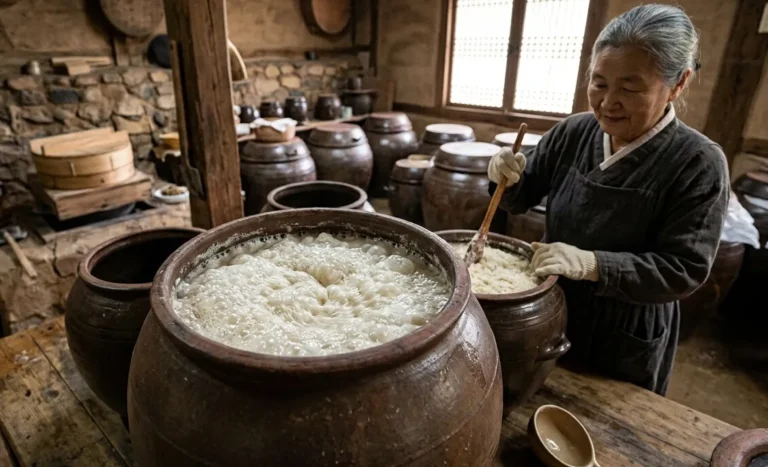
Kombucha, kefir and makgeolli compared: their origins, how each ferments, nutrition, what the health evidence shows, and which to choose.
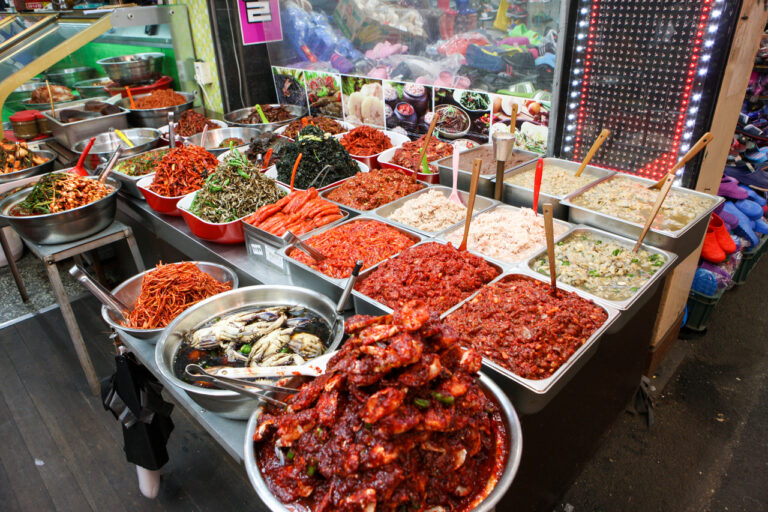
Jeotgal is Korean salt-fermented seafood. What it is, the main types, how it differs from fish sauce, how to store it, and kimchi without it.

How to brew makgeolli at home with nuruk: what lives in nuruk, how to make nuruk from scratch, and a basic rice makgeolli recipe.

AI-generated illustration (not a photograph). Korean vinegar begins where alcohol fermentation ends. When rice wine or fruit wine is exposed to air under the right conditions, acetic acid bacteria convert the ethanol into acetic acid. The liquid turns sour. What was a drink becomes a seasoning. This two-stage process, first alcohol, then acid, is the…
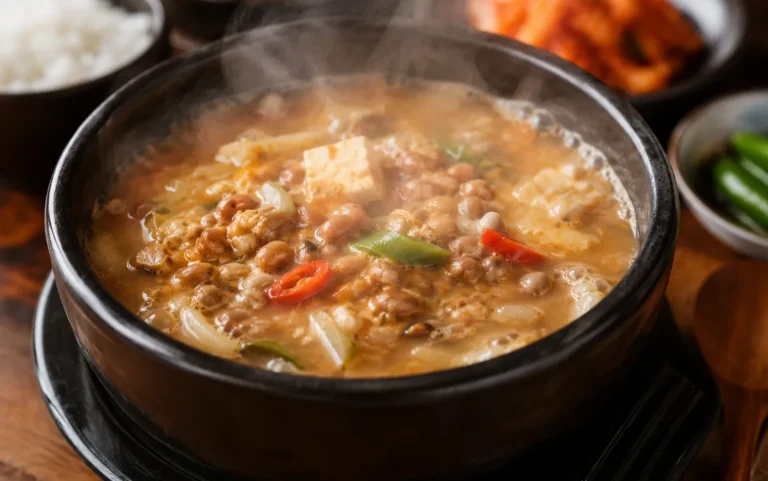
Cheonggukjang and natto share Bacillus subtilis but differ in taste and culture. A side-by-side comparison, plus a cheonggukjang jjigae recipe.

Fermentation is the process by which microorganisms transform food. Bacteria convert sugars into lactic acid. Yeasts convert sugars into alcohol. Molds break down proteins and starches into simpler compounds. In each case, the food that comes out is chemically different from the food that went in — different in flavor, texture, nutritional profile, and shelf…

The Rich, Tangy, Umami-Packed Story of Korean Fermentation The earthy aroma of doenjang jjigae. The sharp, lively scent of kimchi. The deep, layered flavor of soy sauce aged in clay pots. These foods have been part of Korean meals for centuries. Now, quietly but unmistakably, they’re finding their place on tables around the world. Kimchi…