The Science of Salt: The Secret Force Behind Fermentation
The Science of Salt: The Secret Force Behind Fermentation
Growing up, I watched my mother make kimchi by grabbing fistfuls of salt and scattering it over the cabbage without measuring anything. I always wondered — is that actually the right amount? What happens if it’s too salty? What if it’s not salty enough? When I started studying fermentation, I finally got my answers. Salt isn’t just seasoning. It’s the central variable that shapes the entire fermentation process.
Without Salt, It’s Not Fermentation — It’s Rot
Fermentation and spoilage are, at their core, the same thing: microorganisms breaking down organic matter. The difference comes down to one question — which microorganisms are in charge?
Salt is a selector. As salt concentration rises, most harmful bacteria can’t survive the osmotic pressure — the movement of water across cell membranes driven by concentration differences. Their cell walls shrink and they stop functioning. Lactic acid bacteria (primarily Lactobacillus species), on the other hand, are relatively salt-tolerant. They survive. They consume sugars and produce lactic acid, which acidifies the environment. And that acidic environment makes it even harder for harmful bacteria to take hold. Salt essentially clears the stage and hands the spotlight to lactic acid bacteria.
Without enough salt, the opposite happens. Harmful bacteria colonize first. Food turns mushy and develops off odors. That’s not fermentation — that’s spoilage. Salt is the first gate every fermented food has to pass through.
Learn These Numbers and Cut Your Failures in Half
Working by feel alone leads to inconsistent results every time. Knowing the right concentration ranges gives you a much more reliable foundation.
- Kimchi (salting stage): 2–3% salt by weight of the cabbage. When brining in water, a 10–15% salt solution is standard.
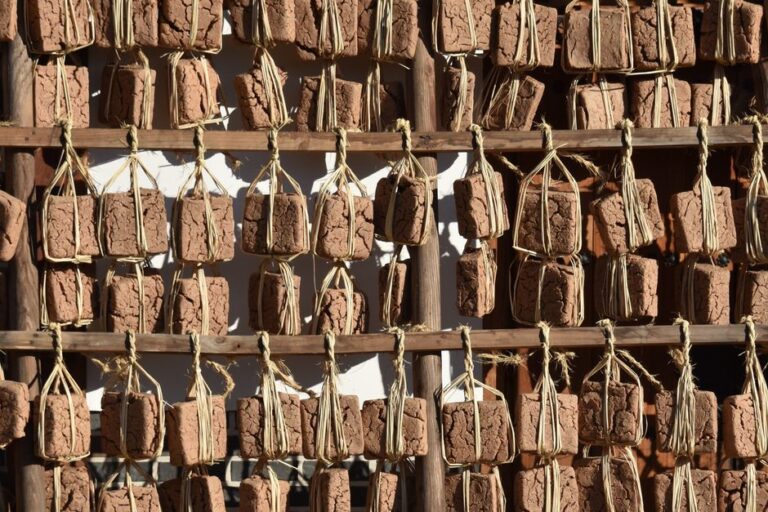
- Ganjang (soy sauce): Starts at an 18–20% brine relative to the fermented soybean blocks (meju).
- Doenjang (fermented soybean paste): Ferments stably at a salinity of 10–13%.
These aren’t absolute rules. When temperatures are high, microbial activity speeds up, so you need a little more salt. In cooler conditions, you can ease back slightly. Adjusting salt by season is actually the correct approach — it’s one of the reasons summer kimchi and winter kimchi taste so different.
Practical tip: If you don’t own a salinity meter, there’s an old method using a raw egg. Drop an unwashed fresh egg into your brine. If it floats and exposes a surface about the size of a 500-won coin (roughly 2.5 cm in diameter), the concentration is approximately 15%. It’s not perfectly precise, but it’s enough to keep you out of serious trouble.
Salt Type Changes Fermentation Outcomes
Salt is salt, right? Not quite.
Refined salt — the kind made through industrial ion exchange membrane processing — is nearly pure sodium chloride, around 99% or higher. It contains almost no minerals. It draws water out of vegetables quickly, but the texture ends up less firm and you get a lot of liquid. It’s generally not recommended for fermented foods.
Solar sea salt is different. Alongside sodium chloride, it contains minerals like magnesium, calcium, and potassium. Magnesium in particular may help maintain the structural integrity of vegetable cell walls. That’s part of why kimchi made with sea salt stays crunchier. One thing to watch: sea salt contains bittern (the bitter residue left after salt crystallizes from seawater), and you want to use salt where that bittern has been properly removed. This is why aged sea salt — typically three or more years old — is preferred.
Practical tip: Not sure if your sea salt has had the bittern removed? Toss a small handful into a hot dry pan. If it pops, crackles, or foams, bittern is still present. Use it as-is and that bitterness will seep into your fermented food. To fix it, place the salt in a mesh bag and leave it somewhere with good airflow for two to four weeks, or wrap it in cheesecloth, set it in a colander, and let it drain naturally.
Practical tip: If you buy salt in bulk, store it away from direct sunlight in a cool, well-ventilated spot. Salt doesn’t spoil, but it absorbs moisture and clumps. Clumped salt can be dissolved and used again, but it becomes a pain to measure accurately — which matters a lot in fermentation.
How to Reduce Salt Without Destabilizing Fermentation
Concerns about sodium are legitimate. Most fermented foods are high in salt — kimchi, doenjang, ganjang, jeotgal (salted seafood) all carry significant sodium levels. Eating large quantities daily may be a concern for people managing blood pressure. According to the U.S. Centers for Disease Control and Prevention (CDC), excess sodium intake is associated with elevated blood pressure in some individuals, and health authorities generally recommend being mindful of sodium consumption.
Simply cutting salt without any strategy will destabilize fermentation. So if you want to reduce it, use these approaches:
Lower the temperature. Microbial activity slows down in cold environments — including the activity of harmful bacteria. This means less salt can still hold things together. Cold fermentation works on this principle. Reducing salt by roughly 5–10% while keeping fermentation temperatures at or below 5°C (41°F) may offer comparable safety.
Compensate with acidity. Adding a small amount of something that lowers pH — like maesil (green plum) syrup or lemon juice — can help create an environment that’s hostile to unwanted bacteria, partially supplementing the role of salt during the early stages of fermentation.
Adjust how you eat it. You can manage your absolute sodium intake by eating fermented foods alongside fresh vegetables, reducing portion sizes, or eating smaller amounts more frequently throughout the day rather than large servings at once.
Try It Yourself: Salt Concentration Experiment with Pickled Radish
The fastest way to understand fermentation theory is to make something with your own hands. This recipe lets you compare three different salt concentrations side by side and see — and taste — exactly what salt does.
Ingredients (three versions, 500g each)
- 1.5 kg Korean radish (daikon), divided into three equal portions of 500g each
- Solar sea salt (bittern removed)
- 30 ml rice vinegar (to assist fermentation)
- 15 g sugar
- 500 ml water
Salt Levels
- Version A – 1.5% (low salt): 7.5g salt
- Version B – 3% (standard): 15g salt
- Version C – 5% (high salt): 25g salt
Steps
- Slice the radish into half-moon shapes, about 1 cm thick.
- Dissolve the sugar and vinegar into the 500 ml of water.
- Add the appropriate amount of salt to each of three separate containers and mix well.
- Add the radish slices to each container and cover with a lid.
- Leave at room temperature (20–22°C / 68–72°F) for 48 hours.
- After 48 hours, compare color, smell, texture, and taste across all three versions.
Version A will likely turn sour quickly or become soft. Version B should hold its crunch while fermenting steadily. Version C will ferment slowly and taste noticeably salty. Set all three next to each other and the effect of salt on fermentation becomes impossible to ignore.
⚠️ Important Notice
The information in this article covers general knowledge about fermentation and the role of salt. If you have a health condition that requires limiting sodium intake — including high blood pressure, kidney disease, or heart disease — please consult a qualified healthcare professional before making significant changes to your consumption of fermented foods. The content here is not intended for the diagnosis, treatment, or prevention of any disease.
This content is for informational purposes only and is not medical advice.