Kimchi Varieties by Region – 200+ Types Explained
Most people think kimchi is one thing: red, spicy, fermented cabbage.
You see it in grocery stores, Korean barbecue restaurants, and increasingly in fusion dishes around the world. It is easy to assume that you already know what kimchi tastes like.
You don’t.
Korea has a long history of fermenting vegetables, and kimchi developed differently across the Korean Peninsula. Climate, local ingredients, seafood availability, salt levels, seasonal produce, and household traditions all influenced the way people made and stored kimchi.
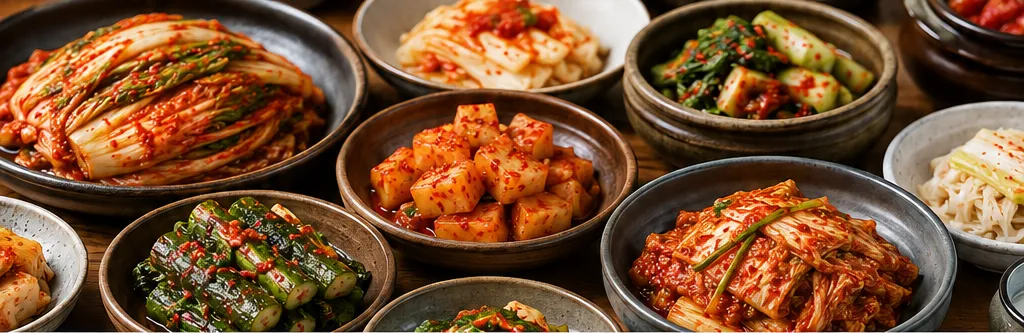
There are far more than 200 recognized kimchi varieties and preparations when regional, seasonal, and ingredient-based variations are included. Korean food classification projects have documented thousands of distinct kimchi items, although the exact number depends on how varieties and regional variations are defined.
Many of these preparations rarely appear on restaurant menus outside Korea. Some are still primarily home foods, preserved through family and regional traditions rather than commercial production.
This article breaks down the regional logic behind kimchi, the major varieties you should know, some flavors you may never have encountered, and the practical knowledge that can help you understand kimchi beyond the standard red napa cabbage version.
The Big Regional Split: North vs. South — and Why It Matters
One of the most useful ways to understand Korean kimchi geography is through climate and food culture.
Northern regions of the Korean Peninsula historically experienced colder, longer winters. This influenced fermentation and food storage practices. Northern-style kimchi is often described as relatively mild, lightly seasoned, and more broth-oriented than some southern styles.
Southern regions generally have warmer climates and historically developed kimchi traditions with more assertive seasoning. Chili, garlic, fermented seafood, and other strong seasonings are commonly associated with many southern preparations.
But this is a general tendency, not a strict rule.
Kimchi traditions changed over time, and individual households could make kimchi very differently even within the same province. Regional styles should therefore be understood as patterns rather than fixed recipes.
The east-west divide also matters.
Coastal communities had access to different seafood resources, and fermented seafood products such as salted shrimp, anchovy sauce, squid, and other seafood ingredients became important in many regional cuisines. The exact ingredients varied considerably by location and household.
Island regions such as Jeju also developed distinctive food traditions because of their geography, agricultural conditions, and access to local seafood.
The result is one of the most interesting things about kimchi:
The same basic idea — preserving vegetables through salting and fermentation — produced remarkably different foods.
The Major Regional Varieties You Need to Know
Let’s go region by region.
Gyeonggi-do — Including Seoul
Gyeonggi-do occupies the central part of the Korean Peninsula and historically included the political and culinary influence of the royal capital.
Kimchi from this region is often characterized as relatively balanced in seasoning — generally neither as mild as some northern traditions nor as intensely seasoned as some southern preparations.
Baechu Kimchi
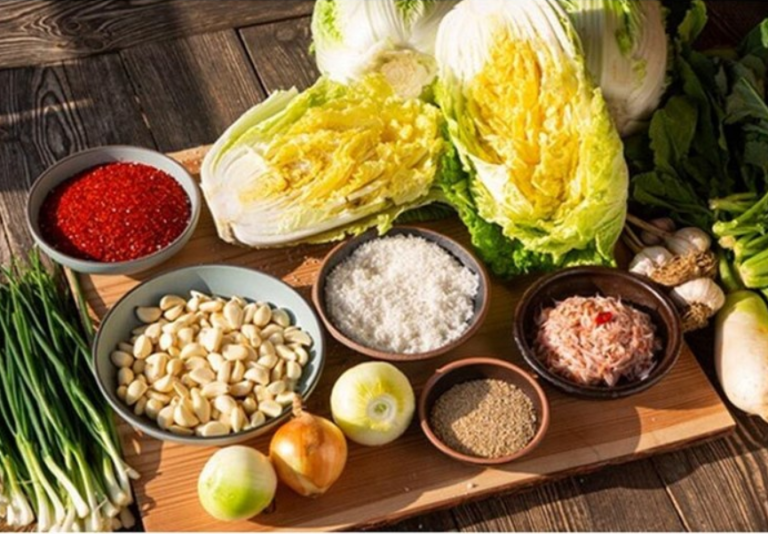
Napa cabbage kimchi is commonly seasoned with gochugaru, garlic, ginger, salted shrimp, and sometimes fermented anchovy products.
The result can combine saltiness, acidity, heat, and umami without any single flavor necessarily dominating.
Of course, recipes vary significantly from household to household.
Kkakdugi
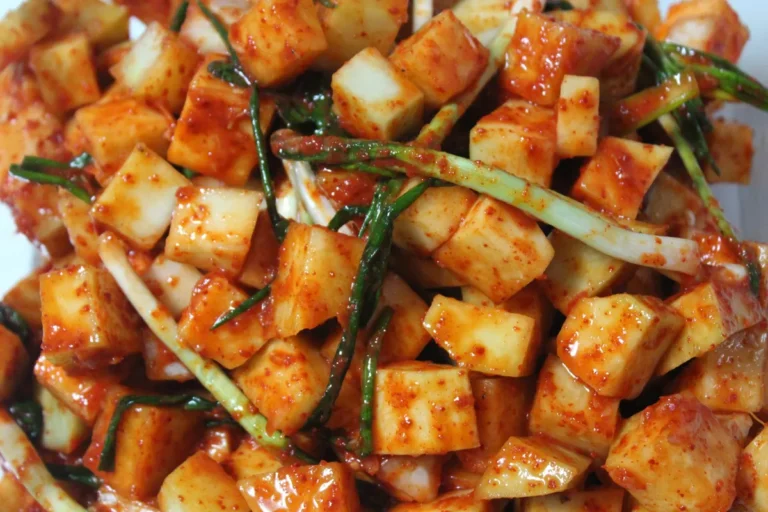
Kkakdugi is cubed radish kimchi.
The radish is cut into cubes, salted, seasoned, and fermented. It is often crunchy when relatively fresh and becomes softer and more intensely fermented as it ages.
It is particularly well known as a companion to rich soups such as seolleongtang.
Nabak Kimchi
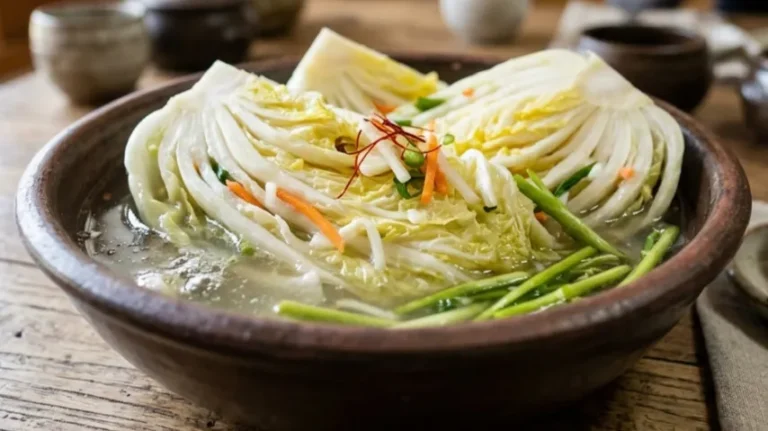
Nabak kimchi is a lightly seasoned, broth-style kimchi made with napa cabbage, radish, and sometimes other vegetables.
Its pale red or pinkish broth comes from a relatively small amount of chili powder. Compared with heavily seasoned red kimchi, it tends to be lighter, cleaner, and more refreshing.
Oisobagi
Oisobagi is stuffed cucumber kimchi.
Cucumbers are cut to create openings and filled with seasoned vegetables such as garlic, green onion, and chives.
It can be eaten relatively fresh or allowed to ferment briefly, producing a crisp, bright, garlicky flavor.
Jeolla-do
Jeolla-do is widely associated with strongly seasoned and richly flavored food.
One characteristic frequently associated with Jeolla-style kimchi is the use of fermented seafood products, including salted shrimp, fermented anchovy, and other jeotgal.
These ingredients contribute salt, umami, and additional fermentation-derived flavors.
That does not mean every Jeolla kimchi uses multiple types of fermented seafood. Regional and household recipes vary considerably.
Gat Kimchi
Gat kimchi is made with mustard greens.
The leaves have a distinctive peppery, slightly bitter, aromatic character. Fermentation softens some of that sharpness while adding acidity and savory depth.
It is particularly associated with the southern coastal areas of Jeolla-do.
Yeolmu Kimchi
Yeolmu kimchi is made from young radish and its leafy greens.
The radish provides crunch, the stems provide a pleasant chew, and the leaves become softer during fermentation.
It is strongly associated with spring and summer eating and is often enjoyed with noodles or rice.
Gyeongsang-do
Gyeongsang-do has its own strong-flavored kimchi traditions.
Compared with the layered, seafood-rich flavors often associated with Jeolla cuisine, some Gyeongsang-style preparations are characterized by a more direct salty, savory profile.
Again, this is a regional tendency rather than a rule that applies to every household.
Buchu Kimchi
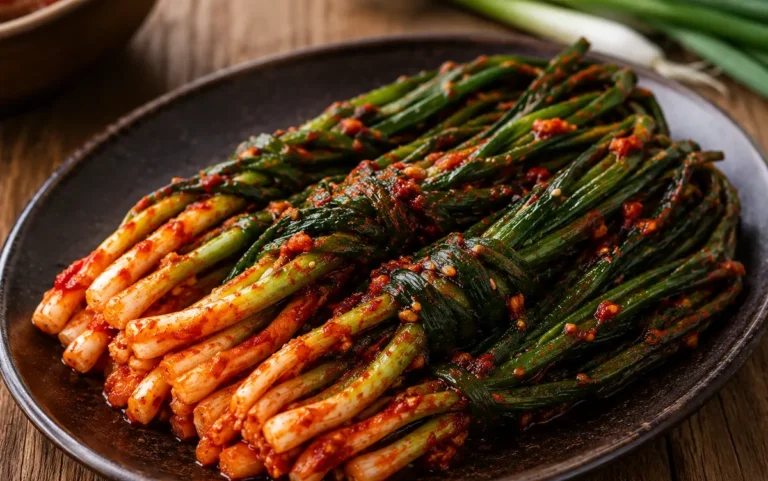
Buchu kimchi is garlic chive kimchi.
Fresh garlic chives have a strong, slightly sulfurous aroma. Fermentation softens the sharpness and develops a deeper, more rounded flavor.
The texture also changes as fermentation progresses.
Radish Kimchi
Gyeongsang-style radish preparations can use larger pieces of radish and relatively assertive seasoning.
Longer fermentation produces a deeper savory and acidic character.
Chungcheong-do
Chungcheong-do occupies a central part of Korea and has a number of kimchi traditions with relatively restrained seasoning.
Some traditional preparations avoid fermented seafood and rely more heavily on salt, vegetables, garlic, ginger, and chili.
The result can taste cleaner and brighter than heavily seafood-seasoned styles.
However, it would be inaccurate to say that all Chungcheong kimchi is vegetarian or completely free of seafood. Recipes vary by region, period, and household.
Nabak Kimchi
Nabak kimchi is also associated with Chungcheong traditions, as well as Gyeonggi-do.
Its relatively clear broth and restrained seasoning make it a useful example of how Korean kimchi can be refreshing rather than intensely spicy.
Hamgyong-do and Pyongan-do — Northern Traditions
Northern Korean kimchi traditions developed under colder climatic conditions.
Many northern-style preparations are characterized by relatively simple seasoning and a greater emphasis on the natural flavor of the vegetables and fermentation broth.
Baek Kimchi
Baek kimchi is white kimchi.
It is made without the heavy red chili seasoning associated with modern red napa cabbage kimchi.
The flavor is generally clean, mildly acidic, refreshing, and relatively delicate.
Baek kimchi is not simply a modern version of red kimchi with the chili removed. It represents an important branch of Korea’s older non-red kimchi traditions.
Dongchimi
Dongchimi is a radish-based watery kimchi.
Whole or large pieces of radish are lightly salted and fermented in a relatively large amount of brine.
The broth becomes mildly acidic and refreshing, and the liquid itself is traditionally consumed.
Dongchimi broth has also been used as a traditional base for cold noodle dishes.
Jeju Island
Jeju developed distinctive food traditions because of its geographic isolation, volcanic environment, agricultural conditions, and access to local seafood.
Jeju’s kimchi traditions therefore include preparations that differ from those found on the mainland.
Local vegetables and seafood have historically influenced the island’s fermented foods.
Jeju radishes are also known for their distinctive flavor and texture, and local radish kimchi can have a different balance from mainland preparations.
Rather than treating Jeju kimchi as a single standardized style, it is more accurate to think of it as a collection of island-specific traditions.
Three Things You Probably Didn’t Know About Kimchi
1. Kimchi Was Not Always Red
The red kimchi that dominates modern Korean cuisine is not representative of the entire history of kimchi.
Long before red chili seasoning became central to many modern kimchi recipes, Koreans preserved vegetables through salting and fermentation using various seasonings and brines.
The history of chili peppers in Korea and the precise route and timing of their introduction are more complicated than the simple claim that peppers arrived at a specific date through a single route.
What is clear is that non-red kimchi traditions, including baek kimchi, represent an important and longstanding part of Korean fermentation culture.
So it is better to say:
Modern red kimchi is one important branch of a much older Korean tradition of salted and fermented vegetables.
2. The Brine Matters Too
Many people throw away the liquid left in a jar of fermented kimchi.
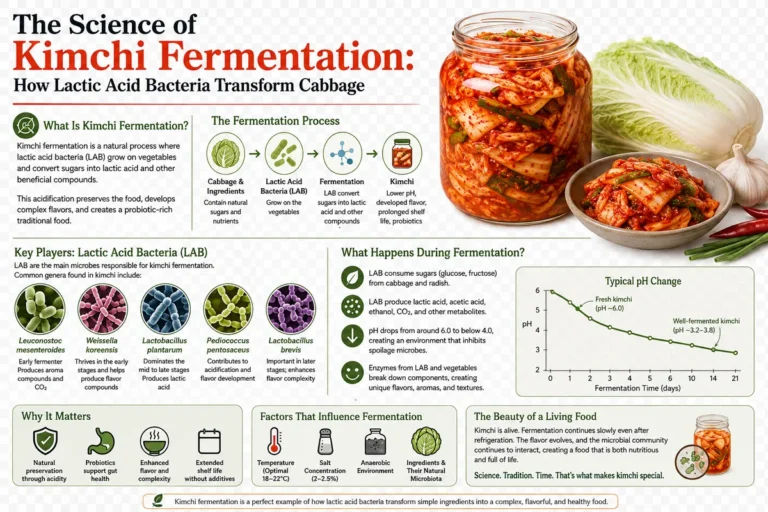
That liquid can contain microorganisms involved in fermentation, including lactic acid bacteria. Kimchi fermentation is driven by a succession of microorganisms, and the microbial community can vary depending on the ingredients, salt concentration, temperature, and fermentation conditions.
However, it would be misleading to claim that adding a spoonful of old kimchi brine will always dramatically accelerate fermentation or increase microbial diversity.
If you use kimchi brine as a fermentation starter, the effect can vary considerably depending on the condition of the brine and the new batch.
In other words:
Kimchi brine is biologically active, but it is not a guaranteed fermentation shortcut.
3. Kimchi Does Not Ferment at One Single Temperature
Many online recipes describe kimchi fermentation as a simple room-temperature process.
That is only part of the story.
Initial fermentation can occur at room temperature, while refrigeration slows the process and allows the kimchi to continue developing gradually.
Traditional Korean storage methods, including onggi containers, helped protect fermented foods from large temperature fluctuations. Modern kimchi refrigerators provide controlled low-temperature storage.
But there is no single universal temperature that defines “traditional kimchi fermentation.”
The speed and character of fermentation depend on multiple factors, including:
- Temperature
- Salt concentration
- Ingredients
- Sugar availability
- Oxygen exposure
- Initial microbial population
- Fermentation time
Research on kimchi microbiology confirms that raw materials, ingredients, kimchi varieties, and fermentation conditions can all significantly influence the microbial community and fermentation characteristics.
Bonus: Kimchi’s Microbial Profile Changes During Fermentation
Kimchi is a living fermented food.
As fermentation progresses, the microbial community changes and different lactic acid bacteria become more or less dominant.
Lactobacillus plantarum is one of the lactic acid bacteria that has been isolated from Korean kimchi, but it is only one part of a much larger microbial ecosystem.
It would therefore be misleading to give one universal fermentation day or temperature at which L. plantarum reaches its “peak” in all kimchi.
Different kimchi recipes can follow different microbial trajectories.
That is one reason two batches made from apparently identical ingredients can still taste different.
Some research suggests that fermented foods containing live microorganisms may have potential benefits for digestive health, but the mechanisms and clinical significance are still being studied.
Kimchi should be considered a food, not a treatment for a specific medical condition.
Sodium Warning
Kimchi can be relatively high in sodium because salt is an essential part of many kimchi preparation and fermentation processes.
The amount varies considerably according to the recipe, ingredients, fermentation method, and commercial product.
People who have been advised by a healthcare professional to restrict sodium — including some people managing hypertension or kidney disease — should pay attention to portion size and the sodium content of the specific kimchi they are eating.
The American Heart Association recommends no more than 2,300 mg of sodium per day, with an optimal goal of 1,500 mg per day for most adults, particularly those with high blood pressure.
Rather than assuming that every kimchi contains the same amount of sodium, check the nutrition label when eating commercially prepared products.
A Recipe: Baek Kimchi — White Kimchi
If you’ve only made red kimchi before, baek kimchi is an excellent way to explore a different side of Korean fermentation.
Without a heavy chili seasoning, the flavors of the vegetables, salt, aromatics, and fermentation become much easier to distinguish.
Ingredients
- 1 medium napa cabbage, approximately 1.5 kg / 3.3 lbs
- 45 g / approximately 3 tablespoons coarse sea salt, for salting
- 1 small daikon radish, cut into thin matchsticks, approximately 200 g
- 4 green onions, cut into 2-inch pieces
- 6 garlic cloves, thinly sliced
- 1-inch piece fresh ginger, peeled and very thinly sliced
- 2 tablespoons sugar or honey
- 1 tablespoon fish sauce, optional
- 1 teaspoon fine salt
- 500 ml cold water
- 2 tablespoons pine nuts, optional
- A small amount of fresh red chili, deseeded and julienned, optional and used primarily for color
Instructions
1. Salt the cabbage
Quarter the cabbage lengthwise and cut each quarter into approximately 2-inch sections.
Toss with the coarse salt.
Let it sit for 1–2 hours, turning every 30 minutes, until the cabbage has released liquid and become noticeably more flexible.
2. Rinse and drain
Rinse the cabbage thoroughly under cold water two or three times.
Taste a piece. It should be lightly salty rather than overwhelmingly salty.
Drain in a colander for about 30 minutes.
3. Make the brine
While the cabbage drains, combine the cold water with the fine salt, sugar, and fish sauce if using.
Stir until dissolved.
4. Combine the vegetables
In a large bowl, combine the drained cabbage, daikon, green onions, garlic, and ginger.
Mix gently.
Add the pine nuts and optional red chili.
5. Pack the kimchi
Transfer the mixture to a clean glass jar or food-safe container.
Do not crush the vegetables aggressively.
Pour in the brine until the vegetables are submerged.
Leave approximately 2 cm of headspace because fermentation can cause the contents to expand.
6. Begin fermentation
Place a small piece of plastic wrap directly against the surface of the vegetables to reduce air exposure.
Close the container loosely rather than sealing it completely.
Fermentation produces gas, so pressure needs a way to escape.
7. Refrigerate
Allow the kimchi to sit at approximately 20°C / 68°F for about 12–24 hours, then transfer it to the refrigerator.
8. Taste as it develops
Begin tasting after about three days.
Depending on refrigerator temperature and personal preference, the flavor may become particularly appealing after several days to two weeks.
A slightly cloudy brine and gentle effervescence can occur as fermentation progresses.
Storage
Keep refrigerated and monitor the kimchi for changes in smell, appearance, and texture.
As with any fermented food, discard it if there are signs of spoilage such as unusual mold, putrid odors, or other clearly abnormal changes.
How to Navigate 200+ Types Without Losing Your Mind
The easiest way to understand kimchi is to start with the main vegetable categories.
Baechu — Napa Cabbage Kimchi
This is the largest and most internationally recognized category.
There are numerous regional and seasonal preparations.
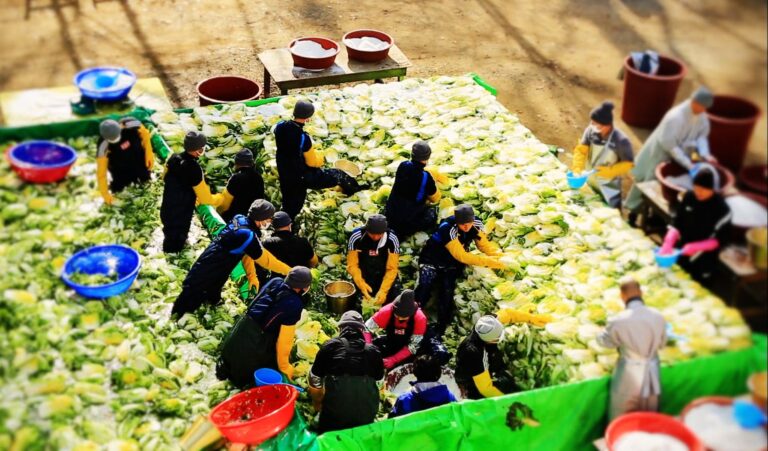
Winter kimchi made during kimjang season can be prepared in large quantities and fermented for extended periods, while seasonal versions made with younger cabbage may be prepared differently and consumed sooner.
Kkakdugi and Other Radish Kimchi
This category includes cubed, sliced, and whole-radish preparations such as kkakdugi and dongchimi.
Different cuts create different textures and fermentation characteristics.
Leafy Vegetable Kimchi
This includes:
- Gat kimchi — mustard greens
- Buchu kimchi — garlic chives
- Yeolmu kimchi — young radish greens
- Kkaennip kimchi — perilla leaves
- Sigeumchi kimchi — spinach
Each vegetable contributes its own flavor compounds and texture to fermentation.
Cucumber and Summer Vegetable Kimchi
Oisobagi and other cucumber kimchi are relatively quick-fermenting preparations because cucumbers contain a great deal of water.
They are generally made and eaten relatively fresh compared with long-aged winter cabbage kimchi.
Specialty and Regional Kimchi
This is where the diversity becomes enormous.
Different regions, villages, seasons, ingredients, and family traditions have produced countless variations that do not fit neatly into a single category.
The Point Is Not to Taste All 200+ Types
If you want to explore kimchi systematically, start with the main vegetable categories.
Try one representative example from each category.
Then explore regional variations within the type you find most interesting.
The goal is not to taste every kimchi that has ever been made.
The goal is to develop a palate that can recognize what fermentation is doing differently to different vegetables, seasonings, and ingredients.
That is when kimchi becomes much more interesting.
A kimchi refrigerator can be useful for controlled storage, while traditional onggi vessels remain an important part of Korean fermentation culture.
Visit a Korean grocery store and look at the kimchi section with new eyes.
Ask where a particular product comes from.
Ask what ingredients are used.
Ask how long it has been fermented.
You may discover that two kimchi products made from the same basic vegetable taste completely different.
That’s not a discrepancy.
That’s the whole point.
Kimchi Isn’t One Thing
Kimchi is not a single recipe.
It is a living record of how different communities used local vegetables, salt, seasonings, seafood, climate, and fermentation to preserve food and create flavor.
For centuries, those solutions were passed from household to household and region to region.
Today, they are still fermenting in jars, crocks, and refrigerators across Korea.
Kimchi is not one flavor.
It is an entire fermentation culture.
This content is for informational purposes only and is not medical advice.