Korean Fermented Crab (Ganjang Gejang): Is It Really Fermented, Is It Safe, and How to Make It
Featured photo: saddy237 via Pixabay (Pixabay Content License).
What Is Korean Fermented Crab?
Ganjang gejang (간장게장) is raw blue crab marinated in a seasoned soy sauce brine, usually for several days in the refrigerator. In English it is often called Korean fermented crab or soy-marinated crab. The meat turns soft and almost creamy, the roe deepens in flavor, and Koreans nickname it “bap doduk” (밥도둑), meaning “rice thief,” because a bowl of rice disappears alongside it.
Is the Crab Actually Fermented?
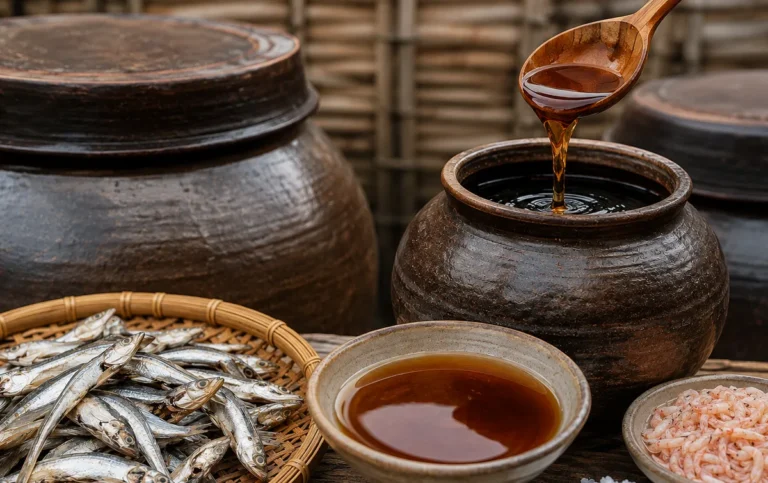
Not in the usual sense. The soy sauce is a fermented product, made from fermented soybeans, but the crab itself is cured. Salt and soy sauce draw out moisture and season the meat, and the crab’s own enzymes slowly soften it. No starter culture ferments the crab, and many home recipes boil the brine before pouring it over, which kills most microbes in the liquid. “Fermented crab” is a convenient English label rather than an accurate description.
That distinction matters for safety. Curing slows the growth of many bacteria but does not kill them, so ganjang gejang carries the risks of raw seafood. The evidence, and who should avoid it, are below.
A History Rooted in the Joseon Dynasty
Ganjang gejang goes back a long way. References to crab cured in soy sauce appear in Eumsik dimibang (飮食知味方), a 17th-century Korean cookbook, and again in Gyuhap chongseo (閨閤叢書) from the 18th century. Back then, gejang was considered a refined dish — something you’d serve to honored guests. The late Joseon scholar Seo Yu-gu documented detailed preparation methods in his encyclopedic work Imwon sibyukji (林園十六志), leaving little doubt that this dish sat at the heart of Korean food culture for a very long time.
Regional variations developed naturally. The western coastal areas — particularly Seocheon in South Chungcheong Province and Yeonggwang in South Jeolla Province — sit near some of Korea’s richest blue crab fishing grounds, and gejang culture flourished there for generations. Inland communities made their own version using freshwater crabs. Each region developed its own personality based on local soy sauce styles and curing traditions.
The Fermentation Science: How Safe Is Raw Crab in Soy Sauce?
This is the question everyone asks. You’re eating uncooked crab. Is that actually safe? The honest answer is that curing in soy sauce does not make raw crab risk-free. The high salt and the other compounds in soy sauce slow the growth of many microbes, but research shows that several foodborne bacteria can survive in soy-sauce-marinated crab.
Please note: this article is for informational purposes only and is not medical advice. Always source crab from reputable suppliers and follow proper food safety practices.
Osmotic Pressure and Antimicrobial Action
The soy sauce used in ganjang gejang is very high in salt. High salinity pulls moisture out of microbial cells through osmotic pressure, and fermented soy sauce also contains organic acids and other compounds that suppress growth. This slows many bacteria and is part of why the dish can be kept cold for days.
Slowing growth is not the same as making the crab safe, though. In a study of raw crab marinated in soy sauce (Cho et al., International Journal of Food Microbiology, 2016), researchers inoculated crabs with five foodborne pathogens and stored them for up to 28 days. At 5 °C (refrigerator temperature), every pathogen except Vibrio parahaemolyticus was still detectable on day 28, including E. coli O157:H7, Salmonella Typhimurium, Listeria monocytogenes, and Staphylococcus aureus. Bacteria attached to the crab survived better than bacteria floating in the soy sauce. The authors concluded that marination alone is not sufficient to inactivate these pathogens. The Singapore Food Agency makes the same point more broadly: marinating raw seafood is not a substitute for cooking.
High sodium content is a real consideration here. People managing blood pressure or sodium-sensitive conditions should enjoy this dish in moderation.
The Microbes Behind the Flavor
The flavor of ganjang gejang is inseparable from the fermentation that built the soy sauce itself. Traditional Korean soy sauce (ganjang) begins with meju — fermented soybean blocks — and the microbial cast involved is fascinating.
- Molds such as Aspergillus: Grow on the surface of meju and secrete protease and amylase enzymes that break down proteins and starches into flavor compounds. Traditional meju is colonized by a mixed community rather than a single inoculated mold.
- Bacillus subtilis: A powerful protein-degrading bacterium active during meju ripening. It drives amino acid production throughout the fermentation process.
- Lactobacillus species: These lactic acid bacteria lower pH during soy sauce aging, suppress unwanted microbes, and contribute a subtle, rounded acidity.
- Saccharomyces and Debaryomyces yeasts: Responsible for producing alcohols and esters — the compounds that give traditionally fermented soy sauce its layered, complex aroma.
The metabolic output of all these organisms — particularly free amino acids like glutamic acid and aspartic acid — is what creates that intense umami punch. By the time the soy sauce reaches the crab, that fermentation is finished, and in recipes that boil the brine its microbes and enzymes are no longer active. What the crab takes up are the flavor compounds the fermentation left behind, while the crab’s own enzymes soften the meat from within.
What Happens During Curing
Curing works from the outside in. Salt draws fluid out of the crab tissue and firms the meat at first, while salt and flavor compounds from the brine move inward. Over the following days the crab’s own enzymes break down some of its proteins, and the texture shifts toward the soft, silky meat the dish is known for. Most home recipes cure for three to seven days in the refrigerator; the exact timing depends on the size of the crab and the strength of the brine.
Who Should Avoid Raw Ganjang Gejang
Raw marinated seafood is a higher-risk food. The Singapore Food Agency advises that people with weakened immune systems, including older adults, pregnant women, infants, and children, should avoid it, and so should anyone who is ill. A Korean news report on the research above also advises that people with liver disease or weakened immune systems take particular care with raw seafood and choose fully cooked crab dishes instead (The Herald Business, 2026).
Handling Tips
- Start with fresh, live crab from a reputable supplier, and keep it cold until you prepare it.
- Keep the finished dish refrigerated, and use clean utensils every time you take some out.
- Do not rely on smell or color. A normal smell and appearance do not prove that raw seafood is free of pathogens.
- If you prefer to avoid the risk, choose a cooked crab dish. The flavors of the soy-and-garlic brine also work with steamed or boiled crab.
Ganjang Gejang Recipe
Ingredients
| Ingredient | Amount | Notes |
|---|---|---|
| Blue crab (female recommended) | 2 kg (about 5–6 crabs) | Best in April–May or September–October, just before spawning |
| Korean soup soy sauce (guk ganjang / joseon ganjang) | 2 cups (400 ml) | Commercial brewed soy sauce can be blended in |
| Dark soy sauce (jin ganjang) | 1 cup (200 ml) | Adds color and a touch of sweetness |
| Water | 3 cups (600 ml) | Boiled and cooled |
| Cheongju (rice wine) or soju | 1/2 cup | Reduces fishiness |
| Garlic | 1 whole head (about 10 cloves) | Sliced |
| Fresh ginger | 1 piece (30 g) | Sliced |
| Onion | 1 medium | Roughly chopped |
| Green onion (large) | 2 stalks | Cut into 5 cm pieces |
| Dried red chili peppers | 3–4 | Preservative and flavor |
| Whole black peppercorns | 1 tablespoon | |
| Sugar or maesil-cheong (plum syrup) | 2 tablespoons | Balances the saltiness |
Instructions
Step 1 — Clean the crabs. Scrub live blue crabs thoroughly with a stiff brush to remove any grit. Lift the apron (the flap on the underside) and remove it. Open the top shell and pull out the sand sac (stomach). Remove the gills as well. Once cleaned, place the crabs in the freezer for 30 minutes to an hour — this stuns them and makes handling much easier. You can cure them whole or halved.
Step 2 — Make the brine. Combine the soup soy sauce, dark soy sauce, and water in a pot. Add the garlic, ginger, onion, green onion, dried chilies, and peppercorns. Bring to a medium boil. Once boiling, add the sugar or plum syrup and continue cooking for 10–15 minutes. This step extracts aromatics from the vegetables, drives off off-notes, and kills any residual bacteria in the liquid.
Step 3 — Cool the brine completely. Strain out all the solids. Let the brine cool fully before it touches the crab — pouring hot liquid over raw crab will cook the meat, which is not what you want. Cooling in the refrigerator is the safest approach.
Step 4 — Pack the crabs. Place the cleaned crabs into a sterilized airtight container. Pour the cooled brine over them until every crab is fully submerged. Weigh the crabs down with a small plate or another heavy object to keep them under the liquid. Add the cheongju or soju at this stage.
Step 5 — First cure and reboil. Traditional recipes leave the crabs at room temperature for 12–24 hours at this point. Because raw crab is a higher-risk food, many cooks skip this stage and cure in the refrigerator from the start. If you do use it, then pour off only the brine and bring it back to a boil. Cool it completely again, then pour it back over the crabs. Reboiling concentrates the brine and deepens the flavor, but it treats only the liquid; it does not make the crab itself safe.
Step 6 — Refrigerator curing. Seal the container and move it to the refrigerator. Cure for a minimum of 3 days. Five to seven days is ideal. The longer it goes (within reason), the creamier the meat becomes and the deeper the umami gets.
Step 7 — Second reboil (optional but recommended). After day five, drain the brine, boil it once more, cool it, and return it to the crabs. This optional step adds another layer of flavor complexity. Eat it sooner rather than later: refrigeration slows bacterial growth but does not kill the bacteria already present.
How to Serve and Store Ganjang Gejang
Take the container out of the fridge about 30 minutes before eating. That brief rest at room temperature makes a real difference — the fat loosens slightly and the flavors open up. The classic way to eat gejang is to scoop a spoonful of steamed white rice directly into the crab shell, add a few drops of sesame oil, a pinch of roasted seaweed flakes, and some sesame seeds, then mix it all together right inside the shell. That combination — briny, creamy crab roe mixed with warm rice — is the whole point of the “rice thief” nickname.
Store in a sealed container in the refrigerator at all times. Eat it sooner rather than later, and never leave it at room temperature. Always use clean utensils when handling the crab to avoid introducing contaminants into the brine.
Frequently Asked Questions
Is ganjang gejang safe to eat?
It carries the risks of any raw seafood. Salt and soy sauce slow microbial growth but do not sterilize the crab, so people at higher risk should avoid it.
Does fermentation make raw crab safe?
No. The soy sauce is fermented, but the crab is not cooked. The study cited above found that several pathogens survived in soy-sauce-marinated crab at refrigerator temperature.
What makes ganjang gejang taste so rich?
Amino acids and other compounds from the fermented soy sauce combine with the crab’s own proteins as the brine slowly penetrates the meat, which is described in the curing section above.
What is the difference between joseon ganjang and regular soy sauce?
See our guide to Joseon ganjang versus brewed soy sauce.
About This Article
The author, Hoon Kwak, has worked in food distribution for about 20 years. The recipe is a home method based on common Korean practice and the food-safety sources below. It has not been laboratory-tested, and raw crab carries a real risk of food poisoning, so follow the safety guidance in this article.
Sources
- Cho TJ, Kim NH, Kim SA, Song JH, Rhee MS. (2016). Survival of foodborne pathogens (Escherichia coli O157:H7, Salmonella Typhimurium, Staphylococcus aureus, Listeria monocytogenes, and Vibrio parahaemolyticus) in raw ready-to-eat crab marinated in soy sauce. International Journal of Food Microbiology, 238, 50–55. Korea University
- Singapore Food Agency. Safety of raw marinated seafood. sfa.gov.sg
- The Herald Business. In season and beloved, ganjang gejang is not as safe from food poisoning as you might think. heraldcorp.com