How to Make Makjang – Gyeongsang-Style Soybean Paste
How to Make Makjang: The Gyeongsang Soybean Paste Guide
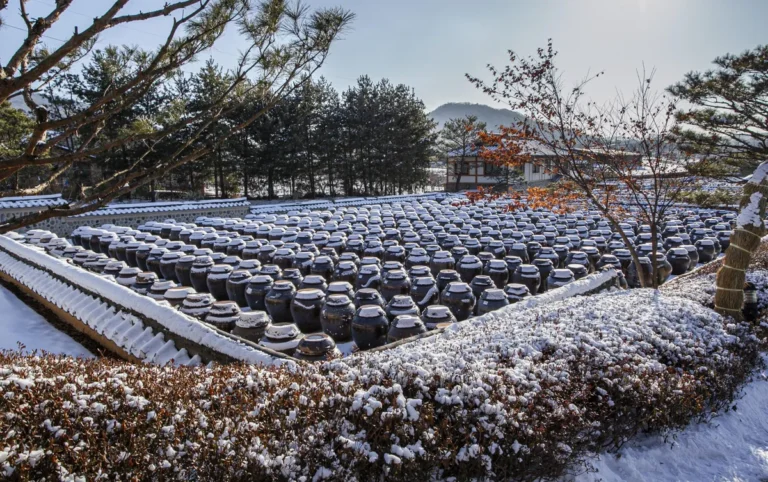
Makjang is not doenjang with a different name. It ferments faster, uses a different ratio of salt to soybean, and produces a funkier, more aggressive paste. The Gyeongsang provinces developed it for speed and intensity, and the technique reflects that.
People from the Gyeongsang provinces of southeastern Korea have been making this paste for centuries, largely outside the mainstream food media conversation. It never got the same global spotlight as gochujang or the polished doenjang you find in lacquered crocks on cooking show sets. That’s partly why so many recipes floating around online are incomplete, vague, or quietly substituting doenjang instructions under a makjang label.
This article is about making the real thing. Not a shortcut version. Not a fusion approximation. The kind of makjang that takes patience, smells alarming during production, and tastes like nothing else once it’s done.
Let’s start with what it actually is.
What Makjang Is (And Why It’s Different From Doenjang)
Doenjang is a byproduct of ganjang production. You make meju — fermented soybean bricks — steep them in brine, press out the liquid (that’s your ganjang, your soy sauce), and what’s left behind gets packed into jars and aged. That leftover is doenjang. The soy sauce extraction shapes the flavor dramatically. The salt concentration tends to be high, the moisture lower, and the fermentation slow and long.
Makjang skips that extraction step entirely. You’re not pulling liquid off for another purpose. The meju goes into the paste directly, often with the addition of gochugaru — dried red pepper flakes — and sometimes glutinous rice flour paste, barley, or wheat flour depending on the family recipe. The result is thicker, redder, spicier, and significantly more pungent than standard doenjang. Some versions read almost like a hybrid between doenjang and gochujang, which isn’t surprising given how central red pepper has been to Gyeongsang cooking for centuries.
The other key difference is fermentation time. Traditional doenjang might age for two to three years. Makjang can be ready in as little as three to four weeks under the right conditions, though a longer secondary fermentation deepens the flavor considerably. This faster cycle made makjang practical for farming households that needed a usable condiment through the growing season without waiting years for a crock to mature.
One more thing most guides don’t mention: the smell. During active fermentation, makjang generates ammonia-forward aromas that can genuinely be alarming if you’re not expecting them. This is normal. It’s bacterial and enzymatic activity breaking down the soybean proteins. If you open your fermentation vessel after a week and think something has gone wrong, it almost certainly hasn’t. Trust the process. The smell transforms.
The Meju Foundation: Where Makjang Actually Begins
You cannot make serious makjang without understanding meju. Meju is the fermented soybean brick that forms the enzymatic and microbial backbone of the entire paste. Buying pre-made meju powder from a Korean grocery is fine for a first attempt — it’s widely available and will give you a functional result. But if you want to understand what you’re doing, making meju from scratch is worth attempting at least once.
Making meju from scratch:
Soybeans are soaked overnight, cooked until they collapse when pressed between your fingers, then ground or mashed into a rough paste. That paste is packed into rectangular bricks roughly the size of a large book. The bricks are dried in a warm, ventilated space for two to four weeks. During this time, naturally occurring molds — primarily aspergillus oryzae and bacillus subtilis — colonize the surface and interior of the brick.
Here’s what most guides skip: the drying environment matters enormously. Too humid and the wrong molds dominate, producing bitter, slimy bricks. Too dry and fermentation stalls. Traditional Korean households hung meju from the rafters in the kitchen, where wood smoke, ambient warmth, and natural air circulation created the right conditions. If you’re making meju in a modern home, a temperature of around 20 to 25 degrees Celsius with good airflow and moderate humidity (roughly 60 to 70 percent) gives you the best results.
The exterior of a well-made meju brick should develop white-to-yellow mold coverage. Some black or green mold at the surface can be scraped off — it’s surface contamination, not structural failure. A brick that smells rotten in a putrid, non-fermented way, or that turns entirely black through the core, should be discarded. Trust your instincts here. Fermented and rotten are genuinely different smells once you’ve encountered both.
Dried meju gets broken into rough chunks or powder before being incorporated into the paste.
How to Make Makjang: Full Recipe With Exact Measurements
This recipe produces approximately 1.5 kilograms of finished makjang and uses a combination of homemade or store-bought powdered meju with gochugaru, salt, and a small amount of cooked glutinous rice paste. It reflects the traditional Gyeongsang method.
Ingredients:
- 500g dried meju (powdered or finely crumbled)
- 200g gochugaru (Korean red pepper flakes, medium-coarse grind)
- 80g sea salt (non-iodized — iodized salt interferes with fermentation)
- 50g glutinous rice flour (chapssal-garu)
- 250ml water (for the rice paste)
- 2 tablespoons malt barley syrup (yeot-gireum — optional, adds mild sweetness and supports fermentation)
- 30ml soy sauce (ganjang — adds depth and extends shelf life)
Tools:
- Large ceramic or earthenware jar (onggi) or a food-grade glass jar with cloth cover
- Large mixing bowl
- Small saucepan
- Wooden or silicone spatula
Steps:
1. Make the rice paste.
Combine the glutinous rice flour and 250ml of water in a small saucepan. Cook over medium-low heat, stirring constantly, until the mixture thickens into a smooth, translucent paste. It should hold a ribbon when dropped from the spatula. Remove from heat and let it cool completely to room temperature before using. Incorporating hot paste into the meju will kill beneficial bacteria.
2. Combine the dry ingredients.
In a large mixing bowl, combine the powdered meju and gochugaru. Mix thoroughly until the red pepper is evenly distributed through the meju powder. Don’t rush this step. Uneven mixing leads to pockets of bitterness.
3. Add the wet ingredients.
Add the cooled rice paste, sea salt, soy sauce, and barley syrup (if using) to the dry mixture. Mix by hand — gloved hands — working the ingredients together until the paste is uniform. The texture should be dense and sticky, similar to thick hummus. If it’s too dry to hold together, add water one tablespoon at a time. If it’s too wet, add a small amount of additional meju powder.
4. Pack into the fermentation vessel.
Transfer the paste into your jar in tight layers, pressing firmly to eliminate air pockets as you go. Air pockets encourage the wrong kinds of microbial activity. Leave about 5 centimeters of headspace at the top. Smooth the surface flat, then press a piece of wax paper or plastic wrap directly against the surface to minimize air contact.
5. Cover and place.
Cover the jar opening with a breathable cloth — muslin or cheesecloth works — secured with a rubber band or twine. This allows gas exchange while keeping dust and insects out. Place the jar in a warm location with indirect sunlight. A sunny balcony, a south-facing windowsill, or a corner of a warm kitchen all work. Target temperature range: 20 to 28 degrees Celsius.
6. Ferment.
Allow to ferment for a minimum of 3 weeks. During the first week you’ll notice the paste darkening, some liquid pooling on the surface, and the ammonia-forward smell mentioned earlier. Stir the paste gently every 3 to 4 days with a clean, dry utensil to prevent the surface from drying out unevenly and to redistribute microbial activity. After 3 weeks, taste. The paste should be funky, savory, and hot. A longer fermentation — 6 to 8 weeks — develops a rounder, deeper flavor profile with more umami complexity.
7. Finish and store.
Once fermented to your preference, transfer to clean jars, seal tightly, and refrigerate. Makjang keeps for 6 months refrigerated, longer if you maintain sanitary handling (always use dry, clean utensils). Some households continue to ferment it at room temperature in sealed onggi for up to a year, which dramatically intensifies the flavor.
Sodium note: This recipe is high in sodium due to the sea salt, ganjang, and the salt content already present in the meju. A tablespoon of finished makjang can contain 400 to 600mg of sodium. People managing hypertension, kidney conditions, or sodium-sensitive health conditions should monitor intake carefully and consult their healthcare provider.
Three Things Most Makjang Recipes Won’t Tell You
1. The gochugaru grind changes everything.
Most recipes simply say “gochugaru” as if it’s a single uniform product. It isn’t. Coarse-ground gochugaru (tae-yang-cho style) gives you visible red flecks in the finished paste and a slightly fruity heat. Fine-ground gochugaru disperses more completely and produces a smoother, hotter, more intense paste. For makjang, medium-coarse is the traditional Gyeongsang preference — you want texture, not a smooth purée. Using the fine powder you’d normally reserve for kimchi seasoning will make your makjang taste flatter and sharper. This one detail shifts the flavor profile noticeably.
2. The salt you use is not interchangeable.
Non-iodized sea salt is the traditional choice for a reason. Iodine added to table salt acts as an antimicrobial agent — that’s exactly why it’s added to drinking water and commercial salt in the first place. In a fermentation context, that antimicrobial activity suppresses the beneficial bacterial communities you need. Specifically, lactobacillus species and bacillus subtilis populations can be significantly inhibited by iodine exposure. Use Korean solar sea salt (cheonillyeom) if you can find it, or any non-iodized sea salt or kosher salt. This matters more in the early, active fermentation phase than during storage.
3. Sunlight exposure is traditional — and biochemically significant.
Traditional Korean home fermentation used direct or indirect sun exposure for onggi crocks intentionally. UV light from sunlight hitting the surface of exposed paste suppresses unwanted surface molds while the interior fermentation continues unaffected. Modern interpretations often move fermentation entirely indoors for convenience, and the results are edible but sometimes more prone to surface contamination requiring removal. A few hours of morning sun on the cloth-covered vessel each day — enough warmth without overheating — is not an old-fashioned superstition. It’s a genuinely effective contamination management technique that predates our understanding of UV microbiology by several centuries.
Makjang, Health Research, and What We Actually Know
Fermented soybean products have attracted serious scientific attention in recent decades, and makjang — as a close relative of doenjang — falls within this research landscape.
The fermentation process produces isoflavones from soybean precursors, particularly genistein and daidzein, which some research suggests may have antioxidant activity in the body. A 2015 study published in the Journal of Medicinal Food found that fermented soybean products showed higher antioxidant activity compared to non-fermented soybeans, with fermentation increasing bioavailability of these compounds.
Bacillus subtilis activity during meju fermentation also produces nattokinase, a fibrinolytic enzyme. Some studies suggest nattokinase may support healthy circulation, though the clinical evidence is still developing and the specific concentrations in makjang versus natto (a Japanese product with far higher bacillus subtilis density) differ substantially. The Korea Rural Development Administration (RDA), which oversees agricultural research including traditional fermented food analysis, has published research on the probiotic potential of traditional jangs broadly, noting that the microbial diversity in traditionally made fermented pastes may contribute to gut microbiome diversity — a finding consistent with broader fermented food research.
Gochugaru adds capsaicin to the equation. Research published in Nutrients (2016) by Zheng et al. found that capsaicin may help modulate metabolism and has demonstrated anti-inflammatory properties in cellular and animal models, though translating this to human dietary intake requires careful hedging — eating makjang is not a treatment for inflammation.
What’s reasonable to say: makjang, consumed as part of a varied diet, fits into the broader pattern of fermented food consumption that some research associates with positive gut health markers. It’s a condiment with real nutritional complexity. It’s not medicine. The sodium content means moderation matters, especially for people with cardiovascular concerns.
How to Use Makjang Once You’ve Made It
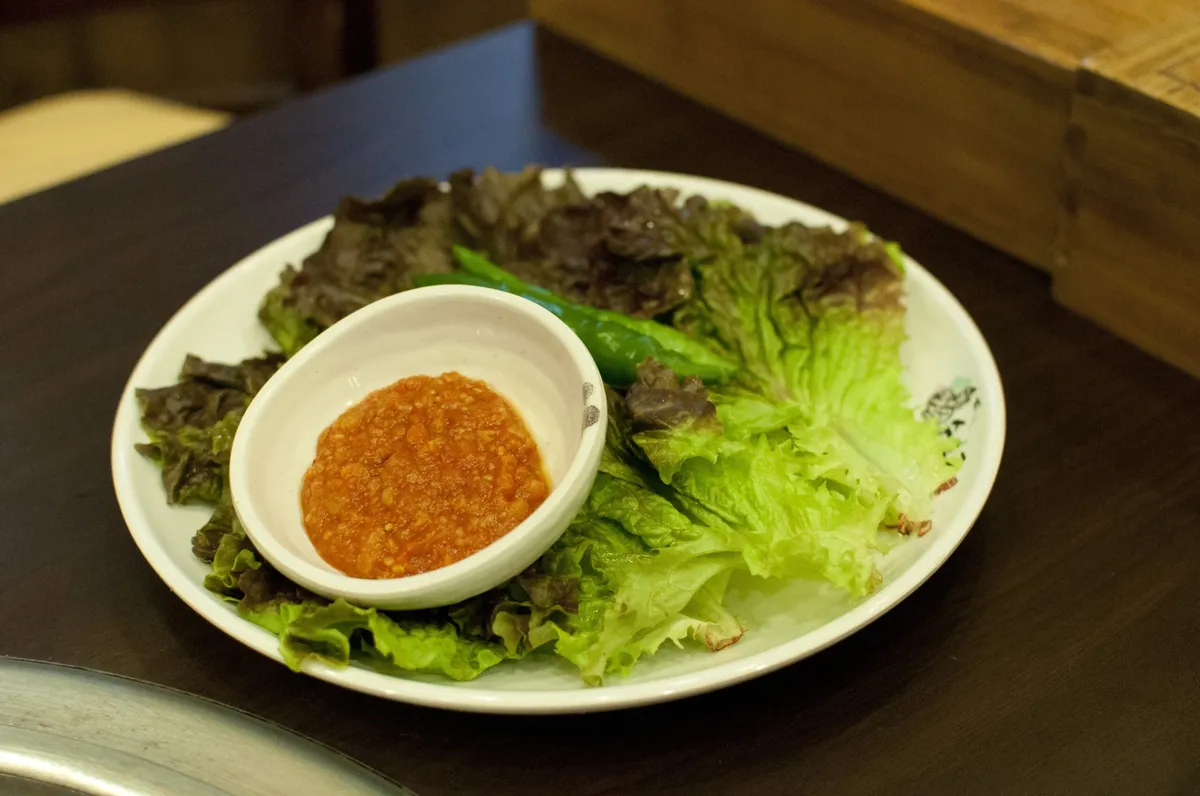
The most traditional Gyeongsang use is as a raw dipping paste — ssam-jang territory, but rawer and more assertive. Raw vegetables, grilled pork belly, steamed rice, blanched greens. You dab makjang directly and eat it. No cooking required.
It also works as a substitute for doenjang in soups, though the flavor is sharper and spicier, so you’ll use less of it. Makjang jjigae exists — a simple stew of zucchini, tofu, potato, and makjang in a light anchovy stock — and it’s significantly bolder than standard doenjang jjigae.
Mixed with a little sesame oil, garlic, and green onion, it becomes an instant sauce for naengmyeon (cold noodles) or bibimbap when you want something with more punch. Some Gyeongsang home cooks mix a small amount into their kimchi paste to add fermented soybean depth alongside the gochugaru — an old technique that doesn’t appear in any mainstream kimchi recipe but creates a noticeably more complex, savory ferment.
The paste keeps its fermented character under heat, which means it can function as a marinade base for grilled meats. Thin it with a little rice vinegar and soy sauce, add minced garlic and ginger, and you have a marinade that caramelizes beautifully while adding fermented depth that commercial sauces don’t replicate.
The real lesson of makjang — and the one thing that separates people who make it once from people who keep making it — is that once you understand the ratio of meju to gochugaru to salt, you can adjust freely. More gochugaru for a hotter, redder paste. Less salt and a longer ferment for something wilder and funkier. The framework is stable. The variation is yours.
Start with the recipe above. Let it ferment three weeks. Taste it. Then decide who you want it to be.
This content is for informational purposes only and is not medical advice.