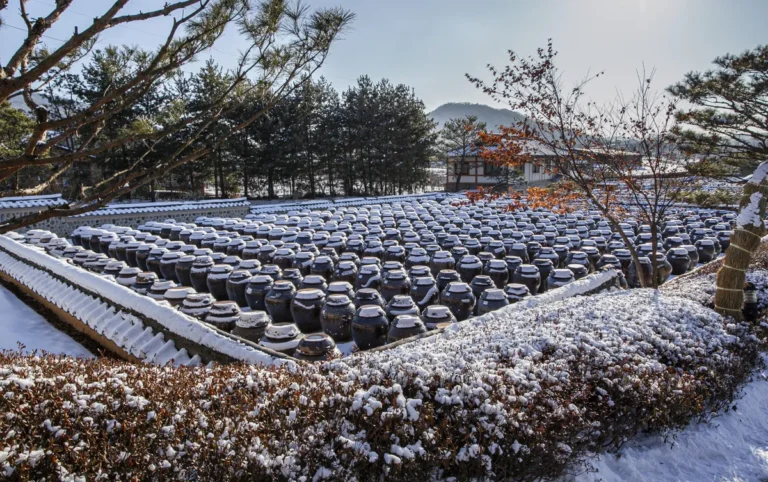
The Living Memory of the Jangdokdae
How traditional gochujang fermentation turns rice, soybeans and chili into a complex Korean condiment, and how it is made at home.
How traditional gochujang fermentation turns rice, soybeans and chili into a complex Korean condiment, and how it is made at home.

Ganjang gejang, often called Korean fermented crab, is raw crab cured in soy sauce. Whether it is really fermented, what the safety research shows, who should avoid it, and a home recipe.

How to make doenjang jjigae at home: the doenjang fermentation behind its flavor, the core principles, and a step-by-step recipe.

Kkakdugi is cubed radish kimchi. Its history, why it stays crunchy, a step-by-step recipe, and a second method by weight.

Yeolmu kimchi is a light summer kimchi made with young radish. Its background, how it ferments, a recipe, and how Koreans eat it.

AI-generated illustration (not a photograph). Korean vinegar begins where alcohol fermentation ends. When rice wine or fruit wine is exposed to air under the right conditions, acetic acid bacteria convert the ethanol into acetic acid. The liquid turns sour. What was a drink becomes a seasoning. This two-stage process, first alcohol, then acid, is the…
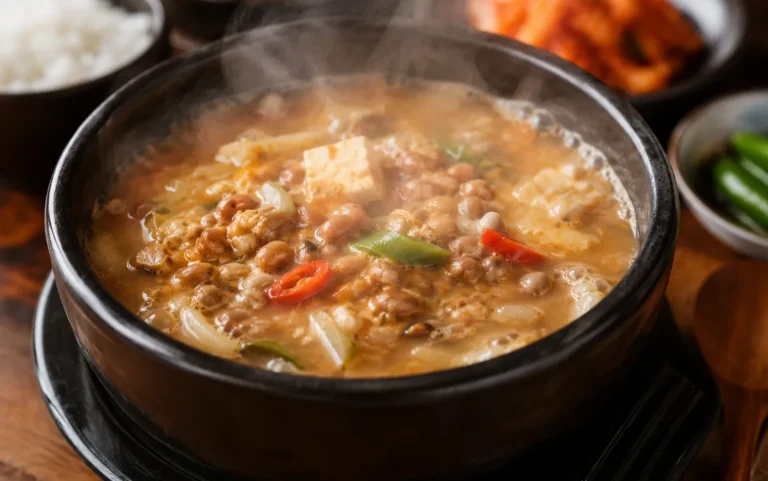
Cheonggukjang and natto share Bacillus subtilis but differ in taste and culture. A side-by-side comparison, plus a cheonggukjang jjigae recipe.

How soybeans become soy sauce: the fermentation behind it, where soy sauce began, and a practical guide to the Korean soy sauce types.

Fermentation is the process by which microorganisms transform food. Bacteria convert sugars into lactic acid. Yeasts convert sugars into alcohol. Molds break down proteins and starches into simpler compounds. In each case, the food that comes out is chemically different from the food that went in — different in flavor, texture, nutritional profile, and shelf…

The Rich, Tangy, Umami-Packed Story of Korean Fermentation The earthy aroma of doenjang jjigae. The sharp, lively scent of kimchi. The deep, layered flavor of soy sauce aged in clay pots. These foods have been part of Korean meals for centuries. Now, quietly but unmistakably, they’re finding their place on tables around the world. Kimchi…