Kimchi: Complete Guide to Korea’s Most Famous Fermented Food
A sourced guide to kimchi: where it came from, how it ferments, the main types, what human research shows about health, and how to store it.

A sourced guide to kimchi: where it came from, how it ferments, the main types, what human research shows about health, and how to store it.

Sikhye is Korea’s sweet rice drink. What happens in the pot, whether it is actually fermented, whether it is probiotic, and how home cooks make it.

Baechu kimchi is the kimchi most people picture: napa cabbage, salted, coated in a red paste of chili, garlic, and ginger, then left to ferment. The recipe below makes one large cabbage, about 2 kg (4.5 lb), which fills a 2-liter container. It uses a classic method with salted-then-rinsed cabbage, a sweet rice paste, and…

Gochujang is a fermented paste; gochugaru is dried chili flakes. How they differ, whether you can swap one for the other, and how to store them.

Fermented and pickled are not the same. How salt-brine fermentation and vinegar pickling differ, how to tell which you are buying, and where kimchi fits.

Doenjang and miso look alike but are made with different microbes and methods. How they taste, how to substitute one for the other, and which is healthier.
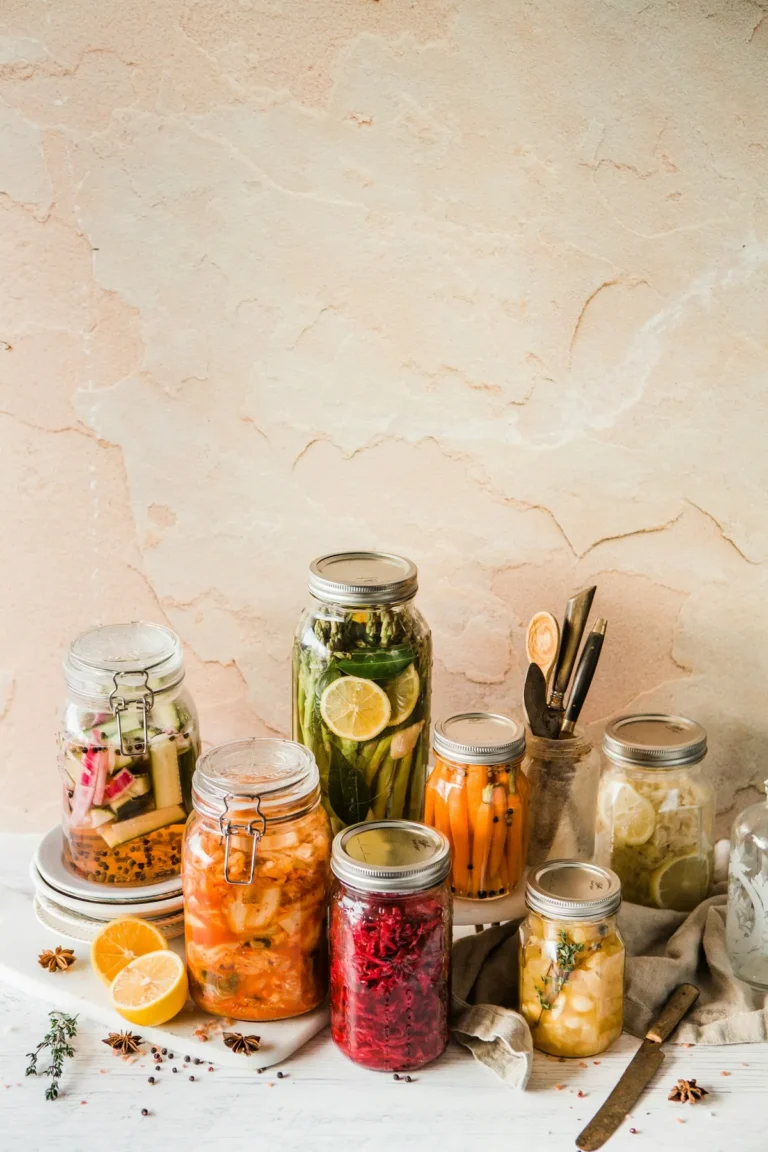
Probiotics vs postbiotics: what fermentation changes in food, what pasteurization does to a ferment, and what the research does and does not support.

How salt controls fermentation: what it does to microbes and texture, why there is no universal salt percentage, and whether salt type matters.
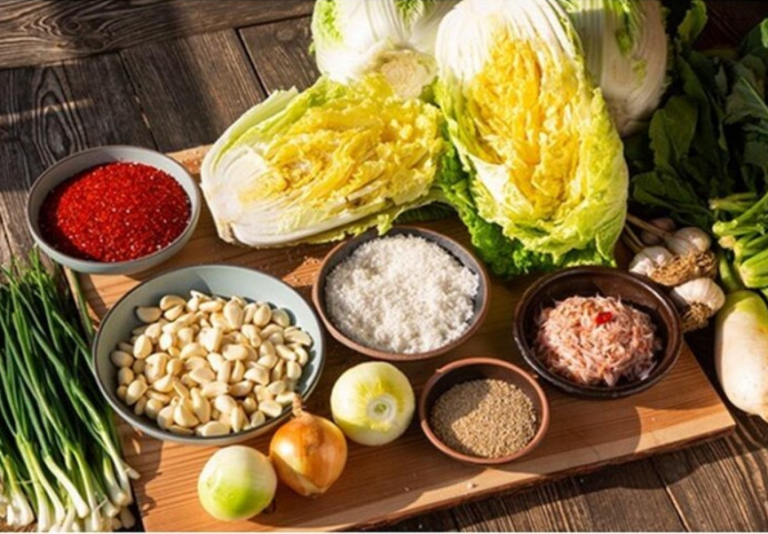
How to use ready-made kimchi seasoning: what is in it, making simple kimchi with it, other dishes it suits, and when the result is really fermented.
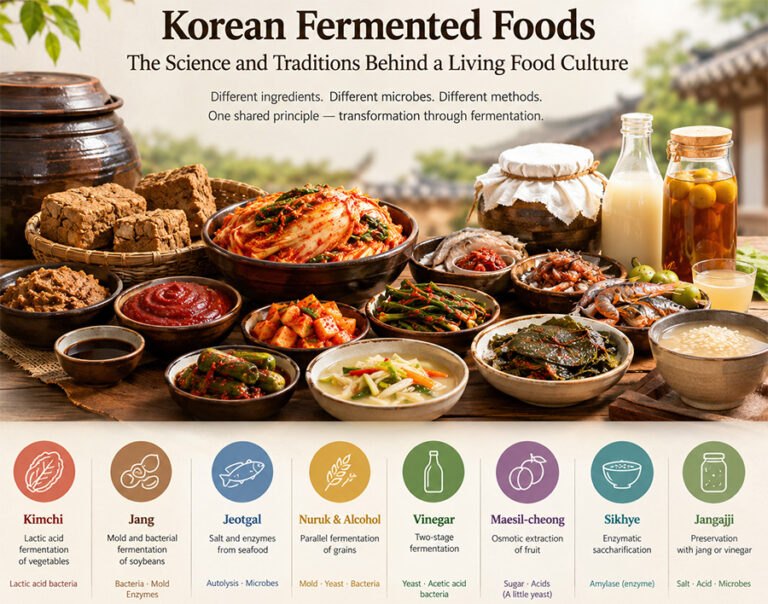
Korean cuisine is built on fermentation. This is not a metaphor. It is a structural fact. The flavors that define Korean food — the sourness of aged kimchi, the deep umami of doenjang, the layered heat of gochujang, the concentrated savoriness of jeotgal — are not created by cooking techniques or spice combinations alone. They…