How to Enjoy Makgeolli – A Beginner’s Guide
Most people try makgeolli for the first time and think it’s a mistake. It’s cloudy. It’s thick. It smells faintly of bread dough and wet grain, and the flavor hits somewhere between sweet, sour, and something almost funky. They assume it went bad. It didn’t. That’s just what makgeolli is — and once you understand what you’re actually drinking, it becomes one of the most interesting fermented beverages you’ll ever put in a glass.
Let’s start from the beginning.
What Makgeolli Actually Is (And What It Isn’t)
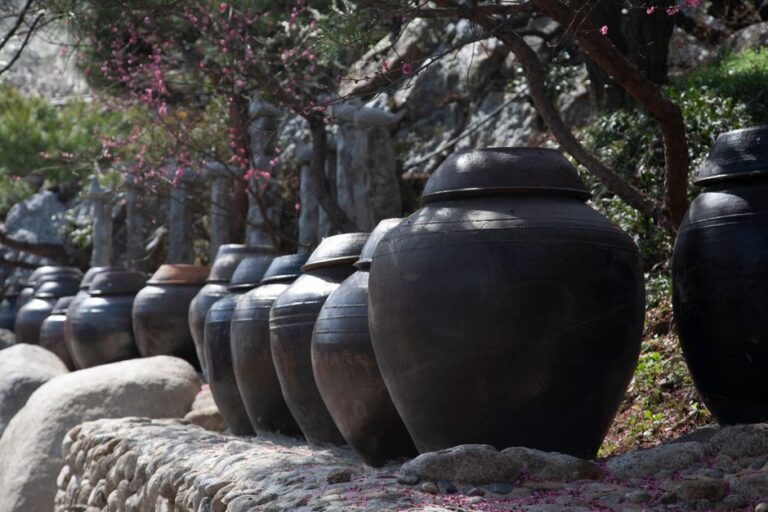
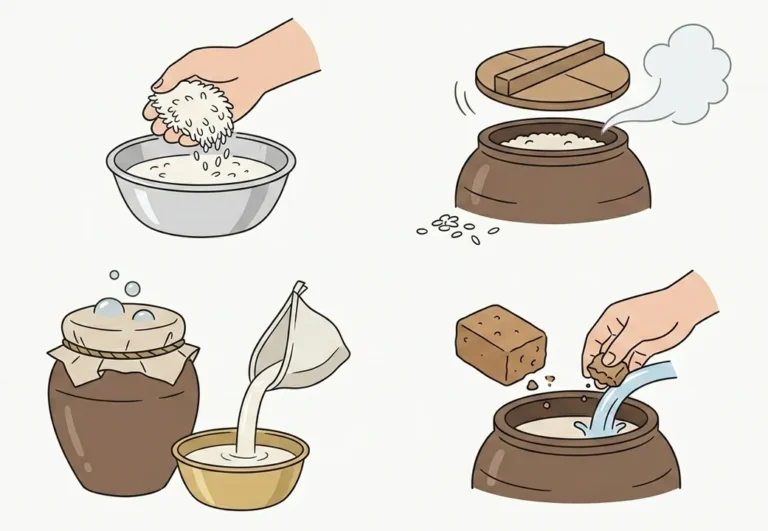
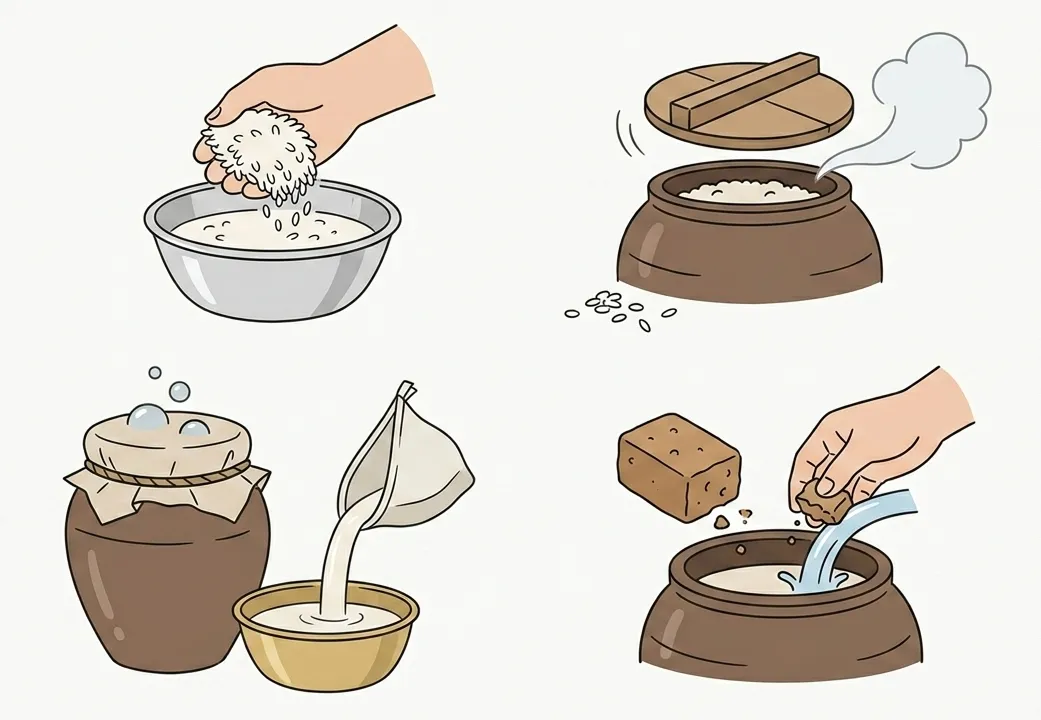
Makgeolli is a Korean rice wine. But calling it rice wine sells it short. It’s closer to a living, breathing ferment — a milky, lightly sparkling drink made from rice, water, and nuruk, a traditional Korean fermentation starter made from grain inoculated with wild molds and yeasts. The fermentation process is simultaneous saccharification and fermentation, which means the starches in the rice are being converted to sugars at the same time the sugars are being converted to alcohol. It’s a parallel process, not sequential. This is different from how beer is made, and it’s part of why makgeolli has such a complex flavor profile even with just a handful of ingredients.
The alcohol content typically falls between 6% and 8%, though some traditional and artisan versions push past 12%. It’s not a light drink pretending to be heavy. It’s genuinely mild by design — low enough that it was historically consumed by farmers during the workday, high enough to feel like a real drink in the evening.
The misconception that trips up most beginners: they think the sediment at the bottom is a defect. It’s not. That sediment is rice solids, proteins, and live microorganisms — the actual nutritional and probiotic heart of the drink. If you pour makgeolli without shaking the bottle first, you’re drinking the thin, bland top layer and leaving the best part behind. Always swirl or gently invert the bottle before pouring. This is non-negotiable.
A second misconception is that makgeolli is interchangeable with sake or Korean soju. It isn’t. Sake is clarified, filtered, and usually pasteurized. Soju is a distilled spirit. Makgeolli is unfiltered, often unpasteurized, and still fermenting in some cases right up until you open the bottle. They’re completely different drinks with different production methods, flavor profiles, and cultural contexts.
How to Taste It Properly
Makgeolli is traditionally served in a large communal bowl and ladled into shallow cups called baekkja or small bowls. You don’t drink it out of a wine glass. The wide-mouth vessel lets you smell the ferment as you drink, which matters — a lot of makgeolli’s character lives in the nose. If you’re at home and don’t have traditional bowls, a wide ceramic mug or a small shallow bowl works better than a wine glass or a standard cup.
Temperature is important. Serve makgeolli cold but not freezing — around 6 to 10 degrees Celsius (43 to 50 degrees Fahrenheit). Too cold and you’ll suppress the aroma and the subtle sourness that makes it interesting. Too warm and the sweetness becomes cloying and the funkiness tips from pleasant to off-putting.
Here’s something most beginners don’t know: makgeolli changes dramatically over the course of a bottle. Pour your first cup immediately after opening. Then wait 10 minutes and pour another. The CO2 releases, the flavors open up, and the sourness often intensifies slightly as the live cultures continue their work. Drinking it over 20 to 30 minutes gives you a genuinely different experience than chugging it fast. Slow down.
The flavor profile you’re looking for in a good makgeolli is a balance of four things: sweet, sour, bitter, and savory. The sweetness comes from residual sugars. The sourness comes from lactic acid produced during fermentation. The bitterness is subtle, coming from the grain. The savory, umami-adjacent quality is harder to pin down — it’s the nuruk doing its work, contributing enzymes and amino acids that no simplified production process can fully replicate. If a bottle tastes only sweet, it was likely heavily processed or sweetened post-fermentation. That’s not necessarily bad, but it’s not what traditional makgeolli is doing.
Three Things You Probably Didn’t Know
One: Makgeolli has a very short shelf life, and that’s the point.
Unpasteurized makgeolli — the real stuff, usually found in Korean markets or ordered from small producers — is alive. The fermentation doesn’t stop when the bottle is sealed. It continues, slowly, in the refrigerator. This means the flavor changes week by week. A freshly bottled makgeolli will taste sweeter and milder. One that’s been sitting for two weeks will taste noticeably more sour and less sweet. This is not spoilage. This is the drink evolving. Most traditional makgeolli is best consumed within 7 to 10 days of purchase. Mark the purchase date on the bottle with a marker. Drink it fresh. The pasteurized commercial versions have longer shelf lives but they’ve also lost much of that living quality.
Two: The food pairing is not optional — it’s structural.
Makgeolli and pajeon (a savory scallion pancake) are so culturally linked in Korea that rainy days actually trigger a documented spike in pajeon and makgeolli sales. It’s not folklore — Korean media and market data have tracked this consistently. The reason the pairing works isn’t romantic. It’s functional. Makgeolli’s acidity cuts through the oil in the pancake. The savory umami of the pancake grounds the sweetness of the drink. They balance each other. Other pairings that work on the same principle: dubu kimchi (firm tofu with stir-fried kimchi), jeon of any kind (fried savory pancakes), gamjajeon (potato pancakes), or even a simple plate of soy-marinated tofu. Makgeolli does not pair well with delicate foods. The ferment overwhelms them. Think bold, oily, savory, fried.
Three: You can cook with makgeolli, and it transforms meat.
Makgeolli contains active enzymes from the nuruk — specifically proteases and amylases — that break down proteins and starches. This makes it a legitimately effective meat tenderizer. Marinating pork belly or beef short ribs in makgeolli for 2 to 4 hours before cooking softens the texture noticeably and adds a subtle depth of flavor that plain wine or soy sauce doesn’t replicate. The enzymes do real work. It’s not just acidity tenderizing the surface — it’s enzymatic activity going deeper into the muscle fibers. Some Korean home cooks also use a splash of makgeolli in the dough for pajeon to create a lighter, crispier texture. The active yeast and CO2 contribute to lift. It works.
The Health Angle — With Appropriate Honesty
Makgeolli has been marketed, especially in the past decade, as a health drink. The claims range from reasonable to wildly overblown. Here’s what the evidence actually supports.
Unpasteurized makgeolli contains live lactic acid bacteria, including Lactobacillus species. A 2010 study published in the Journal of Microbiology and Biotechnology found that traditional makgeolli harbors diverse lactic acid bacterial communities with potential probiotic properties. Whether those bacteria survive digestion in sufficient quantities to provide health benefits is a more complicated question, and the research is ongoing. Some studies suggest that fermented foods with live cultures may help support gut microbiome diversity, but the evidence is not definitive enough to make specific health claims.
Makgeolli also contains small amounts of vitamins B1, B2, B3, and B6, as well as amino acids — byproducts of the fermentation process. A 2012 study in the Korean Journal of Food Science and Technology identified several bioactive compounds in makgeolli, including isoflavones and melanoidins, that may have antioxidant properties in vitro. “In vitro” means in a lab setting, not necessarily in a human body. The gap between a compound having antioxidant activity in a test tube and that compound meaningfully reducing oxidative stress in a living person is significant.
The honest summary: makgeolli is likely among the more nutritionally interesting alcoholic beverages you can drink, especially in its unpasteurized form. It may offer some benefit to gut health. It is not a health food. It is an alcoholic drink that happens to contain some beneficial compounds. Drink it for the flavor and the culture. Any health effects are a modest bonus, not a reason to drink more of it.
One relevant note on sugar: many commercial makgeolli products add aspartame or other sweeteners to compensate for the reduced sweetness of pasteurized versions. If you’re monitoring sugar intake or have sensitivities to artificial sweeteners, check the label. Traditional and craft makgeollis typically use no additives beyond rice, water, and nuruk.
A Simple Pajeon Recipe to Drink It With
You should not drink makgeolli alone. Here is a pajeon — scallion pancake — that pairs with it correctly. This is a stripped-down version, weeknight-practical, and it works.
Pajeon (Scallion Pancake)
Serves 2
Ingredients:
- 1 cup all-purpose flour
- 1/4 cup rice flour (for crispiness)
- 1 cup cold water (ice cold — this matters)
- 1/2 teaspoon salt
- 1/4 teaspoon white pepper
- 1 egg
- 8 to 10 green onions (scallions), trimmed and cut into 5-cm lengths
- 3 tablespoons neutral oil (vegetable or canola), divided
For the dipping sauce:
- 3 tablespoons soy sauce
- 1 tablespoon rice vinegar
- 1 teaspoon sesame oil
- 1/2 teaspoon gochugaru (Korean red pepper flakes, optional)
- 1/2 teaspoon sugar
- 1 small garlic clove, minced
Steps:
- Make the dipping sauce first. Combine soy sauce, rice vinegar, sesame oil, gochugaru if using, sugar, and garlic in a small bowl. Stir until the sugar dissolves. Set aside.
- In a medium bowl, whisk together flour, rice flour, salt, and pepper. Add the ice cold water and egg. Mix until just combined. Do not overmix — lumps are fine. Overmixing develops gluten and makes the pancake tough. The batter should be thin, closer to crepe batter than pancake batter.
- Heat a 25 to 28 cm (10 to 11 inch) non-stick or cast iron pan over medium-high heat. Add 2 tablespoons of oil and let it get hot — you want it shimmering, not smoking.
- Lay the scallion pieces flat in the pan, spreading them into a rough rectangle or circle. Pour enough batter over the scallions to just cover them — you’re not making a thick pancake. Press the scallions gently into the batter with a spatula.
- Cook for 3 to 4 minutes without touching it. You’ll see the edges start to set and turn golden. Lift one edge with a spatula — the bottom should be deep golden brown and crispy.
- Add the remaining tablespoon of oil around the edges of the pan, then flip the pancake. Press down firmly with the spatula to maximize contact with the pan. Cook for another 2 to 3 minutes until the second side is equally golden.
- Slide onto a cutting board. Cut into pieces. Serve immediately with the dipping sauce and a cold, well-shaken bottle of makgeolli.
Sodium note: The dipping sauce contains soy sauce, which is high in sodium. A standard 3-tablespoon portion of soy sauce contains approximately 2,600 mg of sodium — more than the FDA’s recommended daily limit of 2,300 mg for most adults. Use it as a dip, not a pour. If you’re monitoring sodium intake, substitute low-sodium soy sauce and use less.
Where to Find Good Makgeolli and What to Look For
Korean grocery stores carry makgeolli in the refrigerated section, usually in 750 mL to 1 L bottles. The most widely available commercial brand is Lotte Chilsung’s Milky brand — it’s drinkable, consistent, and a reasonable starting point. It is pasteurized and contains some additives, but it’s not a bad introduction.
If you want to understand what makgeolli can be at its best, look for craft or traditional producers. In North America, some Korean specialty importers bring in bottles from smaller Korean breweries. Look for labels that say “saeng makgeolli” — saeng means “raw” or “fresh” and indicates the product is unpasteurized. These bottles are usually kept in the coldest part of the refrigerator section and have a short best-by date. That short shelf life is a good sign.
When you pick up a bottle, look at the sediment level. A thick, heavy sediment layer at the bottom means more rice solids and a fuller-bodied drink. Minimal sediment usually means the bottle has been sitting for a while or was filtered. Shake the bottle gently before opening — you’ll hear the CO2 pressure if it’s still actively fermenting. That faint hiss and the bubbles that rise when you first open it are signs of a lively, well-made product.
Online, some craft Korean makgeolli producers ship domestically within the United States and other markets where alcohol shipping is permitted. Prices for craft bottles range from $12 to $30 USD depending on the producer and the rice variety used. It’s worth spending up once to understand what the drink can taste like at its ceiling.
Store makgeolli upright, not on its side, and always in the refrigerator. Never leave it at room temperature for extended periods — the fermentation will accelerate too fast and the bottle can pressurize dangerously. This is not hypothetical. It has happened.
This content is for informational purposes only and is not medical advice.