Baek Kimchi: The Non-Spicy Fermented Kimchi You Should Know
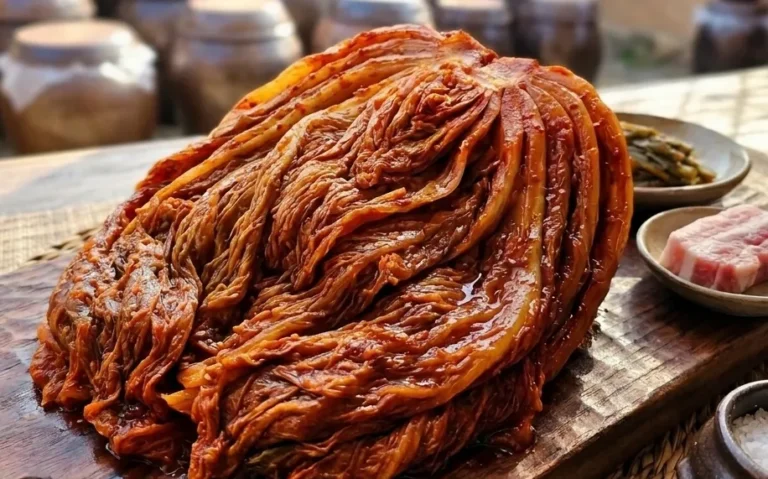
Most people assume kimchi is red. Fiery, funky, and aggressively spiced. That’s the version that took over the world — baechu kimchi, the kind that stains your cutting board and clears your sinuses. It’s earned its fame. But there’s another version that most non-Korean cooks have never encountered, and it deserves serious attention.
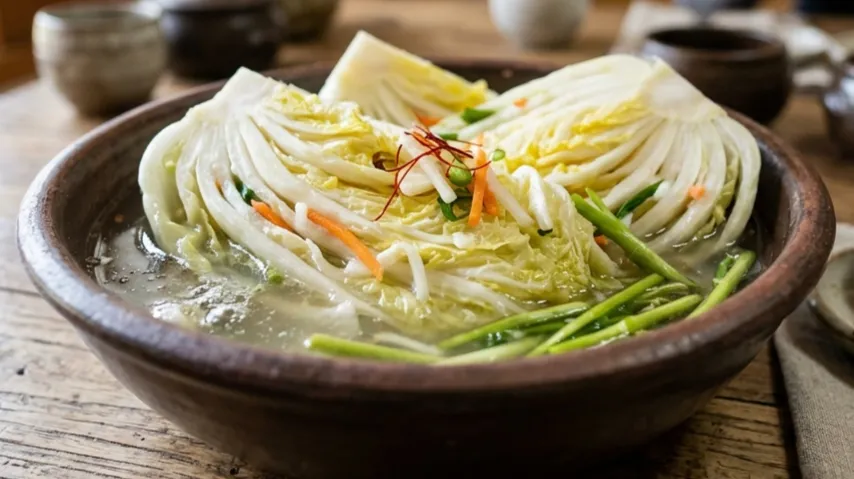
Baek kimchi — white kimchi — has no chili at all. No gochugaru, no heat, no crimson brine. What it has instead is something harder to describe and more interesting to eat: a clean, layered fermentation flavor that’s bright without being sharp, complex without being overwhelming. It tastes like the purest expression of what kimchi actually is before the pepper gets involved.
This matters for more than just flavor variety. Baek kimchi is the version you serve to people who can’t handle heat. It’s what Korean households make for young children, for elders, for anyone who wants fermented vegetables without the burn. It also showcases fermentation skill more nakedly than the red version — there’s nothing to hide behind. Every ingredient is visible, every choice audible.
Here’s what you need to know to make it well.
What Makes Baek Kimchi Different (and Why Most Recipes Get It Wrong)
The most common mistake in baek kimchi recipes is treating it like spicy kimchi with the gochugaru removed. That produces something bland and disappointing — a ghost of the original. The absence of chili isn’t a subtraction. It requires a different approach to flavor entirely.
In red kimchi, the pepper does a lot of heavy lifting. It adds color, heat, a subtle sweetness, and body to the brine. When you remove it, you need other ingredients to carry those functions. That means leaning harder on garlic, ginger, and fermented seafood — or, for a vegetarian version, on soy sauce and salted fermented soybeans. You also need something for brightness. In many traditional baek kimchi recipes, that comes from a pine nut garnish, jujubes cut into thin strips, chestnuts, and sometimes thin-sliced Asian pear or Korean pear.
The other mistake is under-salting the cabbage. Red kimchi can sometimes forgive imprecise salting because the pepper and other bold ingredients compensate. Baek kimchi cannot. The initial salt draw on the cabbage is the foundation of everything. Get it right, and you’ll have crisp, well-textured kimchi with clean brine. Get it wrong, and it’ll be either mushy or unpleasantly salty or somehow both.
One tip that matters: use coarse sea salt, not iodized table salt. Iodized salt can inhibit the lactic acid bacteria responsible for fermentation. The Korean Ministry of Food and Drug Safety has noted that salt type and concentration directly affect microbial activity in kimchi fermentation — coarse, non-iodized salt keeps the fermentation environment stable and predictable.
The Science Behind the Clean Ferment
Kimchi fermentation is driven primarily by lactic acid bacteria, particularly Leuconostoc mesenteroides in the early stages, which later gives way to Lactobacillus plantarum as acidity increases. Without gochugaru, which has mild antimicrobial properties, your baek kimchi environment is slightly more open. This means temperature control matters even more.
A 2011 study published in the Journal of Food Science found that kimchi fermented at lower temperatures (around 4°C / 39°F) developed more complex flavor compounds and a longer shelf life compared to kimchi fermented at room temperature. For baek kimchi specifically, this slow-cold fermentation approach is the right one. It preserves the delicate flavors of the pear, pine nuts, and clean garlic notes. Room-temperature fermentation will work, but you’ll lose subtlety fast.
Here’s something most recipes won’t tell you: the porridge base matters enormously in baek kimchi. In spicy kimchi, cooks often use rice flour porridge (sweet rice flour cooked into a paste) as the base that holds the gochugaru to the cabbage. In baek kimchi, a lighter porridge — sometimes just a thin rice water — gives the brine body without heaviness. Some families skip it entirely and use just a little rice vinegar, but the traditional porridge-based version ferments more evenly and has a rounder texture.
Another underknown tip: when you add Asian pear to baek kimchi, it does more than contribute sweetness. Pears contain enzymes — protease and amylase — that tenderize the cabbage further and influence fermentation speed. A 2018 study in LWT Food Science and Technology confirmed that fruit-based additions to kimchi can accelerate early-stage lactic acid bacterial activity. This means your baek kimchi may develop its initial tang faster than you’d expect, especially if you’re generous with the pear.
The brine should taste clean and lightly savory before you pack it. If it tastes right in the bowl, it’ll taste right — better, actually — after two or three days of fermentation.
Baek Kimchi Recipe: Full Method with Measurements
This recipe makes one large head of napa cabbage, yielding roughly 2 liters of finished kimchi. Scale up easily.
Ingredients
For the cabbage:
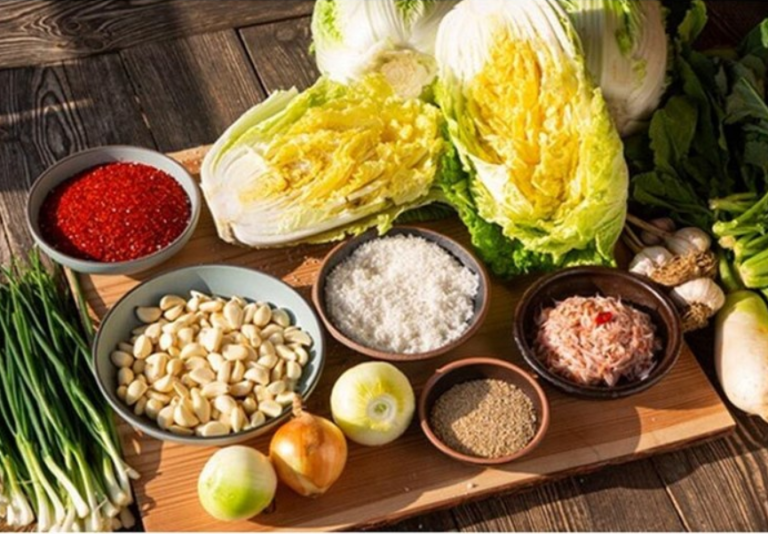
- 1 large napa cabbage (about 2 kg / 4.4 lbs)
- 120g coarse sea salt (non-iodized), divided
For the porridge base:
- 2 tablespoons sweet rice flour (glutinous rice flour)
- 1 cup cold water
For the filling and brine:
- 1 medium Asian pear or Korean pear (about 250g), peeled and grated or blended
- 8 garlic cloves, minced or grated fine
- 1 teaspoon fresh ginger, grated fine
- 2 tablespoons fish sauce (or soy sauce for vegetarian version)
- 1 tablespoon salted fermented shrimp, finely minced (omit for vegetarian)
- 1 teaspoon sugar
- 1 teaspoon sea salt, for the brine
For the filling garnish:
- 2 stalks green onion, cut into 5cm / 2-inch pieces
- 1 small carrot, julienned thin
- 8 jujubes (dried red dates), pitted and sliced thin — optional but traditional
- 2 tablespoons pine nuts, whole
For the brine:
- 4 cups cold water
- 1 tablespoon non-iodized sea salt
Steps
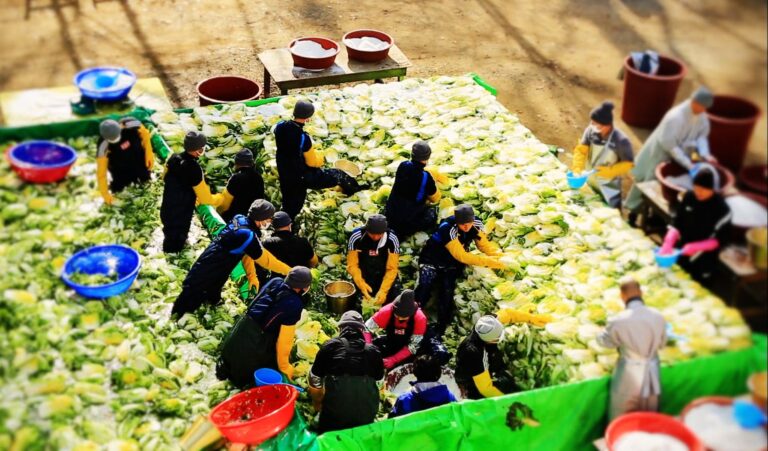
- Salt the cabbage. Cut the napa cabbage in half lengthwise, then into quarters. Rinse under cold water. Separate the leaves just enough to apply salt between the layers. Use about 80g of your salt here, pressing it into the thicker white parts especially. Lay the salted cabbage in a large bowl or tray and let it sit for 1 to 1.5 hours. Turn it once at the halfway point. You’re looking for the cabbage to soften noticeably and release liquid. Test by folding a leaf — it should bend without snapping.
- Rinse and drain. Rinse the cabbage thoroughly under cold running water, three times. Squeeze out excess water gently. Taste a leaf. It should be pleasantly salty, not aggressively so. If it’s too salty, rinse again. Let it drain in a colander, cut side down, for at least 30 minutes.
- Make the porridge base. In a small saucepan, whisk the sweet rice flour into the cold water. Heat over medium, stirring constantly, until the mixture thickens to a translucent paste — about 3 to 4 minutes. Remove from heat and cool completely before using.
- Blend the pear. Peel and grate or briefly blend the Asian pear until you have a loose pulp. Don’t strain it — you want the fiber in there.
- Mix the filling. In a large bowl, combine the cooled rice porridge, grated pear, minced garlic, grated ginger, fish sauce (or soy sauce), fermented shrimp if using, sugar, and 1 teaspoon of salt. Mix well. Taste it. It should be savory, slightly sweet, garlicky, with a clean edge. Adjust salt or fish sauce to taste. Add the green onion, carrot, jujube slices, and pine nuts. Stir to distribute.
- Pack the cabbage. Take each cabbage quarter and spread the filling between the leaves, working from the outer leaves inward. Be thorough but not excessive — you want every leaf to have contact with the seasoning. Fold the outer leaf around the layered quarter to create a compact bundle. Place each bundle tightly into a clean glass jar or ceramic fermentation container.
- Make the brine. Dissolve 1 tablespoon of sea salt in 4 cups of cold water. Pour this brine over the packed cabbage until the cabbage is just submerged. Leave about 2 to 3 centimeters of space at the top of the jar — the kimchi will expand slightly as it ferments.
- Ferment. Leave the jar at room temperature (around 18°C to 20°C / 64°F to 68°F) for 12 to 24 hours. In cooler weather, you may need closer to 36 hours. Then transfer to the refrigerator. Baek kimchi tastes best after 2 to 5 days of cold fermentation, when the flavors have knit together but the brightness hasn’t faded. It continues to develop for up to 3 to 4 weeks.
- Serve. Cut the cabbage bundles into bite-sized pieces before serving. Serve cold, with a little of the brine spooned over. The brine itself is worth drinking — it’s mild and lightly fizzy after a few days and makes an excellent base for cold noodle broth.
A note on sodium: Kimchi is a fermented food that contains significant sodium. A 100g serving of kimchi typically contains anywhere from 400mg to 700mg of sodium depending on preparation. The American Heart Association recommends no more than 2,300mg of sodium per day for most adults. If you’re watching sodium intake, reduce the fish sauce and brine salt slightly, but know that some salt is essential for safe fermentation — it suppresses harmful bacteria while allowing the beneficial lactic acid bacteria to thrive.
Health Considerations and What the Research Actually Says
Baek kimchi, like all kimchi, is a fermented food rich in live lactic acid bacteria. The broader research on kimchi-associated health effects has been growing steadily. A 2021 review published in the Journal of Ethnic Foods analyzed multiple studies and found that kimchi consumption may help support gut microbiome diversity and could be associated with improved digestive comfort in some populations — though the authors note that more large-scale human trials are needed before strong clinical conclusions can be drawn.
The fermented shrimp in traditional baek kimchi contributes additional fermented compounds and amino acids, along with the existing bacterial cultures from the cabbage itself. Some research suggests fermented seafood products may support mineral bioavailability, though this evidence remains preliminary.
Baek kimchi may have a slight advantage over spicy kimchi for people with capsaicin sensitivity, gastroesophageal reflux, or irritable bowel syndrome, since the absence of chili removes a common GI irritant. That said, the garlic content is still high, and garlic is itself a known FODMAP that some people with IBS find problematic. The NIH’s MedlinePlus notes that garlic may cause digestive discomfort for sensitive individuals.
What’s clear and well-supported is this: fermented vegetables like kimchi introduce live bacterial cultures to the gut, and there’s meaningful evidence that dietary diversity in fermented foods is associated with greater gut microbiome diversity. A 2021 study in Cell by Wastyk et al. found that a high-fermented-food diet significantly increased microbiome diversity and decreased markers of inflammation in healthy adults. Kimchi was among the fermented foods consumed in that study.
Don’t treat baek kimchi as medicine. Eat it because it’s genuinely delicious. Any health benefits it may contribute are a quiet bonus.
How to Use Baek Kimchi Beyond the Side Dish
This is where most guides stop — at the banchan dish, the small side portion served alongside rice. Baek kimchi is extraordinary there. But it has a range that spicy kimchi doesn’t have simply because its flavor is more neutral and doesn’t dominate everything it touches.
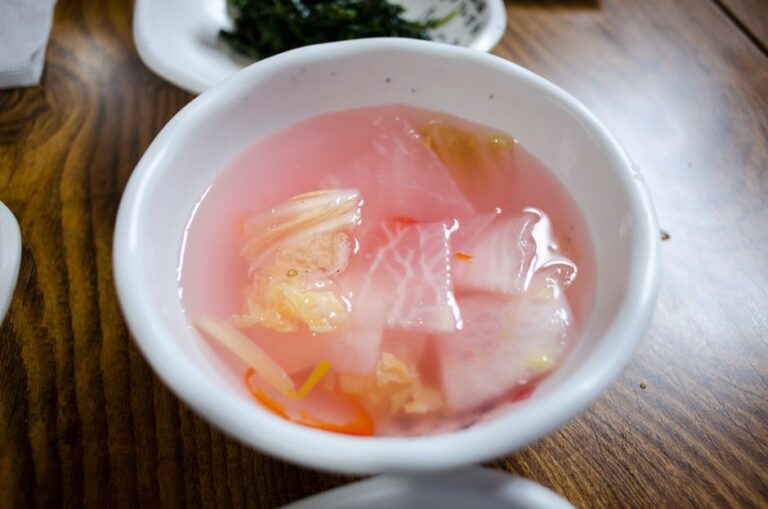
The brine, after two or three days, becomes the base of mul kimchi — kimchi water, a cold, lightly fermented drink that Koreans have consumed for centuries. It’s clean, slightly tart, faintly sparkling. You can sip it as-is or use it as a broth for naengmyeon — cold buckwheat noodles. The brine works beautifully for this because it doesn’t color the broth red or overwhelm the noodles with heat.
Baek kimchi works in slaws. Finely chopped, with a little sesame oil and toasted sesame seeds, it becomes a fermented slaw that pairs well with grilled pork, salmon, or anything fatty that needs acid to cut through it. The clean brine means the surrounding ingredients remain visible and distinct.
It works in dumplings. Mandu fillings traditionally include kimchi, and baek kimchi gives you a way to make kimchi mandu that isn’t red, isn’t heat-forward, and has a more delicate character. Mix it with firm tofu, glass noodles, and a little ground pork. The fermented edge comes through without burning.
Some Korean home cooks use baek kimchi as a wrapping leaf — picking up a piece of meat, placing it on a large cabbage leaf from the kimchi, and folding it around. The slight tang of fermentation replaces the usual ssamjang sauce.
The brine also works as a salad dressing base. Mix two tablespoons of baek kimchi brine with one tablespoon of good rice vinegar, one teaspoon of sesame oil, and a pinch of salt. Dress a cucumber salad or a shaved cabbage salad with it. You’ll get the fermented depth without the color or heat.
The goal with baek kimchi isn’t to make a lesser version of the red kind. It’s to make a different, complete thing on its own terms — one that’s lighter, more versatile, and often more revelatory to people who’ve only ever experienced kimchi as heat.
This content is for informational purposes only and is not medical advice.