Pa Kimchi: What Happens When You Ferment Green Onions
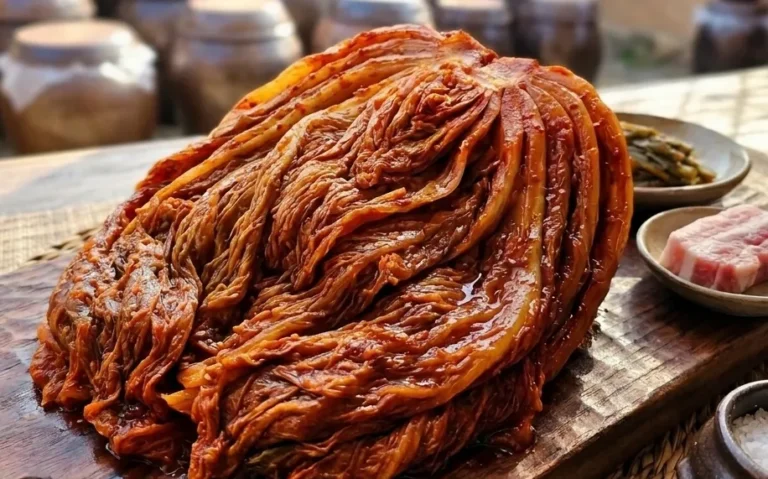
When people think of kimchi, most picture napa cabbage — the familiar red, spicy dish that appears beside rice, soup, and grilled meat.
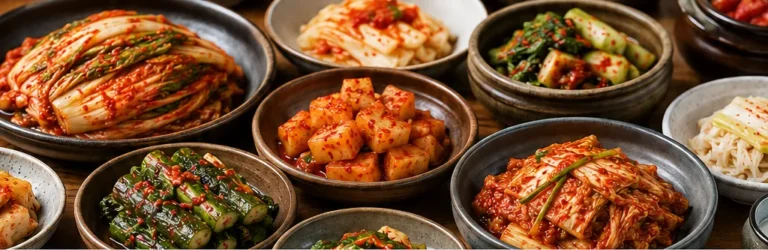
But kimchi has never been just one vegetable or one recipe.
Pa kimchi, made primarily with green onions, is one of the more chemically interesting variations. Not because it is somehow better than baechu kimchi. But because green onions bring a set of volatile sulfur compounds to fermentation that cabbage does not, and what happens to those compounds during lactic acid fermentation produces a flavor profile that is genuinely unique among kimchi varieties.
What Makes Green Onions Different as a Fermentation Substrate
All allium vegetables — onions, garlic, leeks, chives, green onions — contain sulfur-based organic compounds. In green onions, the most relevant are thiosulfinates and their precursors, which are released when cell walls are damaged by cutting, crushing, or salting.
In raw green onions, these compounds produce the sharp, pungent bite that can dominate a dish. They are volatile, reactive, and chemically unstable.
This is where fermentation does something that simple cooking cannot.
When green onions are salted and packed with seasoning, lactic acid bacteria begin metabolizing available carbohydrates. As pH drops, the chemical environment shifts. The reactive sulfur compounds don’t simply disappear — they transform. Some break down into shorter-chain sulfur molecules. Others react with amino acids and organic acids produced during fermentation, creating new aromatic compounds that did not exist in the raw vegetable.
The result is a fundamental shift in character. The aggressive raw pungency softens into something rounder, more complex, and slightly sweet. The sharpness is still there, but it has been reshaped by acid and time into a different kind of intensity.
This is why pa kimchi doesn’t simply taste like “sour green onions.” The fermentation has altered the very compounds that define what a green onion smells and tastes like.
The Fermentation Itself
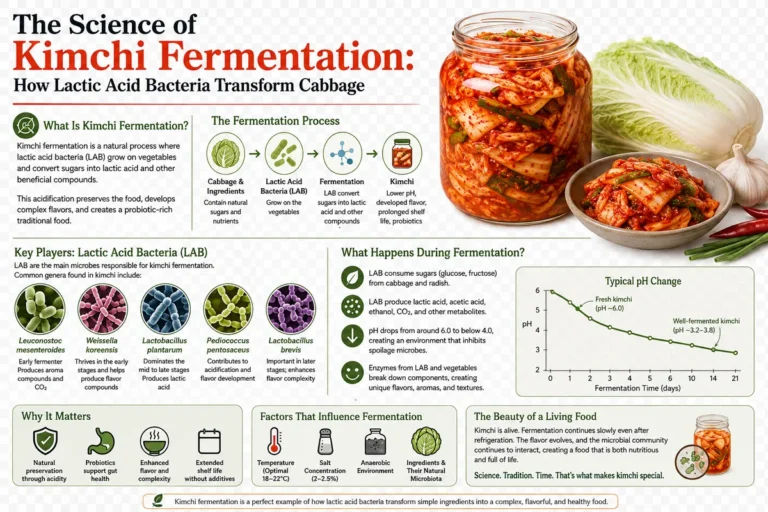
Pa kimchi follows the same general microbial logic as other kimchi varieties. Lactic acid bacteria — primarily from groups such as Leuconostoc and Lactobacillus — metabolize sugars and produce organic acids that lower the pH.
But the timeline is compressed compared to baechu kimchi.
Green onions have less water content and less sugar than napa cabbage. The available carbohydrate pool is smaller, which means lactic acid accumulation proceeds differently. Pa kimchi typically reaches its peak flavor window faster — often within a few days at room temperature — and can become overly sour more quickly if left unrefrigerated.
The sulfur compounds also interact with the fermentation environment in ways that are still being studied. Some research suggests that allium-derived sulfur compounds may influence the composition of the microbial community during fermentation, potentially favoring certain lactic acid bacteria over others. The exact mechanisms are not fully established, but it is clear that fermenting an allium vegetable is not biochemically identical to fermenting brassica vegetables like cabbage or radish.
This is one reason pa kimchi has a shorter optimal window than baechu kimchi. It is not simply a matter of preference. The chemistry of the substrate pushes the fermentation toward a narrower peak.
Salt as Environment Control
Salt plays a particularly precise role in pa kimchi.
Green onions are structurally different from cabbage. They are tubular, thin-walled, and collapse more easily under osmotic pressure. Over-salting produces a limp, waterlogged result. Under-salting fails to draw enough moisture to create the brine environment that lactic acid bacteria need.
The salting step for pa kimchi is therefore shorter than for baechu kimchi — typically 15 to 30 minutes rather than several hours. The goal is to wilt the outer layers enough to make the green onions pliable for coating with seasoning paste, without destroying their structural integrity.
This is a recurring principle in Korean fermentation: salt is not a preservative applied in a fixed amount. It is an environmental variable that must be calibrated to the specific vegetable, its water content, and the desired fermentation outcome.
Why Pa Kimchi Became a Barbecue Companion
Pa kimchi appears alongside grilled meat more consistently than almost any other kimchi variety, and the reason is not arbitrary.
It has to do with the sulfur compounds.
The same allium-derived aromatics that make raw green onions sharp perform a different function after fermentation. In their transformed state, they create a pungent, aromatic bridge between the fermented sourness of the kimchi and the caramelized, Maillard-rich surface of grilled meat. Baechu kimchi provides acid contrast. Pa kimchi provides acid contrast plus an aromatic layer that specifically complements charred, smoky flavors.
There is also a textural element. Even after fermentation, green onions retain a fibrous, slightly chewy structure that contrasts with the soft fattiness of pork belly or the tender grain of galbi. You bite through the onion. It resists slightly before releasing its juice. That physical interaction — the small resistance, then the burst of sour-savory-aromatic liquid — is part of what makes the pairing work.
This is different from why mukeunji works with samgyeopsal. Mukeunji provides deep, aged umami and concentrated acid from months of fermentation. Pa kimchi provides bright, volatile aromatics from recently transformed sulfur compounds. They solve different problems at the same table.
Fermentation Changes the Role of the Ingredient
Fresh green onions are used as a garnish, an aromatic, or a minor ingredient. You scatter them on top of a finished dish. You add them at the last minute to preserve their raw bite.
Fermented green onions occupy a completely different position in a meal. Pa kimchi is a dish in its own right — served in its own bowl, eaten deliberately, contributing its own flavor arc to the meal. It can be the sharpest, most intensely flavored item on the table.
This transformation of role is one of the most consistent things fermentation does across Korean cuisine. Soybeans go from a bland protein source to the deeply savory foundation of doenjang and ganjang. Cabbage goes from a mild vegetable to the complex, acidic centerpiece of baechu kimchi. Chili peppers go from a spice to a structural component of gochujang.
In every case, fermentation elevates an ingredient from a supporting role to something more central.
Pa kimchi follows the same logic. The green onion stops being a garnish and becomes a food.
Making Pa Kimchi
Ingredients
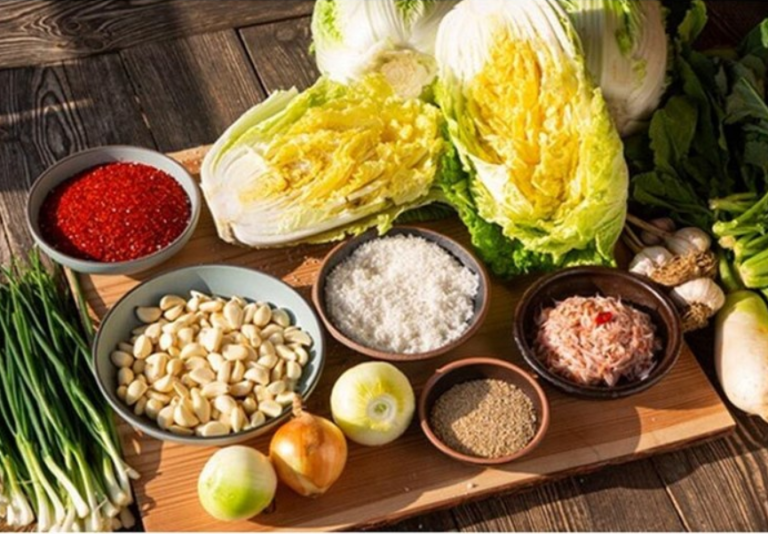
300 g thin green onions or Korean scallions (jjokpa)
1 tablespoon coarse sea salt
3 tablespoons gochugaru
1–2 tablespoons saeujeot (salted fermented shrimp), optional
1 tablespoon fish sauce (myeolchi aekjeot)
1 teaspoon sugar
4 cloves garlic, minced
1 teaspoon grated ginger
1 tablespoon sesame seeds
1 teaspoon sesame oil, optional
Method
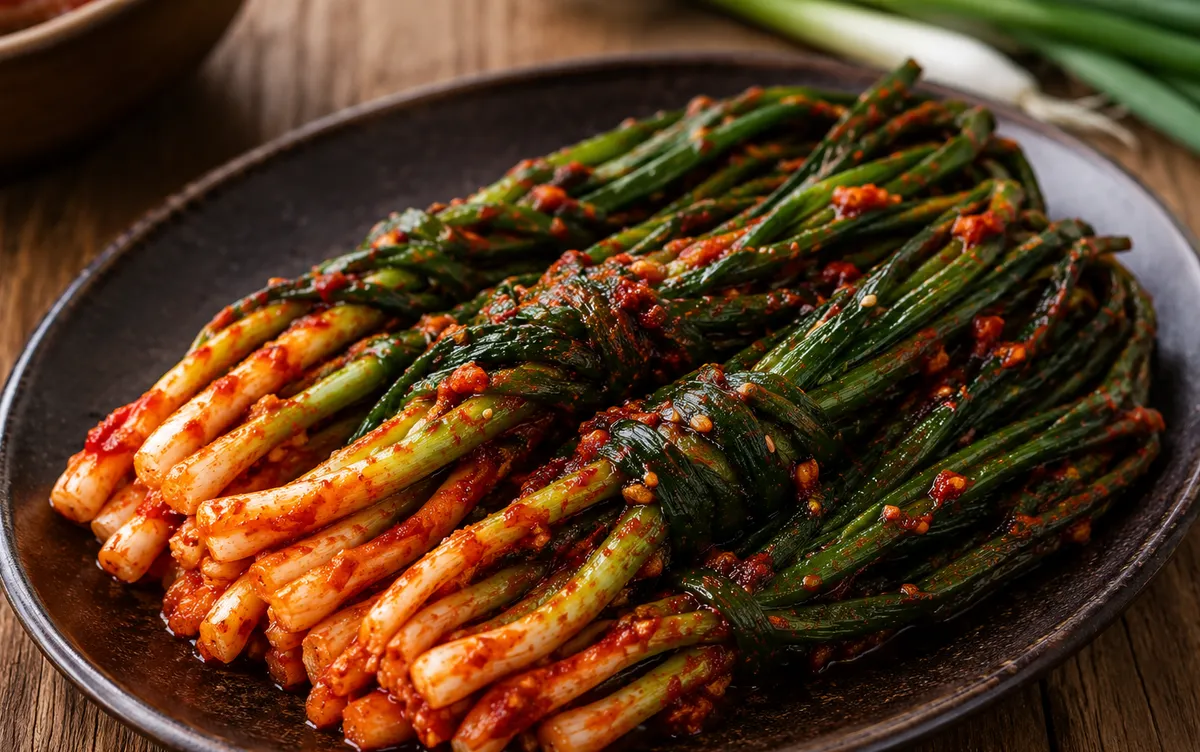
Wash the green onions thoroughly and remove damaged outer layers. Cut to uniform lengths if needed, or leave whole for a more traditional presentation.
Sprinkle evenly with salt. Let rest 15–30 minutes — no longer. The onions should be pliable but not waterlogged. If they collapse entirely, you’ve over-salted or waited too long.
Mix gochugaru, fish sauce, garlic, ginger, sugar, and saeujeot into a paste.
Drain any liquid from the salted onions. Coat them evenly with the seasoning paste — work it between the layers of each onion stalk.
Arrange in a clean container. Press gently to minimize air pockets but do not crush.
Leave at room temperature for 12 to 24 hours depending on ambient temperature. Taste. When the raw sharpness has softened and a light sourness has appeared, move to the refrigerator.
Pa kimchi reaches its peak quickly. Within the first week under refrigeration, the flavors integrate and the sulfur compounds continue to mellow. After two weeks, sourness becomes dominant. Use older pa kimchi in cooked dishes — pancakes, fried rice, or stews — where concentrated acidity is an asset.
The Larger Point
Pa kimchi is a small food that demonstrates a large principle.
Different vegetables bring different chemistry to fermentation. The same lactic acid bacteria, the same salt, the same general process — but the substrate changes everything. Cabbage yields one set of flavors. Radish yields another. Green onions, with their sulfur compounds and structural properties, yield something that neither cabbage nor radish can produce.
This is why Korean cuisine developed dozens of kimchi varieties rather than applying one recipe to every vegetable. The fermentation principle is universal. The results are specific.
Understanding pa kimchi means understanding that fermentation is not a single transformation applied uniformly to all ingredients. It is a process that responds to what it is given.
Give it cabbage, and it builds acid and depth over months.
Give it green onions, and it reshapes volatile sulfur compounds into something sharp, aromatic, and fleeting.
The microorganisms don’t know the difference. The chemistry does.
This content is for informational purposes only and is not medical advice.