Doenjang vs. Miso: Two Soybean Pastes, Two Fermentation Systems
Walk down the same supermarket aisle and you will find two tubs of brown soybean paste sitting near each other. One is Korean doenjang, one is Japanese miso. They look similar enough that most recipes treat them as interchangeable, and plenty of articles will tell you that doenjang is simply the saltier, funkier cousin of miso.
That description is not exactly wrong. It is just describing the result while skipping the reason.
Doenjang and miso solve the same problem: how to turn a hard, bland, protein-rich bean into something savory enough to build a meal around. They solve it with different microorganisms, in a different order, and with a different definition of how much the maker should control. That is where the flavor difference actually comes from.
The short answer, if you are standing in the kitchen
You can substitute one for the other, and the dish will still be good. It will not taste the same.
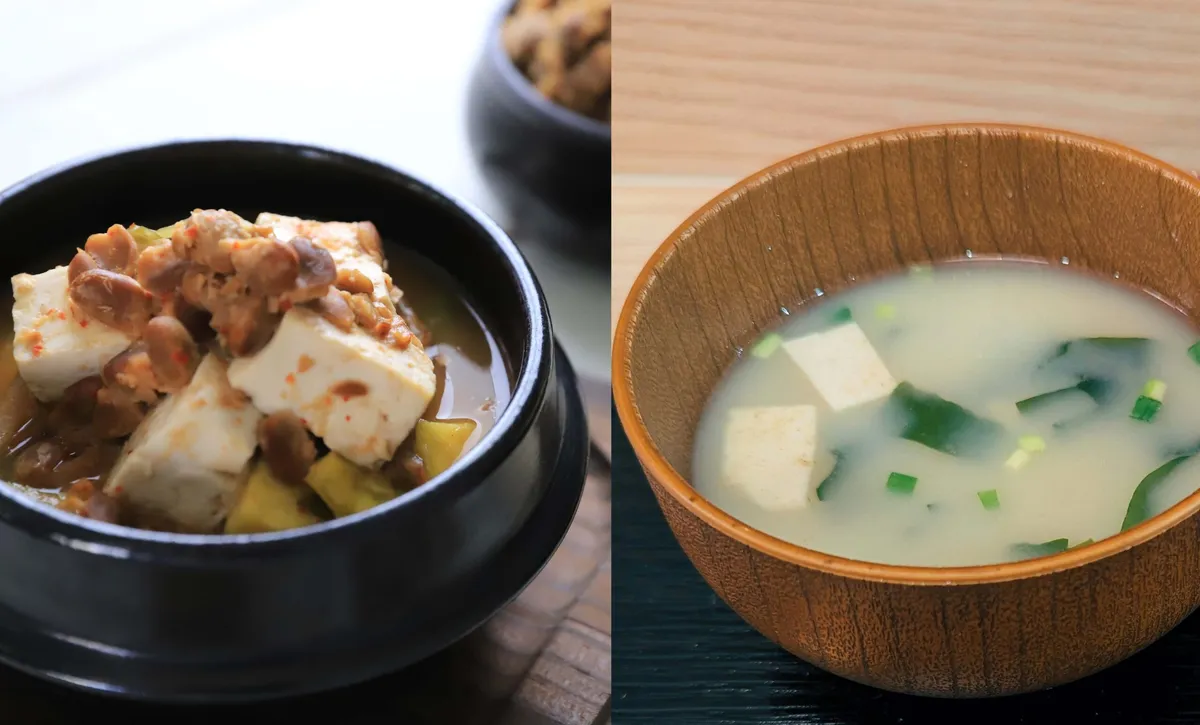
Doenjang is generally deeper, saltier, and more pungent, with a bitterness at the edges that some people love and some people take a while to get used to. Most miso is rounder, sweeter, and milder, though a long-aged red miso narrows that gap considerably.
If you are substituting, start with less doenjang than the miso a recipe asks for, and taste before adding more. In the other direction, expect a miso version of doenjang jjigae to taste thinner and sweeter than the stew you were aiming for.
The rest of this article is about why.
Same biochemistry, different machinery
Both pastes rely on the same underlying process. Enzymes break soybean protein into peptides and free amino acids, glutamic acid among them, which is what the tongue reads as savory depth. Enzymes also break residual starches into sugars, and those sugars feed the slow browning reactions that darken an aging paste and build its roasted notes.
The difference is where those enzymes come from.
In Japanese miso, they come from koji: rice or barley that has been deliberately inoculated with a pure culture of Aspergillus oryzae, grown under controlled temperature and humidity until the grain is covered in mold. The maker chooses the organism and the conditions.
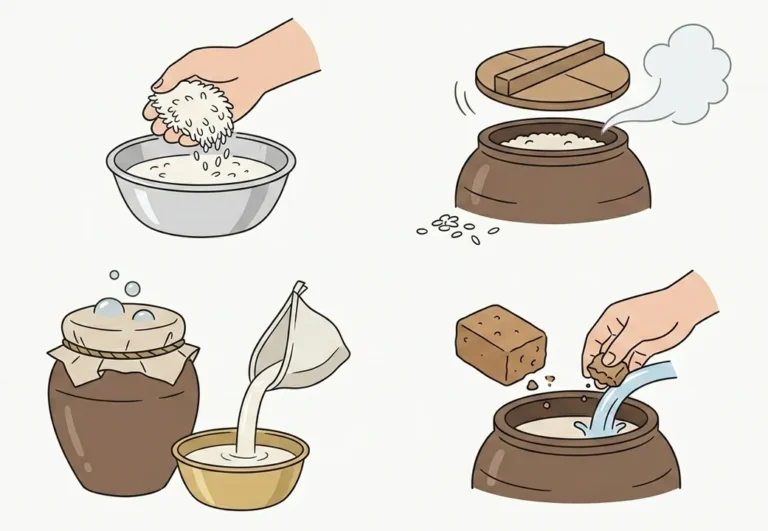
In traditional Korean doenjang, they come from meju: blocks of cooked, mashed soybeans that are tied with rice straw and left to ferment in open air for weeks. Nothing is inoculated. Whatever is in the room, in the straw, and on the surfaces colonizes the block.
That single decision — inoculate or invite — separates the two systems.
What actually grows on meju
Because meju is colonized from the environment, its microbial community is mixed and variable. Sequencing studies of Korean meju and doenjang consistently find Bacillus species, Bacillus subtilis prominent among them, alongside a range of molds and salt-tolerant yeasts and lactic acid bacteria that appear later in the process.
Bacillus matters here more than its reputation suggests. It is a prolific producer of proteases, the enzymes that take soybean protein apart. It is also the organism behind the sticky threads of cheonggukjang and of Japanese natto, which is worth remembering the next time meju smells more aggressive than anything you would want on a plate. That smell is protein being dismantled.
Molds grow on meju as well, on the surface, and they contribute amylases and additional proteases. But describing traditional meju as a koji block is a common mistake. Koji is a deliberately inoculated single culture. Meju is a mixed community that arrived on its own.
This is also why traditional doenjang is inconsistent by nature. Two households in different provinces, using the same recipe, can end up with noticeably different paste, because the microorganisms that colonized their meju were not the same. Consistency was never the goal. In industrial production, where starter cultures and controlled rooms are used, it is.
One mass, or two phases
The second structural difference is what happens after the enzymes exist.
Miso is usually mixed and fermented as a single mass. Cooked soybeans, koji, and salt go together into one vessel and stay there. What goes in is what comes out, transformed.
Doenjang goes through two phases and a separation. The dried meju blocks are submerged in heavy brine — roughly 18 to 20 percent salt — in an onggi jar. The salt shuts down most microbial growth, but the enzymes produced during the meju stage keep working in the brine, pulling soluble compounds out of the blocks and into the liquid.
After several weeks the two parts are separated. The liquid becomes ganjang, Korean soy sauce. The solids are salted again, packed into a jar, and aged, often through a full summer, to become doenjang.
One fermentation, two foods. Miso has no equivalent step; Japanese soy sauce is brewed separately from its own mash.
That separation shapes the paste that remains. A large share of the freely soluble compounds has already left with the ganjang, and what stays behind is concentrated, salty, and distinctly less sweet than a miso that kept everything it started with.
Why the flavors land differently
Several things stack up in the same direction.
Most miso is made with a starch source — rice or barley koji — in the mix. Those starches become sugars, and the sugars stay in the paste. White miso in particular uses a high proportion of koji and a short fermentation, which is why it tastes almost sweet.
Traditional doenjang is soybeans and salt. There is no rice or barley in the jar adding sweetness, and much of what dissolved has already been drawn off as soy sauce. What is left is savory and salty with a mineral edge, and often a trace of bitterness from long protein breakdown.
Texture follows the same logic. Miso is usually smooth and even, ground into a uniform paste. Doenjang is coarser, with visible pieces of bean, because the meju solids were pressed rather than milled.
Aging widens or narrows the difference depending on which miso you compare. A three-day white miso and a three-year doenjang are barely the same category of ingredient. A dark, long-aged red miso and a young commercial doenjang can sit surprisingly close together.
Using them in cooking
The practical rules differ more than the recipes suggest.
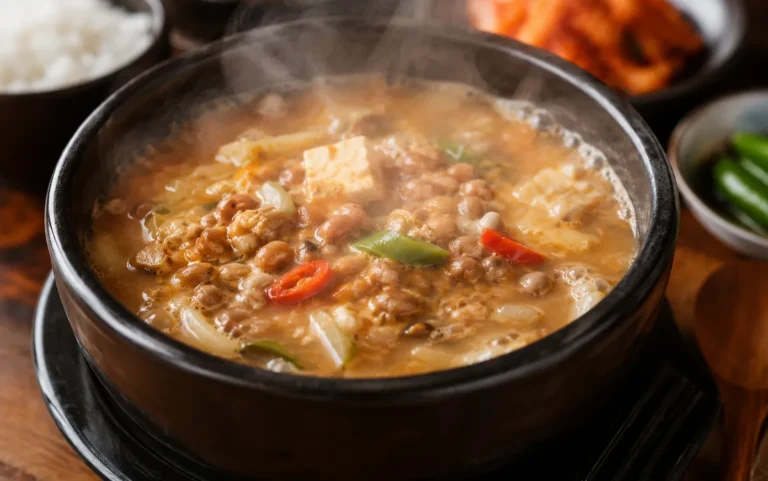
Doenjang is built for simmering. Korean stews dissolve it into broth and cook it, and the flavor holds up. Long boiling does drive off aroma and kills most live microbes, which matters if you were counting on the paste as a source of live cultures, but it does not ruin the dish.
Miso is usually added at the end, off the heat or just below a simmer, because boiling flattens its more delicate aroma quickly. Stir it into hot broth rather than cooking it in.
For substitutions:
- Miso in place of doenjang: use about the same amount, then add a little soy sauce or a spoon of salted shrimp for the depth that is missing.
- Doenjang in place of miso: start with two-thirds of the quantity, taste, and add from there. Adding it to a soup earlier than a recipe says is fine.
- Neither works well where the paste is the whole point: a real doenjang stew made with white miso is a different dish, not a version of the same one.
Reading the label
For doenjang, the short ingredient list is the traditional one: soybeans and salt, sometimes with a note that it was made with meju and aged. Longer lists usually mean wheat flour and a defined starter, which produces a milder, sweeter, more uniform paste closer to miso in character.
For miso, the grain tells you most of what you need to know. Rice koji is the common base; barley gives a rougher, earthier paste; soybean-only miso, such as hatcho, ferments the longest and tastes closest to doenjang of any miso on the shelf.
Both are high in sodium. Both keep for months refrigerated, and both darken slowly as they age in the container, which is normal.
Neither one is the original
It is tempting to arrange these two pastes in a line and decide which came first or which is more authentic. The more useful framing is that two food cultures faced the same problem — soybeans are nutritious and nearly inedible without help — and solved it with the organisms and methods available to them.
Japan standardized the organism and the process. Korea kept the environment in the recipe and accepted the variation that came with it. Both work. They just do not taste the same, and now the reason is clear.
Frequently Asked Questions
Can I use miso instead of doenjang in doenjang jjigae?
Yes, and the stew will be edible and pleasant, but it will taste noticeably lighter and sweeter than the original. If that is your only option, add soy sauce or a small amount of salted seafood to rebuild some of the depth, and use a red or long-aged miso rather than white miso.
Is doenjang just Korean miso?
No. They share the same basic biochemistry but use different enzyme sources and different production structures. Miso is fermented with inoculated koji mold, usually on rice or barley, as a single mass. Traditional doenjang is fermented with a mixed environmental community on meju blocks, then brined and separated into soy sauce and paste.
Why does doenjang smell so much stronger?
Mostly because of how completely the soybean protein is broken down, and by which organisms. Bacillus-driven fermentation produces sharp, sometimes ammonia-like compounds during the meju stage, and traditional doenjang keeps more of that character than a koji-based miso does.
Which one is healthier?
Neither has a clear advantage, and both are high in sodium, which is the practical consideration for most people. Both are fermented soybean foods, and the nutritional research on them is not detailed enough to rank one above the other. Treat them as flavor ingredients rather than health foods.
Related Reading
- How doenjang is born — the full process from meju to aged paste.
- Fermentation molds: Aspergillus, Rhizopus, and koji — what these organisms actually do to food.
- Cheonggukjang vs. natto — the same Bacillus, two very different foods.
References
- Jung JY, et al. (2014). Microbial community dynamics during fermentation of doenjang-meju, traditional Korean fermented soybean. International Journal of Food Microbiology. PubMed
- Jeong DW, et al. (2016). Functional characterization of bacterial communities responsible for fermentation of doenjang. Frontiers in Microbiology, 7, 827. Frontiers
- Allwood JG, et al. (2021). Fermentation and the microbial community of Japanese koji and miso: a review. Journal of Food Science. PubMed