Gochujang vs. Gochugaru: Paste or Powder, and Why It Matters
If you are new to Korean cooking, these two words cause more confusion than almost anything else on an ingredient list. They sound alike. They are both red. They both come from the same chili pepper. And a recipe that calls for one will not turn out right with the other.
The difference is simple once you see it.
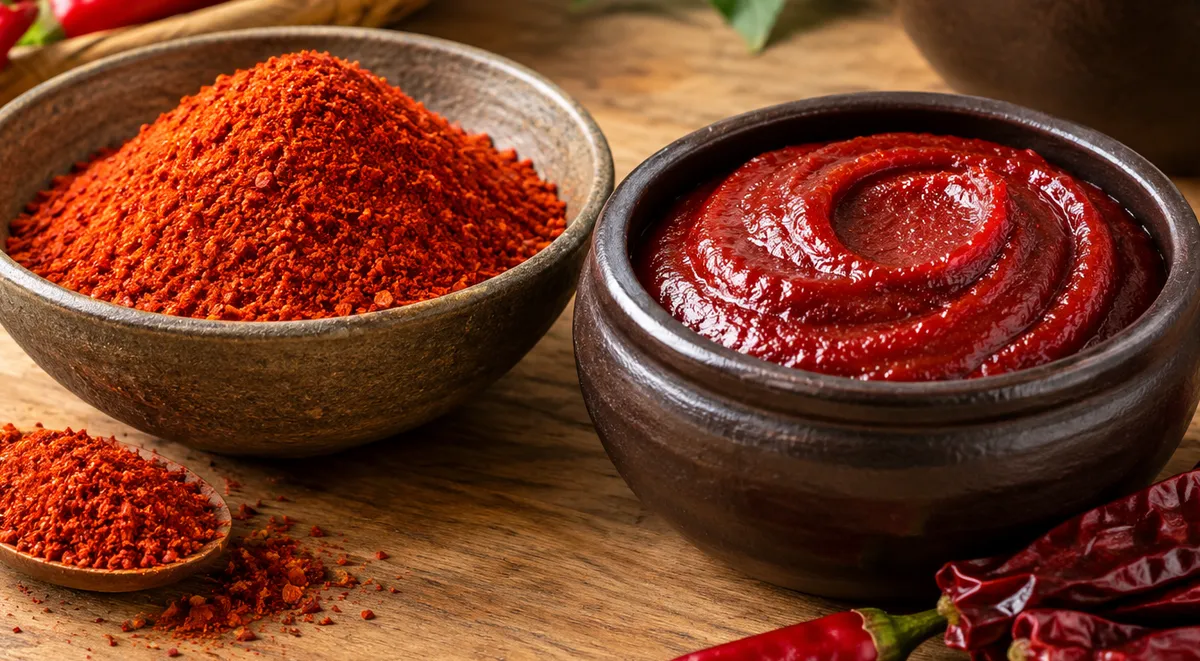
Gochugaru is dried Korean red pepper, ground into flakes or powder. That is all it is.
Gochujang is a thick, fermented paste. Gochugaru is one of its ingredients, but it also contains rice, fermented soybean powder, and salt, and it spends months fermenting before it is finished.
One is a spice. The other is a fermented food made partly from that spice.
The Quick Comparison
| Gochugaru | Gochujang | |
|---|---|---|
| What it is | Dried red pepper flakes or powder | Fermented red pepper paste |
| Ingredients | Dried Korean red peppers | Gochugaru, glutinous rice (or other grain), fermented soybean powder, salt |
| Fermented? | No | Yes, usually for months |
| Texture | Dry flakes, coarse or fine | Thick, sticky paste |
| Taste | Fruity, smoky, mildly hot | Savory, sweet, salty, and hot together |
| Main uses | Kimchi, seasoning, stews, dipping sauces | Bibimbap, tteokbokki, marinades, stews, dipping sauces |
What Gochugaru Actually Is
Gochugaru comes from Korean chili peppers that are harvested ripe and red, dried, seeded, and ground. The best-regarded kind is taeyangcho, meaning peppers dried in the sun rather than in machines. Sun-drying is slower and gives a deeper color and a sweeter, rounder flavor.
Compared with cayenne or crushed red pepper flakes from a pizza shop, gochugaru is usually milder, brighter in color, and fruitier. It tastes like a pepper, not just like heat. Heat levels still vary a lot, and packages are often labeled mild, medium, or hot.
It comes in two main textures:
- Coarse flakes. The everyday kind, used for kimchi and most cooking. The flakes cling to vegetables and give kimchi its familiar look.
- Fine powder. Used for gochujang itself and for smooth sauces, where coarse flakes would feel gritty.
Gochugaru is not fermented. It is a dried spice, in the same category as paprika or chili powder. That matters later, when we get to substitutions.
What Gochujang Actually Is
Gochujang starts with gochugaru and then becomes something much more complicated.
A traditional batch combines fine gochugaru with a starch, most often glutinous rice, which is cooked and broken down with malt so it turns sweet. Then comes meju powder, ground from the same fermented soybean blocks used to make doenjang and soy sauce, and plenty of salt. The paste goes into jars and ferments for months.
During that time, enzymes from the fermented soybean powder and from microorganisms in the paste break the rice starch into sugars and the soy protein into savory amino acids. That is why gochujang tastes sweet and deeply savory at the same time, which gochugaru on its own never does. Studies of traditional gochujang find a mix of Bacillus bacteria, molds, and salt-tolerant yeasts contributing to this process. Our deeper guide covers what happens during gochujang fermentation in detail.
Commercial gochujang is usually made faster and often uses wheat, corn syrup, or other sweeteners in place of some of the rice. It is still gochujang, just a different style. Reading the ingredient list tells you which kind you have.
Can You Substitute One for the Other?
Not directly. Here is what actually happens if you try.
Gochujang in place of gochugaru brings sweetness, salt, and a thick texture that the recipe was not built for. In a stew or stir-fry, a small amount may work. In kimchi, it changes the result more than you might expect: the extra sugar and starch give the bacteria more to feed on, and the kimchi can turn sour faster and taste sweeter and heavier. For kimchi, it is worth getting real gochugaru.
Gochugaru in place of gochujang gives heat and color, but none of the sweetness, body, or savory depth. A sauce that should cling will stay thin, and the flavor will be flat.
If you need a stand-in anyway:
- Instead of gochugaru: a mild chili flake such as Aleppo pepper comes closest. A mix of sweet paprika with a little cayenne works in cooked dishes. Use less of anything labeled hot; plain cayenne is much sharper than gochugaru.
- Instead of gochujang: mix gochugaru with a spoon of miso or doenjang, a little honey or sugar, and a splash of soy sauce. It will not be fermented gochujang, but it will cover the same flavor ground: heat, savoriness, and sweetness together. Sriracha is not a good substitute; it is thin, vinegary, and garlicky rather than sweet and savory.
Which One Does Your Recipe Need?
A rough rule helps:
- Kimchi uses gochugaru. Traditional kimchi does not use gochujang.
- Bibimbap, tteokbokki, and gochujang-based marinades use gochujang.
- Kimchi jjigae and many stews often use both: gochugaru for clean heat, gochujang for depth.
- Dipping sauces can go either way, and the recipe will usually be clear.
For a closer look at where the paste shines, our gochujang guide walks through the classic dishes.
Buying and Storing Them
Gochugaru loses color and aroma over time. Buy it in amounts you will use within a few months, keep it sealed and away from light, and store it in the freezer if you buy a large bag. Bright red flakes are fresh; dull, brownish ones have faded.
Gochujang keeps for a long time in the refrigerator after opening because of its salt content. It darkens slowly and may dry at the surface, which is normal. Press the surface flat after each use. Our guide to storing fermented foods covers the details.
The One Thing to Remember
Gochugaru is a spice. Gochujang is a fermented food.
They share a pepper, but the months of fermentation in between turn one into something the other cannot replace. If you have ever wondered why the same red color can taste so different from one Korean dish to the next, this is usually the reason. It is the same logic behind doenjang and miso, and behind most of Korean cooking: time and microbes turn simple ingredients into something new.
Frequently Asked Questions
Is gochugaru the same as gochujang?
No. Gochugaru is dried Korean red pepper flakes or powder. Gochujang is a fermented paste made from gochugaru plus glutinous rice, fermented soybean powder, and salt. One is a spice; the other is a fermented condiment.
Can I use gochujang instead of gochugaru in kimchi?
It is not recommended. Gochujang adds sugar, starch, and salt that change both the flavor and how the kimchi ferments, often making it sweeter, heavier, and faster to sour. Traditional kimchi uses gochugaru.
Is gochugaru spicy?
Usually mildly to moderately. It is typically gentler and fruitier than cayenne, but heat varies by pepper variety and brand, and many packages are labeled mild, medium, or hot.
Is gochujang fermented?
Yes. Traditional gochujang ferments for months, as enzymes and microorganisms turn rice starch into sugars and soybean protein into savory amino acids. That fermentation is what gives it its sweet, savory depth.
References
- Physicochemical characteristics and microbial communities in gochujang, a traditional Korean fermented hot pepper paste. Frontiers in Microbiology (2020). Frontiers
- Physicochemical, microbial, and volatile compound characteristics of gochujang produced by traditional cottage industries. Foods (2022), 11(3), 375. PMC
- The health benefits and functional properties of gochujang: a comprehensive review of fermentation and bioactive compounds. Fermentation (2025), 11(2), 67. MDPI