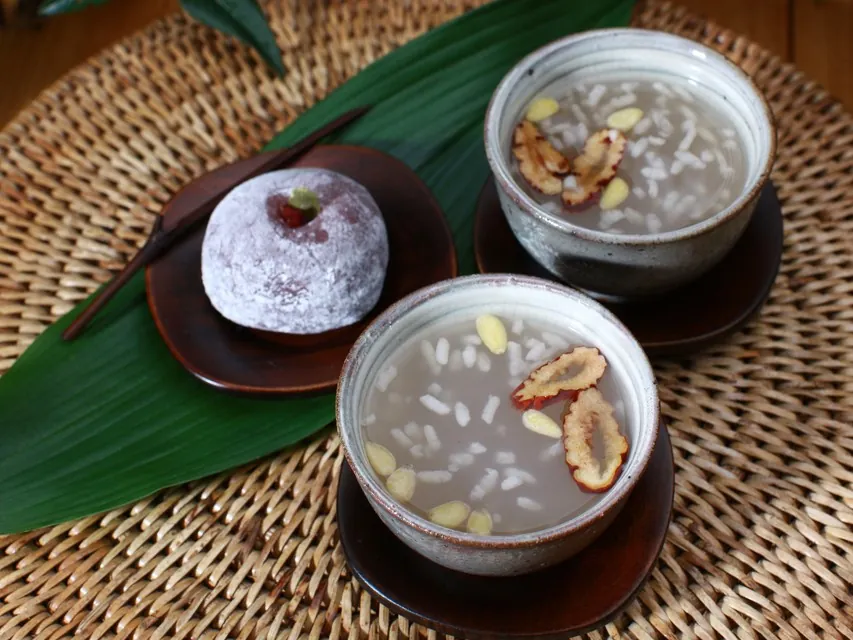
Sikhye: Is Korea’s Sweet Rice Drink Actually Fermented?
Photo: ⓒ한국관광공사-김지호 (Korea Tourism Organization), Korea Open Government License Type 1.
Sikhye (식혜) is the sweet rice drink sold in convenience stores across Korea: pale gold, served cold, with soft rice grains floating in it. People tend to lump it in with makgeolli and other traditional drinks, so it is easy to assume it is fermented too. It mostly isn’t.
The short answer: standard sikhye gets its sweetness from enzymes in malt, not from microbes. That is a different process from fermentation, and the difference is worth understanding. Andong sikhye, a regional version, is a separate case, and we get to it below.
What Sikhye Is
Sikhye is made from malt, rice, and water. The malt is called yeotgireum (엿기름): barley that has been sprouted, dried, and ground into powder. In traditional recipes the malt supplies all of the sweetness. Some modern and store-bought versions add sugar as well, so read the label if it matters to you.
Malt is not all the same. A 1997 Korean study compared malt made from wheat, covered barley, and naked barley. Wheat malt had the highest saccharifying power, meaning it was the best at turning starch into sugar. Naked barley malt beat covered barley malt. Malt from grains whose sprouts were 1.5 to 2 times the grain length worked best.
What Happens in the Pot
Cooked rice is mostly starch, and starch does not taste sweet. Malt contains amylase, an enzyme that chops starch into smaller sugars. In sikhye the main sugar it produces is maltose. This step is called saccharification.
Two studies from 1999 worked out the lab conditions. The best result came from 4% malt and 20% rice. The malt was extracted for 30 minutes at 60°C, then the mixture was held at 60°C for five hours at pH 5.5 and stirred every hour. The drink that came out had 17.1% total sugar and 11.2% reducing sugar, and maltose was the most abundant sugar. The abstracts do not say what those percentages are measured against, so read them as a reference point from one experiment, not as a recipe or a nutrition label.
Two things from the research stand out.
Temperature matters. The enzymes work in a warm range, and heat that is too high destroys them. A 1997 study found that extracting the malt at 50°C for four hours gave the highest saccharifying power and reducing sugar content.
Malt beat the commercial enzymes. The 1999 study also tried commercial β-amylase, α-amylase, and pullulanase preparations and found them not effective for making sikhye. That covers only the products they tested, but it fits with why traditional cooks use malt.
In the usual method the sweet liquid is then strained and boiled. Boiling stops the enzymes and kills most of the microorganisms. What you drink is a liquid sweetened by enzymes and finished with heat.
So Is It Fermented?
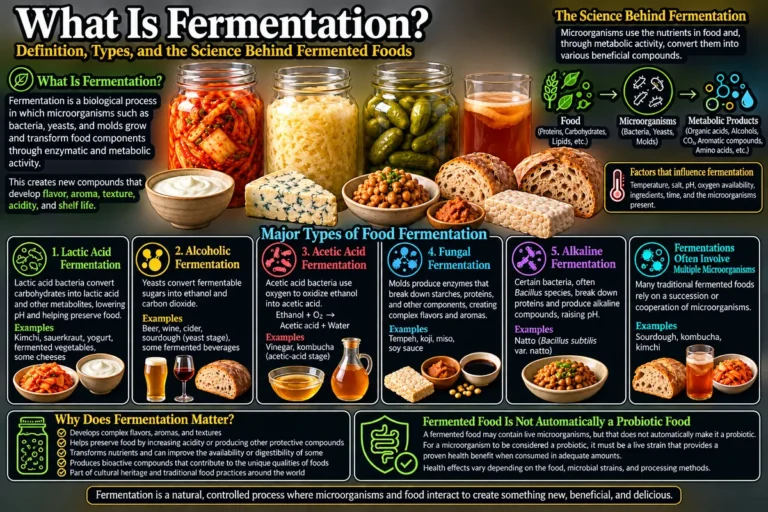
Two terms need to be kept apart. Saccharification is enzymes turning starch into sugar. Fermentation is microorganisms turning food components, usually sugars, into other compounds such as acids, alcohol, or gas. (For the full definition, see our guide to what fermentation is.)
In standard sikhye, saccharification is the point and no step depends on microbes. That is why we do not count it as a fermented food.
Makgeolli is different. Its starter, nuruk, brings both enzymes and microbes, so the release of sugar and alcoholic fermentation happen in the same vessel. Sikhye is more or less the first half of that story without the second. A tradition being old does not make a food fermented, either. The same mix-up shows up between fermented and pickled foods.
Andong sikhye is a different case
Andong sikhye is a regional version that is aged instead of boiled and served right away. It is usually described as containing radish and red pepper. A 1991 study followed traditional Andong sikhye during aging at 4°C and reported these changes:
- pH fell over time, reaching a minimum of 3.90 after 20 days.
- Maltose rose from 6.35 to 9.85 g per 100 mL by day 15.
- Amino nitrogen climbed to 22.40 mg% by day 3.
So this is a drink that keeps changing as it ages. The study tracked chemistry, not microbes, which means it does not tell us which organisms were involved. We are not going to guess.
Is Sikhye a Probiotic Food?
Not by default. Boiled sikhye has been through heat that kills most microbes, and its sweetness comes from enzymes, not live cultures. A probiotic needs live microorganisms, in adequate amounts, with a demonstrated health benefit. Unless a product can show that, do not count it as one. More in our guide to probiotic foods.
How Home Cooks Make It
There is no single standard recipe. Malt powders differ in strength, so follow the amount recommended on the package of the one you buy. The temperatures and times below come from the lab studies cited here. They describe a saccharification method, not a tested food-safety protocol for home kitchens.
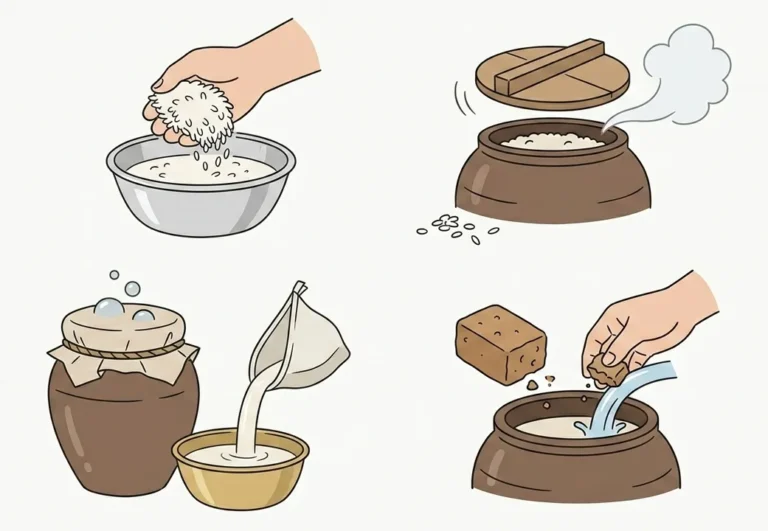
- Extract the malt. Steep the malt powder in warm water, about 30 minutes at around 60°C in the lab study, then strain out the solids. The liquid is what carries the enzymes.
- Cook the rice. Let it cool slightly before you combine it with the malt liquid.
- Hold it warm. Keep the mixture at about 60°C for around five hours, stirring now and then. Many home cooks use a rice cooker’s keep-warm setting, but the temperature varies by model, so check it with a thermometer.
- Watch the rice. Cooks traditionally look for the grains to float to the surface as a sign it is working. That is a practical cue, not proof the process is finished.
- Strain and boil. Strain if you want a clear drink, then bring it to a boil briefly to stop the enzymes. Add sugar only if you want it sweeter.
- Cool and refrigerate. Chill it in a clean, covered container.
Keep it cold. A sugary liquid with starch in it can start to ferment or sour if it sits warm, and an unplanned fermentation can add sourness, gas, or alcohol. Throw it out if it smells off, fizzes when it should not, or shows any mold. Do not taste it to decide whether it is safe.
Frequently Asked Questions
Is sikhye alcoholic?
Standard sikhye is not made through alcoholic fermentation. If a batch sits warm, yeasts can ferment the sugars and produce alcohol, which is one more reason to keep it refrigerated.
Is sikhye the same as amazake?
No. Both are sweet rice drinks, but the enzymes come from different places. Sikhye uses malt. Amazake is commonly made with koji, rice grown with the mold Aspergillus oryzae. See our guide to koji and fermentation molds.
Is sikhye healthy?
It is a sweet drink, and how sweet depends on the recipe and on whether sugar was added. The 17.1% total sugar from the lab study should not be applied to every sikhye, but plenty of carbohydrate is likely in any version, so portion size matters if you watch your sugar intake. Being traditional does not make it a health food.
About This Article
The author, Hoon Kwak, has worked in food distribution for about 20 years, and his family made meju and looked after jang crocks. He has not tested the home method above; its temperatures and times come from the cited laboratory studies. For makgeolli, the fermented relative of this drink, see our makgeolli beginner’s guide and homemade makgeolli.
Sources
- 안용근 (1999). Preparation of Traditional Malt-Sikhye – 2. Preparation by Malt (전통식혜제조-제 2보 엿기름에 의한 제조). The Korean Journal of Food and Nutrition 12(2):170-176. KoreaScience
- Preparation of Traditional Malt-Sikhye 1. Preparation by Malt and Amyolytic Enzymes (전통식혜제조 – 제 1보 엿기름과 효소를 이용한 제조) (1999). KoreaScience
- 서형주 et al. (1997). Characteristics of Malt Prepared with Covered Barley, Naked Barley and Wheat (쌀보리, 겉보리 및 밀을 이용한 엿기름의 특성). Journal of the Korean Society of Food Science and Nutrition 26(3):417-421. KoreaScience
- Choi C, Lim S-I, Seog H-M (1991). Changes in Composition during Aging of Traditional Andong Sickhae (전통 안동식혜의 숙성과정중 성분변화). Journal of the Korean Society of Food Science and Nutrition 20(4):381-387. KoreaScience
- We read the abstracts of these studies, not the full texts. The figures quoted here come from those abstracts.
This content is for informational purposes only and is not medical advice.