Cheonggukjang vs Natto: Key Differences, Taste, and Health Benefits
Two Kitchens, One Microbe
Picture a Korean kitchen filled with the pungent, earthy aroma of a bubbling stew. Now picture a Japanese breakfast table where sticky, thread-pulling fermented soybeans sit next to a bowl of rice. Cheonggukjang and natto look nothing alike and smell entirely different. Yet at the heart of both foods lives the same remarkable bacterium: Bacillus subtilis. Same bean. Same microbe. So why did these two foods evolve into such wildly different flavors, textures, and cultural identities? Let’s dig in — from the microbiology to the history to an actual recipe you can make at home.
The Science Behind the Fermentation: Meet Bacillus subtilis
Bacillus subtilis is the engine driving both ferments. In Korean and Chinese traditions, it’s called gochogyu (枯草菌), which translates roughly to “dried grass bacterium” — a nod to the fact that it naturally colonizes rice straw. This is no fragile organism. It forms endospores that can survive temperatures above 100°C for a significant period of time, making it one of the toughest bacteria found in traditional food fermentation.
When Bacillus subtilis encounters soybean protein, it releases powerful proteases — enzymes that break complex proteins down into amino acids. One of those amino acids is glutamic acid, the compound responsible for deep, savory umami flavor. The fermentation also produces poly-γ-glutamic acid (PGA), a sticky biopolymer that gives natto its signature stringy threads and cheonggukjang its thick, viscous texture. The sweet spot for fermentation is around 40–42°C, and the bacteria thrive under aerobic conditions rather than anaerobic ones.
History and Culture: The Same Root, Two Very Different Paths
The Story of Cheonggukjang
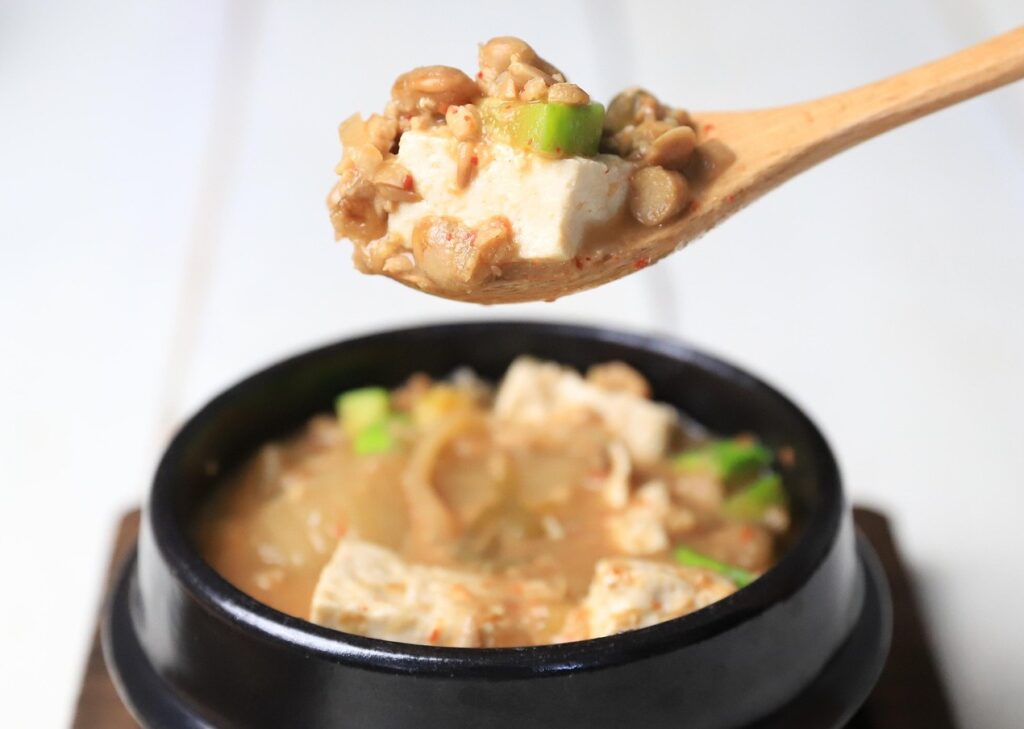
Cheonggukjang’s origins are debated, but the most popular legend traces it back to the Goguryeo Kingdom and the battlefield. Soldiers reportedly carried cooked soybeans tucked under their horse saddles. The horse’s body heat — naturally around 38–39°C — combined with Bacillus subtilis living in the straw beneath the saddle created the perfect fermentation environment. The resulting food was called jeongukjang (戰國醬), meaning “wartime paste,” which eventually evolved into the word cheonggukjang.
It wasn’t just legend. The 1766 Korean text Jeungbo Sallim Gyeongje (增補山林經濟) includes detailed instructions for making cheonggukjang, confirming that it was already a well-established food by the Joseon Dynasty. In Korea, cheonggukjang is consumed almost exclusively as a cooked stew. Its intense smell is famously polarizing — people either love it or avoid it completely — but it has been a beloved winter dish for centuries. Today, odor-reduced powder and pill supplements have made it far more accessible to those who want the benefits without the smell.
The Story of Natto
Natto’s origin story is strikingly similar. During the Heian period (794–1185 CE), soldiers under the commander Minamoto no Yoriie reportedly discovered that cooked soybeans wrapped in rice straw had transformed into something sticky and pungent during a military campaign. Whether or not that story is entirely accurate, natto spread through Japan’s Edo period (1603–1868) as an affordable, protein-rich food for ordinary people, particularly in the Kanto region.
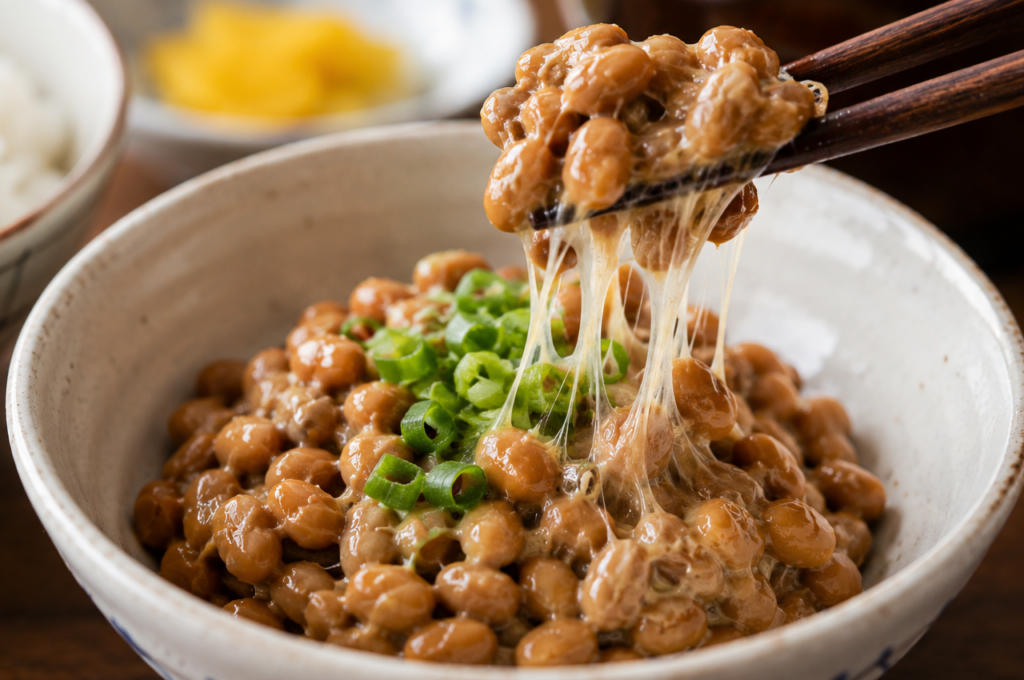
Today, Japan produces approximately 230,000 tons of natto annually. Around 70% of Japanese adults eat it regularly. Unlike cheonggukjang, which is always cooked before eating, natto is almost always eaten raw — stirred vigorously with soy sauce and mustard, then served over rice. That single difference in preparation has significant implications for nutrition, which we’ll get to shortly.
Cheonggukjang vs. Natto: A Scientific Comparison
| Category | Cheonggukjang | Natto |
|---|---|---|
| Primary strain | Bacillus subtilis var. chungkookjang | Bacillus subtilis var. natto |
| Fermentation temperature | 40–45°C | 40–42°C |
| Fermentation time | 2–3 days | 18–24 hours |
| How it’s eaten | Cooked (usually as stew) | Raw |
| Sodium per 100g | ~400–800mg (as stew) | ~2–10mg (plain natto) |
| Vitamin K2 (menaquinone) | Small amount (reduced by heat) | ~870μg (exceptionally high) |
| Nattokinase | Present (activity reduced by heat) | Present (preserved when raw) |
| Poly-γ-glutamic acid (PGA) | Present | Present (more pronounced stringiness) |
Note: The sodium figures above reflect typical preparation methods. Plain, unseasoned cheonggukjang paste has lower sodium than finished stew. Always check nutrition labels for packaged products.
Nattokinase and Vitamin K2
Two compounds have made natto a darling of the wellness world. The first is nattokinase, a serine protease produced specifically by the Bacillus subtilis var. natto strain. First identified in 1987 by Dr. Hiroyuki Sumi, nattokinase has been shown in laboratory and animal studies to break down fibrin, a key structural component of blood clots. The second is vitamin K2 in the form of menaquinone-7 (MK-7). At roughly 870μg per 100g, natto is one of the most concentrated dietary sources of vitamin K2 on the planet. Vitamin K2 plays a well-documented role in bone health and calcium metabolism.
Important: The research on nattokinase and vitamin K2 is ongoing. This article is not medical advice. If you are on blood-thinning medications or have a health condition, speak with your doctor before adding natto or cheonggukjang supplements to your diet.
Cheonggukjang ferments for longer than natto, which means protein breakdown goes deeper — and that’s where the sharp ammonia smell comes from. Cooking the paste into a stew reduces heat-sensitive enzyme activity, including nattokinase. That said, the amino acids, isoflavones, and dietary fiber largely survive the heat. It’s a trade-off between convenience and raw nutritional potency.
Recipe: Homemade Cheonggukjang Jjigae (Fermented Soybean Stew)
This is a classic Korean winter stew — deeply savory, warming, and satisfying. Serves 2.
Ingredients
- 4 tablespoons cheonggukjang paste (about 80g)
- ½ block firm tofu (about 150g)
- 100g Korean radish (daikon), sliced
- ¼ zucchini, sliced
- ⅓ stalk green onion, sliced on the diagonal
- 1 cheongyang (Korean green) chili pepper, sliced (optional, for heat)
- 1 teaspoon minced garlic
- 400ml anchovy broth or water
- 1 teaspoon doenjang (Korean soybean paste) — optional, for extra depth
- 1 teaspoon gochugaru (Korean red pepper flakes) — optional
Instructions
- Step 1: Place the radish slices in a pot and pour in the anchovy broth. Bring to a medium heat and cook for about 5 minutes. Starting with the radish is key — it takes longer to soften and its starch gives the broth body and sweetness.
- Step 2: Once the radish turns slightly translucent, add the tofu cut into 2cm cubes and the zucchini cut into half-moon slices.
- Step 3: Add the cheonggukjang paste and stir it into the broth until fully dissolved. Leave the lid off — this lets some of the strong aroma cook off.
- Step 4: Stir in the minced garlic and gochugaru. Let everything simmer together for 3–4 minutes. If you want a rounder, more complex flavor, add the optional teaspoon of doenjang at this point.
- Step 5: Add the sliced green onion and chili pepper. Let the stew come to one more boil, then turn off the heat. Adding the green onion at the very end preserves its fresh fragrance.
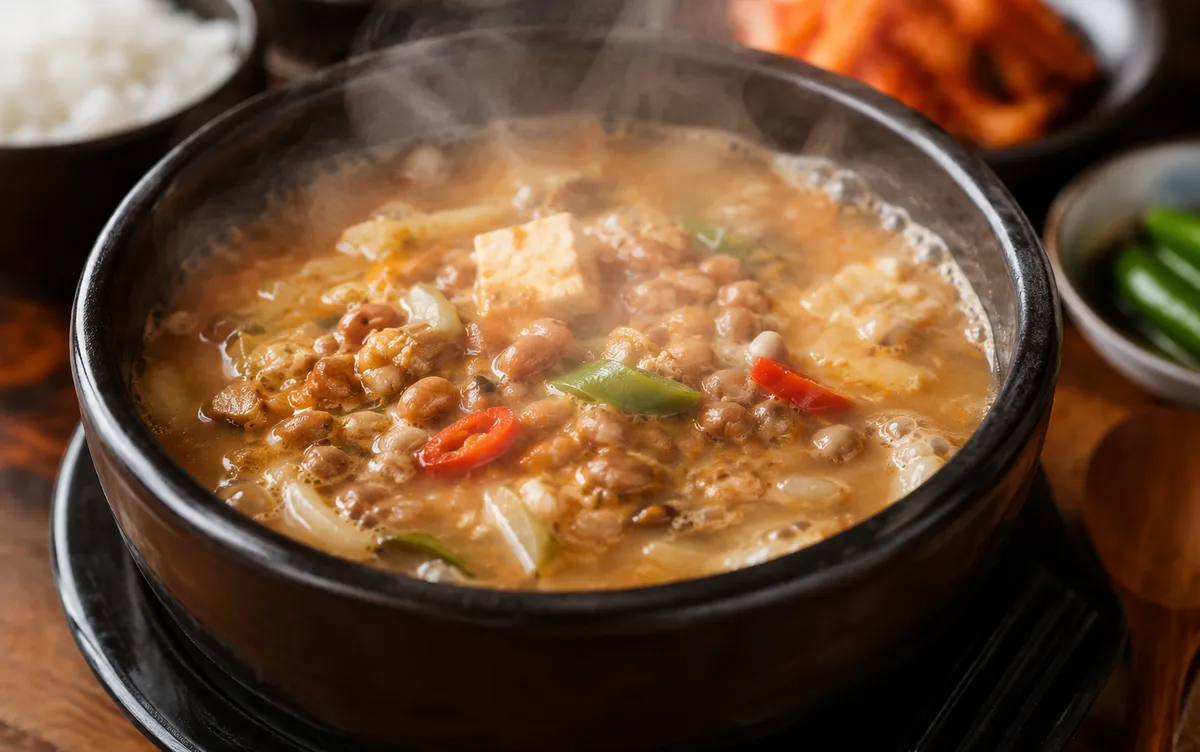
- Step 6: Ladle into a stone pot (dolsot) or earthenware bowl if you have one. The heat-retaining properties of a stone pot keep the stew bubbling at the table, which is part of the experience.
Cook’s tip: The longer you simmer cheonggukjang, the milder the smell gets — but the probiotics and enzyme activity also decrease. If you want the most nutritional benefit from the fermented paste, add it near the end and keep the cooking time short.
Two Traditions, One Future
From a fermentation science perspective, cheonggukjang and natto are siblings. Both increase the digestibility and bioavailability of plant-based protein. Both generate functional compounds during fermentation that weren’t present in the raw soybeans. And both represent something rare: an ancient food technology that modern science keeps finding new reasons to appreciate.
Research is actively underway at several Korean institutions to develop new Bacillus subtilis strains that preserve the health benefits of cheonggukjang while significantly reducing its characteristic strong odor — an effort to bring this traditional food to a wider audience at home and abroad.
These two fermented foods evolved independently in neighboring countries over hundreds of years, shaped by different climates, cuisines, and cultures. Now, as interest in fermented foods grows globally, both are finding their way onto shelves and into kitchens far beyond Northeast Asia. Inside every bowl of cheonggukjang stew is the accumulated wisdom of generations — and billions of invisible microbes still doing exactly what they’ve always done.